

Financing the Future of Neighborhoods Through Trusted (Anchor) Institutions: A Philanthropic and Institutional Perspective
Financing the Future of Neighborhoods Through Trusted (Anchor) Institutions: A Philanthropic and Institutional Perspective
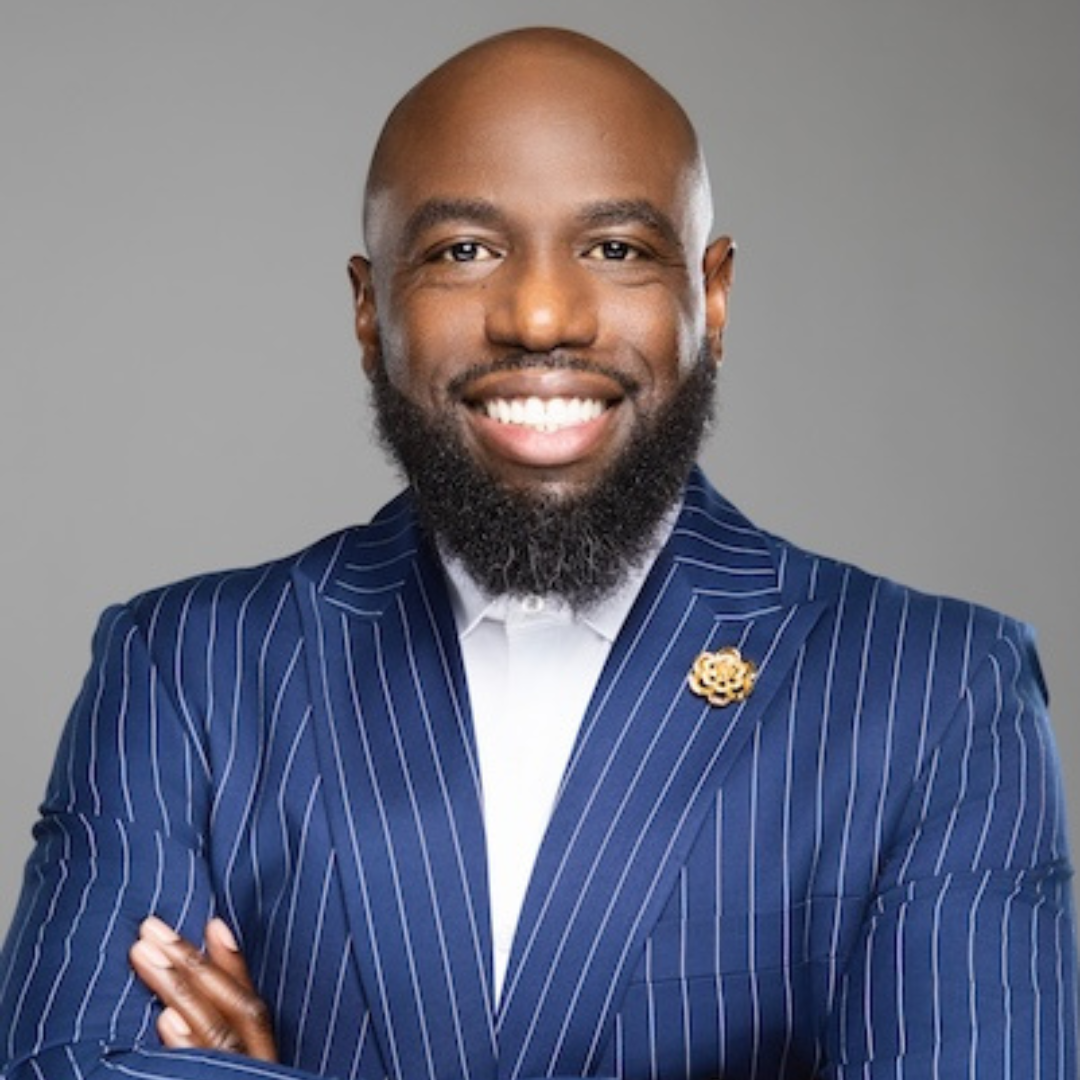
By Dr. Carlos W. Perkins, Associate Director for Engagement, Lake Institute on Faith & Giving
 Across the nation, faith communities continue to serve as some of the most trusted and enduring institutions within neighborhoods. Long before conversations about food insecurity, trauma-informed care, or neighborhood revitalization entered mainstream policy discussions, congregations were already responding to community needs by feeding families, mentoring youth, comforting grieving neighbors, and providing spaces of hope and stability during times of crisis. Churches possess something many institutions struggle to cultivate: deep relational trust, multi-generational credibility, cultural fluency, and long-term rootedness within the communities they serve.
Yet, many of the institutions most trusted by communities remain among the least structurally resourced. Congregations are often expected to address complex challenges such as housing instability, violence prevention, mental health, education inequities, and food insecurity while operating with limited administrative infrastructure, aging technology, insufficient staffing, and minimal access to long-term capacity-building support. Too often, philanthropy asks neighborhood institutions to produce transformational outcomes without adequately investing in the organizational systems necessary to sustain that work.
This reality sits at the center of my work as Associate Director for Engagement at Lake Institute on Faith & Giving, Program Manager for the Indiana Conference of the African Methodist Episcopal Church Supporting Hoosier Churches Grant Initiative and senior pastor of the oldest Black church in the City of Indianapolis—Bethel Cathedral African Methodist Episcopal Church. Through the Supporting Hoosier Churches Initiative funded by the Lilly Endowment Inc., we seek to address a critical challenge facing African Methodist Episcopal congregations across Indiana: churches cannot sustain transformational ministry if the institutions themselves are struggling to survive.
The initiative intentionally focused on strengthening leadership, infrastructure, financial systems, communications strategies, digital readiness, and long-term sustainability. Through extensive conversations with pastors, presiding elders, denominational leaders, and community stakeholders, recurring themes emerged. Many congregations possessed extraordinary vision and strong community relationships but lacked the organizational capacity to scale their work, access philanthropic opportunities, or sustain ministry beyond immediate program funding. The issue was not a lack of commitment—it was institutional capacity.
One of the most important lessons from this work is that healthy ministry requires healthy institutions. Passion and calling matter deeply, but sustainability requires systems that support long-term impact. Congregations need leadership development pipelines, financial literacy, strategic planning, technological adaptation, coaching, and collaborative learning environments. They need the ability to collect data, communicate impact effectively, and develop diversified funding strategies capable of sustaining ministry beyond a single grant cycle. Capacity building helps move churches from survival mode toward sustainable transformation.
This distinction between program funding and capacity building is increasingly important within philanthropy. Programs provide immediate services and respond to urgent needs, but programs without institutional strength often disappear once funding ends. Capacity building, however, strengthens the organization itself. It develops governance structures, operational systems, stewardship cultures, leadership continuity, financial accountability, and organizational resilience. Programs may touch lives temporarily, but strong institutions sustain transformation across generations.
Philanthropy is also increasingly asking important questions about long-term systems-level change. Funders are looking beyond isolated activities toward initiatives that strengthen organizational health, increase collaboration, expand digital access, improve leadership capacity, and build sustainable community infrastructure. They are interested in whether congregations can serve as stronger civic partners and healthier anchor institutions capable of supporting broader neighborhood vitality.
Equally important is the role of storytelling within philanthropy. Too many communities are described only through the language of deficiency and crisis. Similarly, congregations are sometimes viewed merely as struggling charities rather than as institutions possessing significant relational and cultural capital. We must tell more complete stories—stories rooted not only in need, but also in resilience, innovation, dignity, and possibility. Congregations are not simply service providers; they are community anchors that cultivate social trust, leadership development, civic engagement, and neighborhood stability.
The future of neighborhood transformation depends upon strengthening trusted local institutions already embedded within the life of the community. Sustainable change cannot simply be imported from outside. Effective transformation emerges from local leadership, contextual understanding, and organizations that possess neighborhood memory and long-standing relationships. The institutions closest to the pain are often closest to the solutions.
As philanthropy looks toward the future, the question is no longer simply whether we are funding programs. The deeper question is whether we are investing in the long-term capacity of trusted institutions to sustain transformational work for generations to come. Financing the future of neighborhoods begins by strengthening the institutions that never abandoned them in the first place.
Funding That Lasts: Supporting Congregations Beyond the Grant
By McKenzie Scott Lewis, Senior Director, Congregations With Community

Community is the indigenous climate of the human spirit. It is for this reason that we seem most likely to be our true selves when we are deeply involved in relations with others. In paraphrasing Dr. Howard Thurman’s profound statement, I am reminded of the power and necessity of belonging, of generosity, and of divine consciousness that there is community in and all around us. My esteemed friend Rev. Dr. Carlos Perkins states, “One of the most important lessons from this work is that healthy ministry requires healthy institutions.” Not only do his words ring loudly true, but it also begs the question: how do these trusted institutions(congregations) build the muscle of capacity, sustainable, scalable, and accountable to strengthen the community?
At Congregations With Community (CWC), we have the awesome opportunity as one of the only institutions in the country where congregations along with their community partners form teams to address an opportunity and/or challenge in their respective communities. Sure, we provide lucrative grant funds; however, our uniqueness is that the team decides what they will address, and our staff is “with” them as a “collective” force before, during, and after the grant funds have been distributed. We are a grant plus model institution; we lay the groundwork for progress to extend beyond the grant cycle in addressing challenges facing congregations and communities. Here’s what we discovered through an extensive evaluation of our work and through research: organizations that fund institutions must provide a pathway to success for the community, not just funds.
So, how do these trusted institutions (congregations and community partners) build the muscle of capacity, sustainable, scalable, and accountable, to strengthen the community?
We developed the Pathway To Program Success (PTPS) to answer the question. First, I must reintroduce to us the word integrity. The term means wholeness or completeness, a state of being undivided or unbroken. This is the foundation for PTPS, for congregational and community wholeness. We ask the following questions among many:
Area 1: Congregational Integrity – who is responsible for key decisions, what does the community believe about your congregation?
Area 2: Community Organization Integrity – how will you dedicate time to managing this program amongst other programs; how do you encourage open communication and feedback?
Area 3: Financial Integrity – how often do you participate in an informal or formal audit or budget review; how do you inform your congregation of all financial dealings?
Area 4: Team Integrity – how will your congregation and community partner communicate throughout the grant cycle; how will you resolve conflict?
From faith institutions to community organizations to funding institutions to the business world to the community, we were created to bring wholeness, an unbroken approach to be a part of something greater; all of us! Trust with integrity is a promise to do good, while being good with one another in community.
Rev. McKenzie Scott Lewis is the initial Senior Director of an innovative division of the Center for Congregations (CfC) called Congregations with Community (CWC). He is a Licensed & Ordained Minister and a faith-informed Executive Leader with deep expertise and commitment to strengthening congregations, organizational and community transformation and strategic partnerships. His professional life history includes over 30 years of expertise in Diversity, Equity, and Inclusion (DEI), a Division I Basketball Coach, Entrepreneur, Higher Education Administrator and Pastor. He can be reached at mslewis@cwcin.org.
Explore Stories to Inspire Your Ministry
Discover the latest additions to the Faithful Generosity Story Shelf! Explore inspiring stories of intergenerational generosity, sustainable ministries, and innovative approaches to sharing property. These new resources showcase how congregations and faith communities across the country are creatively stewarding their assets and resources as an expression of faithful generosity.
Learn to Cultivate Generosity with ECRF
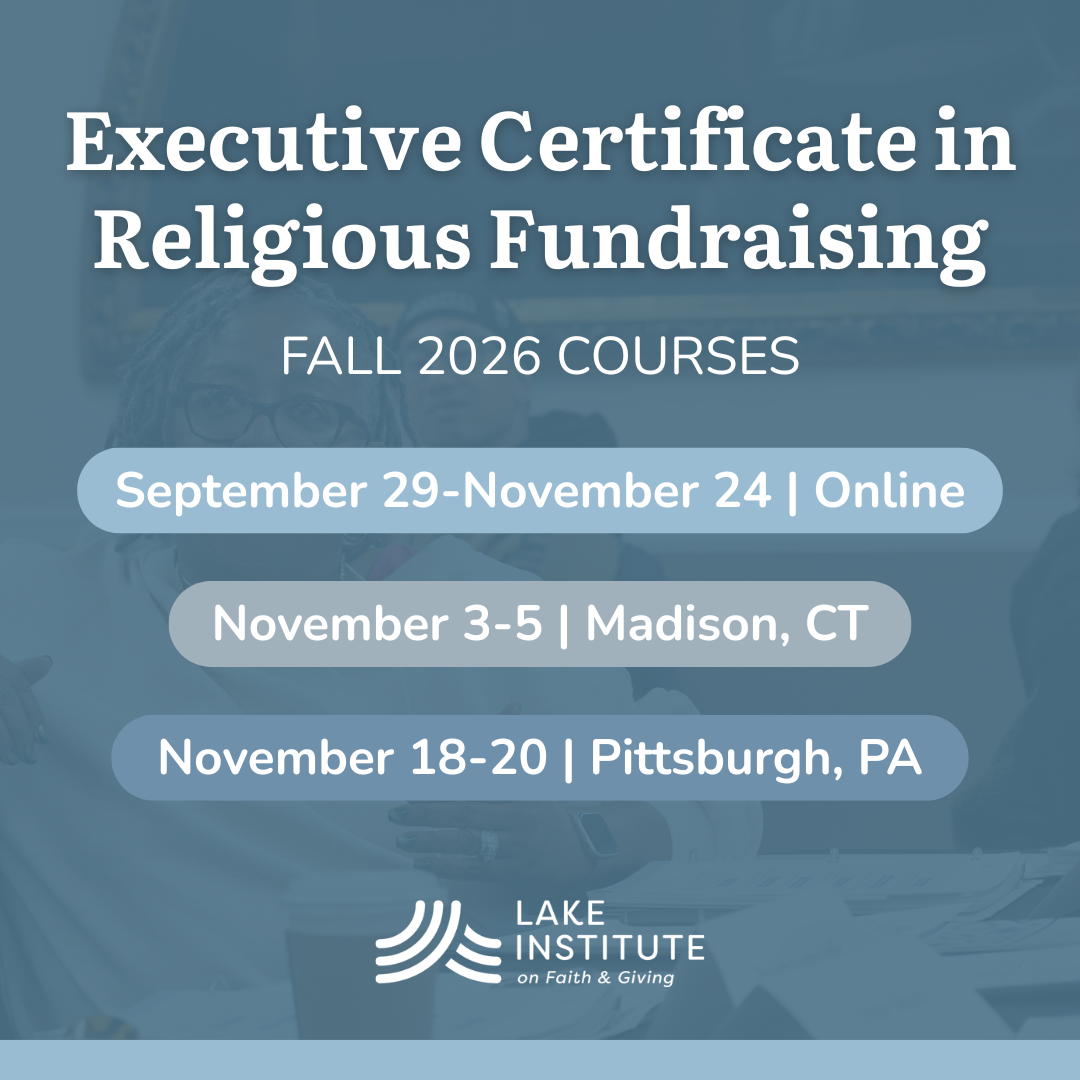
Looking for ways to strengthen your congregation? This September and November, Lake Institute is offering multiple Executive Certificate in Religious Fundraising (ECRF) cohorts, with options ranging from a three-day in-person experience to an eight-week online program. Designed for faith leaders, ECRF provides research-based strategies, practical tools, and customized fundraising training to help you meet the growing needs of your congregation and community.
Subscribe
Insights is a bi-weekly e-newsletter for the religious community and fundraisers of faith-based organizations that provides:
- Reflections on important developments in the field of faith and giving
- Recommended books, studies and articles
- Upcoming Lake Institute events