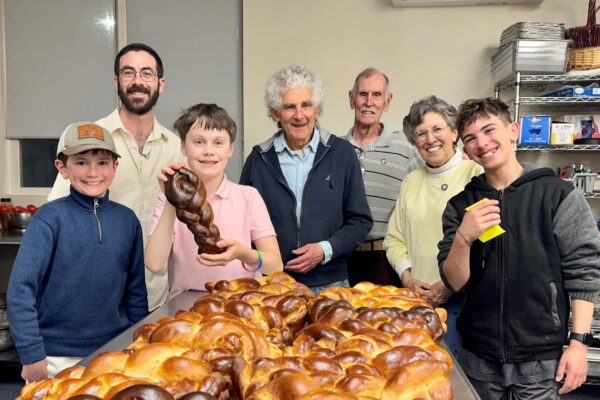
When a century-old congregation faced an enormous price tag for essential repairs, they found a way to stay, keep worshiping, and provide affordable housing for seniors.
Lake Institute’s Resource Library collects and curates a wide range of resources that can help deepen understanding and practice at the intersection of faith and giving.
Search by keywords or browse by themes to find current research, leadership insights, inspiring stories, discernment guides, theological reflection, and more.
The Faithful Generosity Story Shelf highlights congregations and other religious organizations who have sought to use their assets and resources in creative—and sometimes surprising—ways as an expression of faithful giving.
This Insights explores how your organization’s “digital front door” shapes giving and engagement. Meredith McNabb shares practical guidance on strengthening your website and online presence to support donor trust and accessibility, while Emily Heck expands on this perspective with strategies for improving search engine optimization (SEO) and AI-readiness. Together, they offer actionable ways to ensure your digital presence both reflects your mission and helps people find—and support—your work.
Drawing on recent research from Givelify and philanthropic scholars, David P. King, PhD, examines the gap between religious donors’ desire to give consistently and their actual giving patterns. He explores how congregations and faith leaders can foster generosity by framing giving not simply as a financial transaction, but as a spiritual practice rooted in habit, reflection, and community.
When a century-old congregation faced an enormous price tag for essential repairs, they found a way to stay, keep worshiping, and provide affordable housing for seniors.
Origin Church constructed a new building in hopes that their congregation would grow to fill it. When that didn't happen, they gave it to a local journalism organization whose values matched their own.
In this edition of Insights, we reflect on the enduring connections between faith, philanthropy, and civic life through the lens of the American Revolution. Philip Goff examines how religious communities and voluntary organizations helped inspire and sustain the movement for independence, while Tasha Gibson considers how these same traditions of generosity and collective action continue to influence our communities today.
Through neighborhood canvassing, a pastor felt his church was called to be a convener of organizations already at work in the community, rather than create something new.
Drawing on recent research from Givelify and philanthropic scholars, David P. King, PhD, examines the gap between religious donors’ desire to give consistently and their actual giving patterns. He explores how congregations and faith leaders can foster generosity by framing giving not simply as a financial transaction, but as a spiritual practice rooted in habit, reflection, and community.
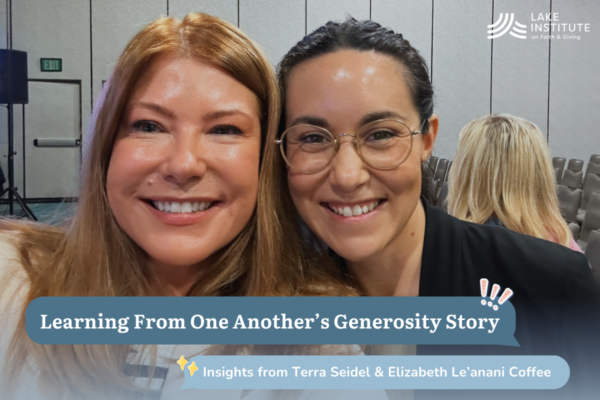
In this issue of Insights, we’re highlighting an interview with Vivian Long and Elizabeth Le’anani Coffee, facilitated by Tasha Gibson. Together, they explore the intersection of philanthropy, lived religion, and cultural identity, with a specific focus on centering the experiences of Asian-American, Native Hawaiian, and Pacific Islander community members.
In this edition of Lake Insights, students from the Lilly Family School of Philanthropy reflect on how their experiences with Lake have expanded their understanding of giving beyond traditional frameworks. In response, Anthony L. Heaven, PhD, explores how diverse belief systems shape philanthropic study and practice, emphasizing the importance of moral imagination, equity, and inclusive approaches to giving.
In this Insights edition, Meagan Anderson Longley, MSSW, and Elizabeth Le’anani Coffee examine the untapped potential of partnerships between faith communities and philanthropic organizations to drive meaningful, place-based impact in areas like affordable housing and community development.
This Insights explores how your organization’s “digital front door” shapes giving and engagement. Meredith McNabb shares practical guidance on strengthening your website and online presence to support donor trust and accessibility, while Emily Heck expands on this perspective with strategies for improving search engine optimization (SEO) and AI-readiness. Together, they offer actionable ways to ensure your digital presence both reflects your mission and helps people find—and support—your work.
In these two reflections from the El Semillero Executive Certificate in Religious Fundraising, Jorge Juan Rodríguez V, PhD, and Alma Lizzette Cárdenas-Rodríguez explore the deeper moral and cultural dimensions of faith-based fundraising.
Insights is a bi-weekly e-newsletter for the religious community and fundraisers of faith-based organizations that provides: