

The Samaritan, the Levite, and Innkeeper: Three Approaches to the Ethics of Philanthropy
The Samaritan, the Levite, and Innkeeper: Three Approaches to the Ethics of Philanthropy
What does it truly mean to love humanity?
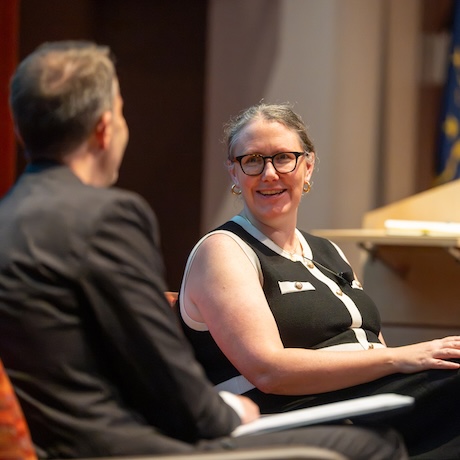 Long before it became associated with modern nonprofits and foundations, the nature of philanthropy was up for fierce philosophical debate in the ancient world. During our 21st annual Thomas H. Lake Lecture, Dr. Sullivan helped the audience dive into one of history’s most famous stories—the Parable of the Good Samaritan—and look at it through a fresh lens. Dr. Sullivan explored the ethical frameworks embedded in the story and what it can teach us about different approaches to giving and caring for others.
Meghan Sullivan is the Wilsey Family Professor of Philosophy and Director of Notre Dame’s Institute for Ethics and the Common Good. The university hub for research and teaching in ethics, the Institute includes the new Rev. John I. Jenkins, C.S.C, Center for Virtue Ethics and the Notre Dame–IBM Technology Ethics Lab. The Institute is home to faculty, program chairs, postdoctoral fellows, PhD students, and undergraduates and runs several residential fellowship programs for faculty, nonprofit leaders, and faith leaders. Sullivan currently directs a $50M grant with the Lilly Endowment to build a network of educators, faith leaders, technologists, journalists and others to consider what human formation looks like in the era of powerful AI.
Subscribe
Insights is a bi-weekly e-newsletter for the religious community and fundraisers of faith-based organizations that provides:
- Reflections on important developments in the field of faith and giving
- Recommended books, studies and articles
- Upcoming Lake Institute events