

For many congregations and faith-based organizations, sustaining mission and ministry requires expanding the circle of people who support the work financially. Yet identifying and engaging new donors can feel daunting, especially for leaders who are already balancing pastoral care, administration, and community engagement.
Fortunately, thoughtful donor engagement does not begin with a fundraising pitch. It begins with relationship-building, listening, and alignment between mission and values.
Lake Institute’s colleagues at the Lilly Family School of Philanthropy, The Fund Raising School, have long taught the concept of the Constituency Model. Drawing on insights from Meredith McNabb of Lake Institute on Faith & Giving, she explains that The Constituency Model is a helpful tool for faith leaders seeking to identify and engage with potential new donors by mapping out the different groups connected to their congregation or organization.
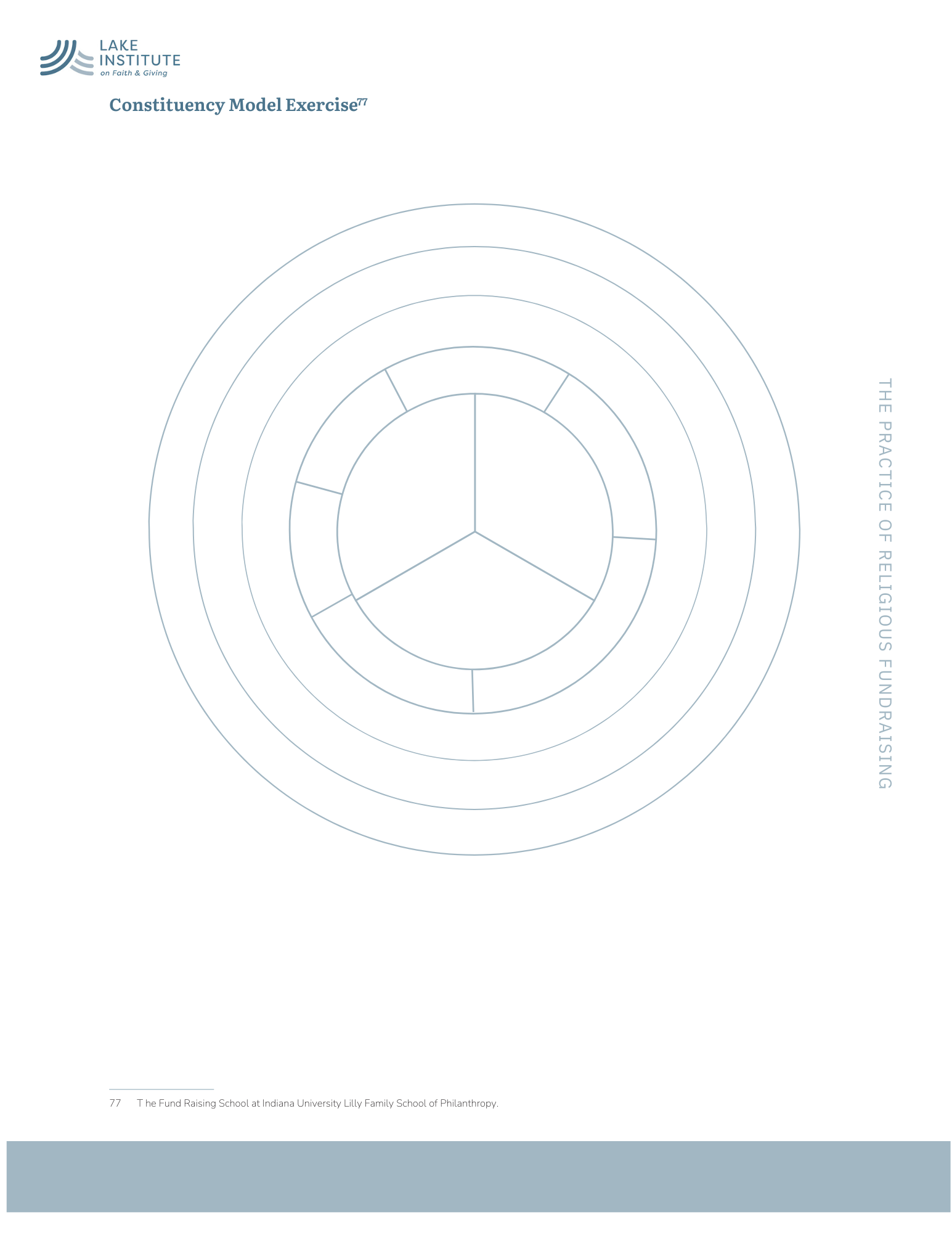
 The Constituency Model:
Use the following steps to map your organization’s network of relationships and identify potential opportunities for deeper engagement.
Step 1:
Start by asking: Who knows the most about your organization or congregation?
These individuals or groups are central to your success through their leadership, advocacy, or financial support. They belong in the center of the model.
Examples may include:
- Board members
- Major donors
- Senior clergy
- Your executive director or other key leadership
Step 2:
Fill in the next ring of the model by answering this question: Which individuals or groups know a lot about your congregation or organization and are important to your success?
These may include:
- Staff members
- Volunteers
- Former board members
Step 3:
Now consider a broader circle of individuals or groups who may have some connection to your work or have shared interests.
Answer the following questions:
- Who knows some things about your organization and are pretty important to accomplishing your work?
- Who knows a little about our organization but isn’t deeply involved yet?
- Who shares similar passions or interests with you?
Examples might include:
- Participants in programs or ministries
- People connected through shared religious traditions
- Individuals or groups passionate about similar causes
Step 4:
In the final outer edge, fill in groups and individuals who do not know you or your organization and don’t share common interests but are in your community or your region.
While these individuals and groups may not be immediate prospects for donor engagement, they represent future opportunities for connection and awareness.
Next Steps for Engagement
Once you’ve mapped your constituency groups, take time to reflect on how you can engage with each group more intentionally.
Consider the following questions:
- What kinds of information might capture the attention of this group?
- Which aspects of our mission might resonate with them?
- What opportunities for giving or involvement might interest them?
Tailoring engagement strategies for different audiences will help develop long-lasting and meaningful connections with the groups and individuals.
Read more about The Constituency Model and Meredith’s insights here.