

Lake Institute on Faith & Giving is deeply connected to the IU Lilly Family School of Philanthropy (LFSOP), where everyone from first-year students to established leaders explores what it means to practice generosity in today’s world.
We asked several LFSOP students how their studies and their work with Lake Institute have shaped their understanding of faith and giving, and what questions they’re carrying into their future in philanthropy.
Their responses reflect a wide range of experiences, from those just beginning their journey to those building on years of work in their communities. Together, they offer a powerful glimpse into how the next generation of philanthropic leaders is reimagining philanthropy.
It is a privilege for Lake Institute to walk alongside these students, and we’re grateful to share their perspectives with you.
Kelin Peraza-Argueta
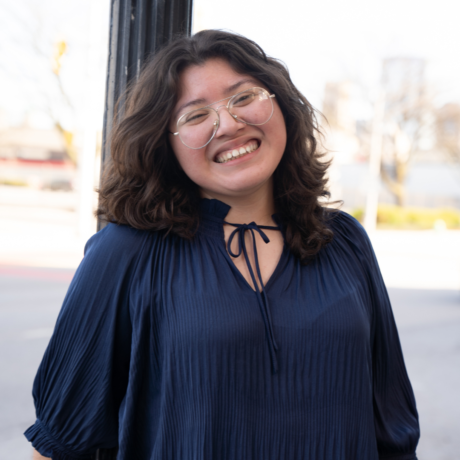 My work with Lake has really shaped how I think about philanthropy and who it belongs to. I feel like a lot of times we talk about philanthropy in a very institutional way that centers wealth and people like Carnegie and Rockefeller. However, through my experience with Lake, I have been reminded that philanthropy has always existed in everyday communities, even if it has not always been recognized that way.
For me, some of my earliest experiences with giving came from my family and from growing up Catholic. I remember going to mass and my mom handing me a few dollars to put into the collection tray. Even though at the time I did not recognize it as philanthropy, I now recognize it as one of my first introductions to giving. In faith spaces, you learn that we are all equal in the eyes of God and that everyone has something to give, no matter how big or small or where they come from. I think that brings philanthropy back to its roots, to its literal meaning as the love of humanity.
I have seen this same kind of giving in my culture, where families fill boxes with clothes and other items to send back home or find ways to support family from a distance, showing that even across borders people continue to give and care for one another. Those acts may not fit the traditional image of philanthropy, but they are real, impactful, and life-changing.
Working with Lake has grounded me in these values again and reminded me that philanthropy is human and that it is for everyone. Moving forward, I want to continue learning how to make philanthropy more accessible and inclusive, especially for communities that have not traditionally been recognized in this space. I want to be part of work that empowers my community, breaks down barriers, and creates opportunities for others to support one another. I hope to help build a cycle where, when someone is poured into, they are able to pour into others, creating lasting impact that continues beyond any one person.
I am Kelin Peraza-Argueta, and I am currently a student at Indiana University Indianapolis studying Philanthropic Leadership and Political Science. As a first-generation college student and the daughter of immigrants, my background has deeply shaped how I understand community, access to opportunities, and leadership. I care deeply about work that strengthens communities and expands access to opportunities for people who have been historically underserved. My interests lie at the intersection of philanthropy, advocacy, and social change, and I hope to build a career focused on increasing access to resources while amplifying the voices of communities most affected by systemic inequalities.
Elizabeth Greene
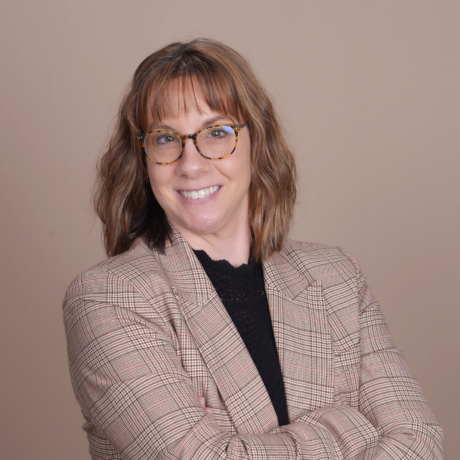 Because I’m pursuing my master’s at the IU Lilly Family School of Philanthropy, I’ve been afforded many opportunities to explore the ways faith and generosity intersect. I am grateful for these chances because I’m the Grants Officer at a faith-based nonprofit serving individuals and families fleeing domestic violence. During my offsite internship last fall, for example, I compared the ways nonprofits use language and images to depict their current and prospective clients on their websites and in online appeals. My study included 16 Midwestern nonprofits (eight are faith-based) that offer emergency shelter and/or supportive services to people experiencing homelessness, including those fleeing domestic violence. I now view this as a pressing concern because I was incredibly disappointed with a lot of the faith-based organizations’ materials. Most employed condescending language, casting their clients as helpless, directionless, and in need of redemption – or worse, as dangerous and subhuman. The “success stories” downplayed their clients’ resilience and courage while emphasizing the donor’s ability to “save lost souls.” Often, the text was accompanied by dehumanizing pictures. In some cases, it’s questionable whether the organization even obtained the subject’s consent. Jesus preaches, “Truly I tell you, whatever you did for one of the least of these brothers and sisters of mine, you did for me” (Matthew 25:40). I am certain, however, that He did not intend for us to emphasize the “least” part when we craft appeals. We must do better, and I believe we can. Faith-based fundraisers like us are called to this work. We aren’t just offering people the chance to serve; we’re uniting them in His name. With that purpose in mind, I’m committed to doing better, and I hope you will join me.
Elizabeth (Liz) Greene is a public servant with a passion for empowering individuals and families trying to overcome poverty. She has worked in the homeless sector for about five years and is currently the grants officer at a center for people fleeing domestic violence. Liz was also a case manager directly serving people experiencing homelessness and worked at a state agency that serves as the pass-through for HUD funds awarded to nonprofits across Indiana. Prior to that, she was a middle and high school teacher for 13 years. She’s a proud Hoosier who’s pursuing her Master’s in Philanthropy at the IU Lilly Family School of Philanthropy.
Muaz Ibrahim
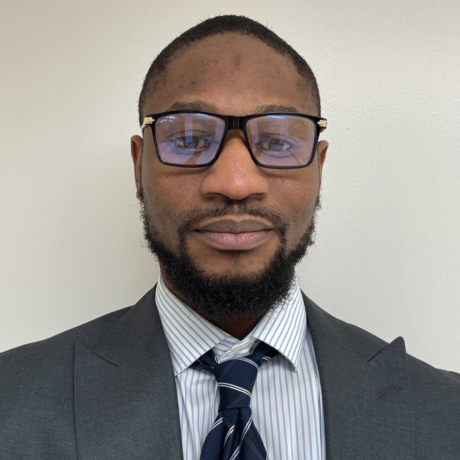 My studies at the Lilly Family School of Philanthropy have provided an important intellectual bridge between my longstanding commitment to faith leadership and my growing scholarly interest in structured systems of giving.
As an Imam and community practitioner engaged in pastoral care, social development initiatives, and faith-based community organizing, I have always witnessed the transformative power of religious generosity at the grassroots level. However, my academic formation has enabled me to interpret these experiences through analytical, historical, and policy-oriented lenses. This has helped me understand faith-inspired giving not only as a devotional act but also as a sophisticated social institution capable of shaping civic life, strengthening social capital, and advancing human development.
My engagement with philanthropy studies has been particularly meaningful in refining my research interests around mobilizing religious charitable mechanisms for sustainable community impact. Through coursework and scholarly dialogue, I have developed a deeper appreciation for how faith traditions structure moral responsibility, institutional trust, and collective action. This has strengthened my desire to contribute to both academic discourse and practical innovation in faith-based development.
In the near future, I see several pressing questions emerging at the intersection of faith and giving. One key concern is how religious communities can preserve spiritual authenticity while navigating increasing expectations for transparency, measurable outcomes, and professional nonprofit governance. Additionally, I am interested in how faith-based philanthropy can respond more effectively to contemporary global challenges such as youth disenfranchisement, migration, inequality, and environmental sustainability. My work seeks to explore how theological motivation, ethical leadership, and empirical research can be integrated to foster more resilient and compassionate philanthropic ecosystems.
Muaz Ibrahim is a faith leader, philanthropy scholar, and community development practitioner whose work explores the strategic role of religious giving in fostering sustainable social change and inclusive human development. As an Imam and institutional leader in the United States, he provides spiritual guidance while leading initiatives in youth empowerment, social welfare, interfaith collaboration, and ethical fundraising.
Robert Rueda
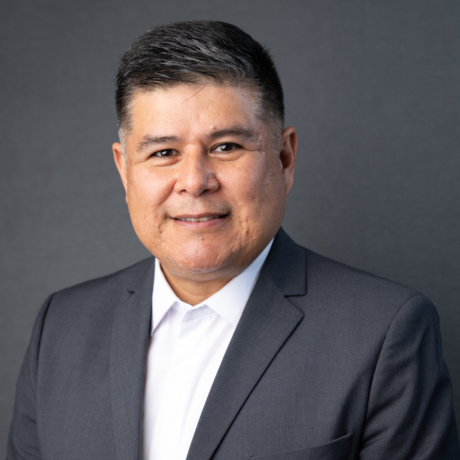 My path to the School of Philanthropy began not in a classroom but on the Texas-Mexico border, where I have spent over two decades walking alongside Latino young adults and their faith congregations. What I observed was the start of a journey of exploring philanthropy through my context: communities practicing extraordinary generosity, sharing food, pooling resources, caring for neighbors, yet often seen as recipients of generosity but not key actors. The disconnect between what I witnessed and what the sector measured sent me looking for a better framework.
My studies have given me language for what I always sensed was true. Philanthropy, at its core, is love and care for humanity, expressed in multiple ways across contexts and intended to lift others up and support their well-being. That action, infused with God’s love, takes on special meaning through the work of the church. The School has sharpened my ability to connect generosity to discipleship, not as a fundraising strategy, but as a spiritual formation practice. Giving, in its fullest expression, shapes who we are becoming, not just what we contribute.
The pressing questions I carry into my work are these: Why do our theological frameworks for giving mainly focus on financial expressions and seldom consider other forms of generosity expression in the same vein? How do we cultivate a culture of honoring giving in congregations where scarcity is real but generosity is abundant? And how do we hold the philanthropic sector accountable to recognize diverse expressions of giving as central to the future of the study of philanthropy?
These are not academic questions for me. They belong at the center of how we live out our faith.
Robert Rueda is a Christian Hispanic practitioner-scholar whose work examines the cultural, spiritual, and generational patterns of generosity within Latino faith communities on the U.S.–Mexico border. For more than 21 years, he has served as Director of the Baptist Student Ministry in the Rio Grande Valley, walking alongside the young adults who inspire his research. He is currently pursuing a doctorate at the Indiana University Lilly Family School of Philanthropy, where his work explores how Latino young adults express generosity through culturally rooted practices of service, community care, and faith.