
The Joys and Oys of Us
The Joys and Oys of Us
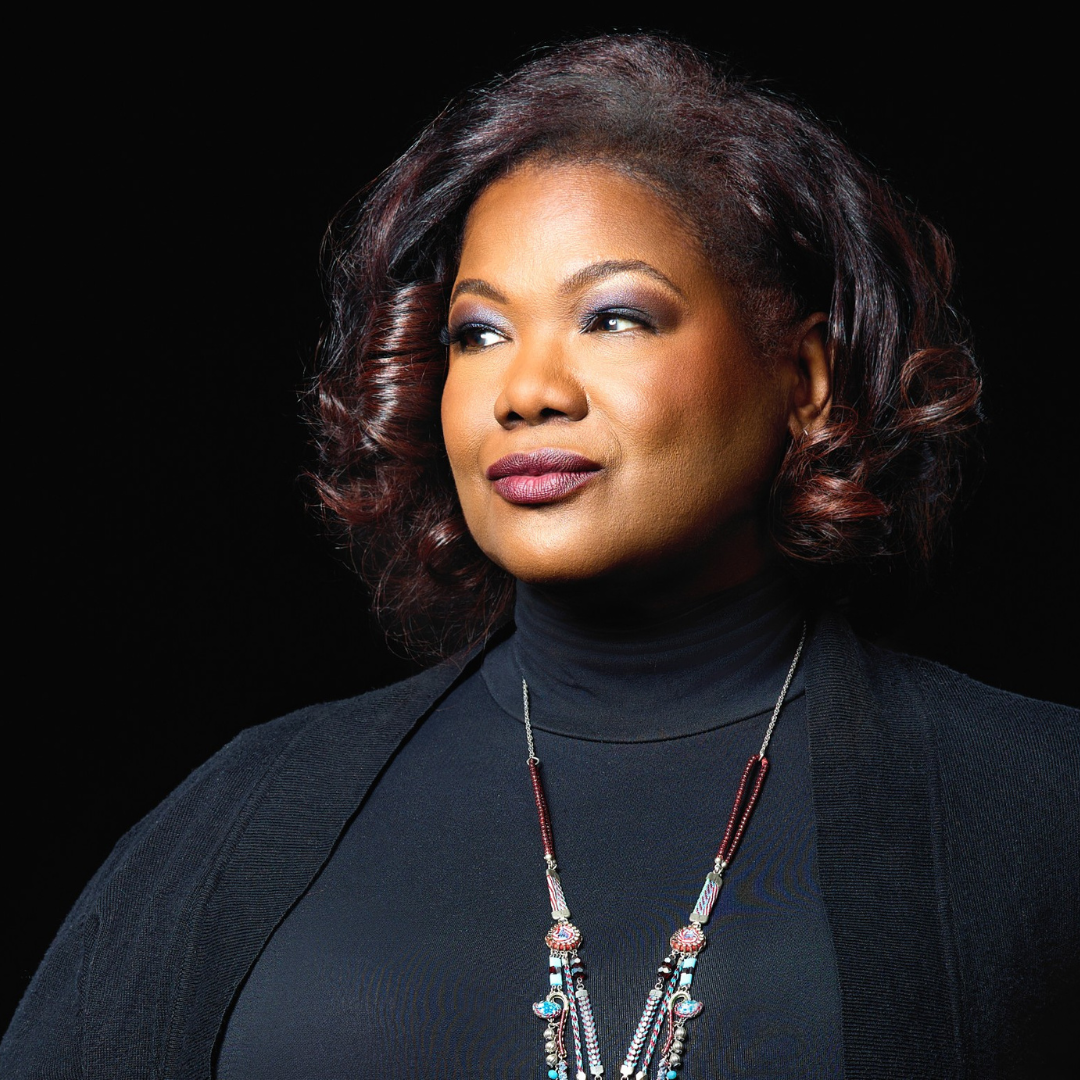
By Valaida Fullwood, Award-Winning Author; Founding Member of NGAAP; Co-Creator of The Soul of Philanthropy Exhibit; and 2014 Lake Distinguished Visitor
“Our ancient history began with slavery and the yearning for freedom. During the Middle Ages my people lived for a thousand years in the ghettos of Europe. Our modern history begins with a proclamation of emancipation.” — Rabbi Joachim Prinz, 1963 March on Washington
 Writing during the week of the MLK Holiday, in the year 2026, while reflecting on a Black-Jewish interfaith program I organized in Charlotte, NC late last summer has brought into laser-sharp focus the fine-knit weave of Jewish and Black American histories. It also illuminates stark realities about our unending vulnerabilities in today’s chaos.
As a young girl, I read Anne Frank’s The Diary of a Young Girl. When an even younger child, I saw historical footage about Birmingham’s “four little girls”: Addie Mae Collins, Denise McNair, Carole Robertson and Cynthia Wesley. A regular Sunday School goer, member of the church youth choir, budding writer, and precocious preteen, I could identify with all these girls. I learned early about anti-Black racism, anti-Semitism, prejudices, and hate that humans hold a profound capacity for. With loving care, my parents made sure I knew of these societal threats for my physical safety and to protect a sentient soul.
“History doesn’t repeat itself, but it often rhymes.” Mark Twain’s quip rings truer now perhaps more than ever. News of a mass shooting of Jewish worshippers on Bondi Beach, and we flash back to the Mother Emmanuel massacre. Scenes from a charred synagogue in Mississippi a few weeks ago conjure images of the burned churches of Southern Black congregations. Two evenings after the King holiday, local media reported spray-painted Nazi imagery at a campus for Jewish life in Charlotte. The emotional assault of hate made manifest through symbols and tropes is a familiar one. Confederate flag sightings and abusive epithets—scrawled somewhere or hurled at me—cut.
And now coverage of Alex Pretti’s killing in Minneapolis pokes at unhealed wounds from viewing George Floyd’s murder. An ICU nurse, Pretti stirs remembrance of aspiring nurse and EMT Breonna Taylor. Yet still, his circumstance harks back to Freedom Riders Goodman, Chaney and Schwerner.
Last summer when NGAAP, the philanthropic collective I’m a part of, announced an interfaith program featuring clergy and philanthropists from both Jewish and Black Christian traditions, the timing seemed fraught. The U.S. had entered a new era, and Americans were shell-shocked from six months of heavy battering on issues of race, religion, identity, and diversity. In Gaza, the conflict with the Israeli government was taking its toll on not only Palestinians but also relationships with and among Jewish people. Tensions, suspicions, and security concerns, everywhere, were escalating.
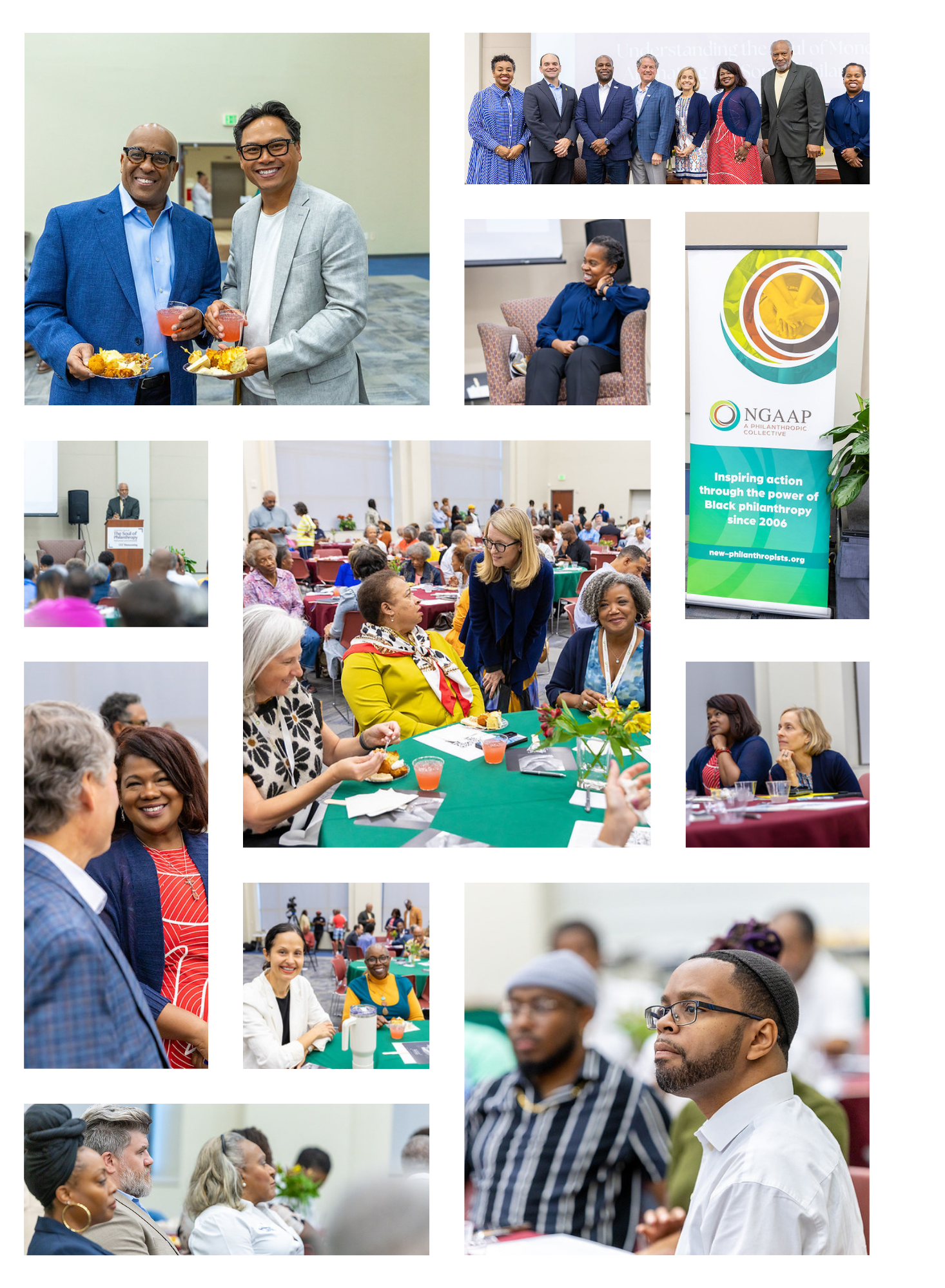
Justin Chance, Josouna Photography
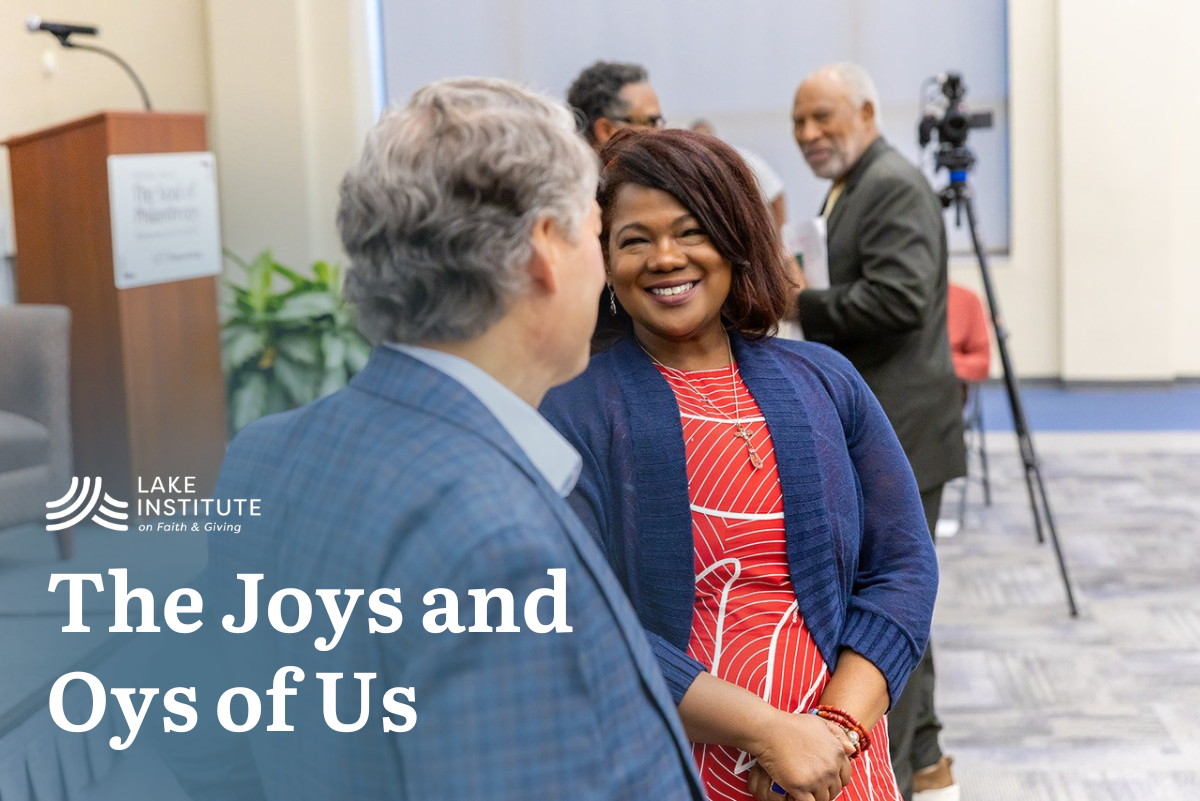
In actuality, the program could not have been more well timed. Bondage and bonds of solidarity. Liabilities and opportunities. Oppression and liberation. Just us, or justice. The interwoven, often rhyming histories of Blacks and Jews rendered our interfaith discussion significant. So, on an auspiciously beautiful evening, more than 250 people of myriad backgrounds gathered for a curiously convened forum on Black philanthropy, Jewish philanthropy, and how faith drives giving.
The program, titled “Understanding the Soul of Money, Animating the Soul of Philanthropy,” began with a seed of an idea planted and watered for a year. Fellow gardener and kindred spirit was Rabbi Dr. Judith Schindler. A community bridge-builder, “Rabbi Judy” is Sklut Professor of Jewish Studies at Queens University of Charlotte. She also serves as Executive Director of Spill the Honey, a national organization working to deepen understanding of the historic Black-Jewish alliance and strengthen the present-day Black-Jewish coalitions across our country.
I was drawn to a collaboration with Rabbi Judy, in part, because of my esteem for the prolific philanthropy of Booker T. Washington and Julius Rosenwald. Their unlikely friendship and cross-cultural cooperation is one of the most compelling stories of American philanthropy. Washington’s ability to see possibilities and his strategic insights combined with Rosenwald’s vast resources and faith-guided generosity transformed the American South. Facing Jim Crow-era White Christian rule, Jewish philanthropy and Black philanthropy, buoyed by the genius of community, built nearly 5,400 schoolhouses for descendants of the formerly enslaved, educating and uplifting generations.
Early on in tending the idea, I invited Rev. Dr. Clifford A. Jones, Sr., Senior Pastor of Charlotte’s Friendship Missionary Baptist Church—my place of worship—to collaborate. His involvement proved golden. Rev. Jones not only granted us use of the space, amenities, and services of Friendship’s conference center, he also urged us to envision and plan for far more than a few dozen attendees.
Together, the three of us sketched a program featuring a panel of givers from our respective religions, anchored by two 15-minute sermons—one by Rabbi Judy and another from Pastor Jones. Rabbi Judy titled her sermonette “Money Matters,” based on a past sermon inspired by Lynne Twist’s book The Soul of Money. In it, Twist posits “money is a mirror” and explores how our attitudes toward money reflect our core values.
Absent from the lexicon of a good many Black Baptist preachers, the sermonette delivered by Rev. Jones carried the title “Pennies, Nickels and Dimes.” Each of their short talks drew on holy scripture, clarified religious and cultural perspectives, and gripped the audience with personal stories. Discussion among the four panelists and moderator followed, delving into one another’s journey as a philanthropist, religious values, and joys in giving. The speakers’ messages asserted the necessity of courage and generosity, as well as sacrifice at times, to combat inequities and injustice.
One specific program element was an agreed-upon hit: the opening social reception with food from both cultures. Ladies from Friendship’s food service staff joined with a popular Kosher deli owner to serve punch and light bites of chicken-n-waffles, hummus, black-eyed pea salad, kugel, and more. This and every element was made possible thanks to wide-ranging local and national support, including: NGAAP Philanthropic Collective, Friendship Missionary Baptist Church, Stan Greenspon Center for Holocaust Education, The Soul of Philanthropy – CLT Homecoming, Jewish Federation of Greater Charlotte, Spill the Honey, Charlotte Black-Jewish Alliance, and Lake Institute on Faith & Giving.
Still struck by the strong audience turnout and their sustained focus, I’m curious to see what can come next. Despite a time of unsettling breaches of decency and morality, that night at Friendship we glimpsed the soul of philanthropy. It is the very human, yet immaterial spirit of generosity that compels friends and neighbors to pool resources and then gather up more friends and neighbors to break bread, share stories, and nurture relationships, kindling hope for mutual safety and thriving. Ancient ways for modern movements.
Ancestors like Washington and Rosenwald, Rev. Martin Luther King, Jr. and Rabbi Joachim Prinz, the NAACP founders, and countless others provided blueprints for these times. Bold, moral leaders, with trust in God, are meant to unite and confront injustice, clearing paths that help free us all. Coalitions of conscience, powered by Jews and Blacks, constitute poetic justice in the fight against historical rhymes.
Named Lake Distinguished Visitor in 2014, Valaida Fullwood is the award-winning author of “Giving Back: A Tribute to Generations of African American Philanthropists,” co-creator of The Soul of Philanthropy exhibit, and a founding member of NGAAP. Formed in 2006 as New Generation of African American Philanthropists, NGAAP is Charlotte’s Black philanthropic collective that inspires action through the power of Black philanthropy.
View highlights from ‘Understanding the Soul of Money, Animating the Soul of Philanthropy’.
Different Paths, Shared Purpose
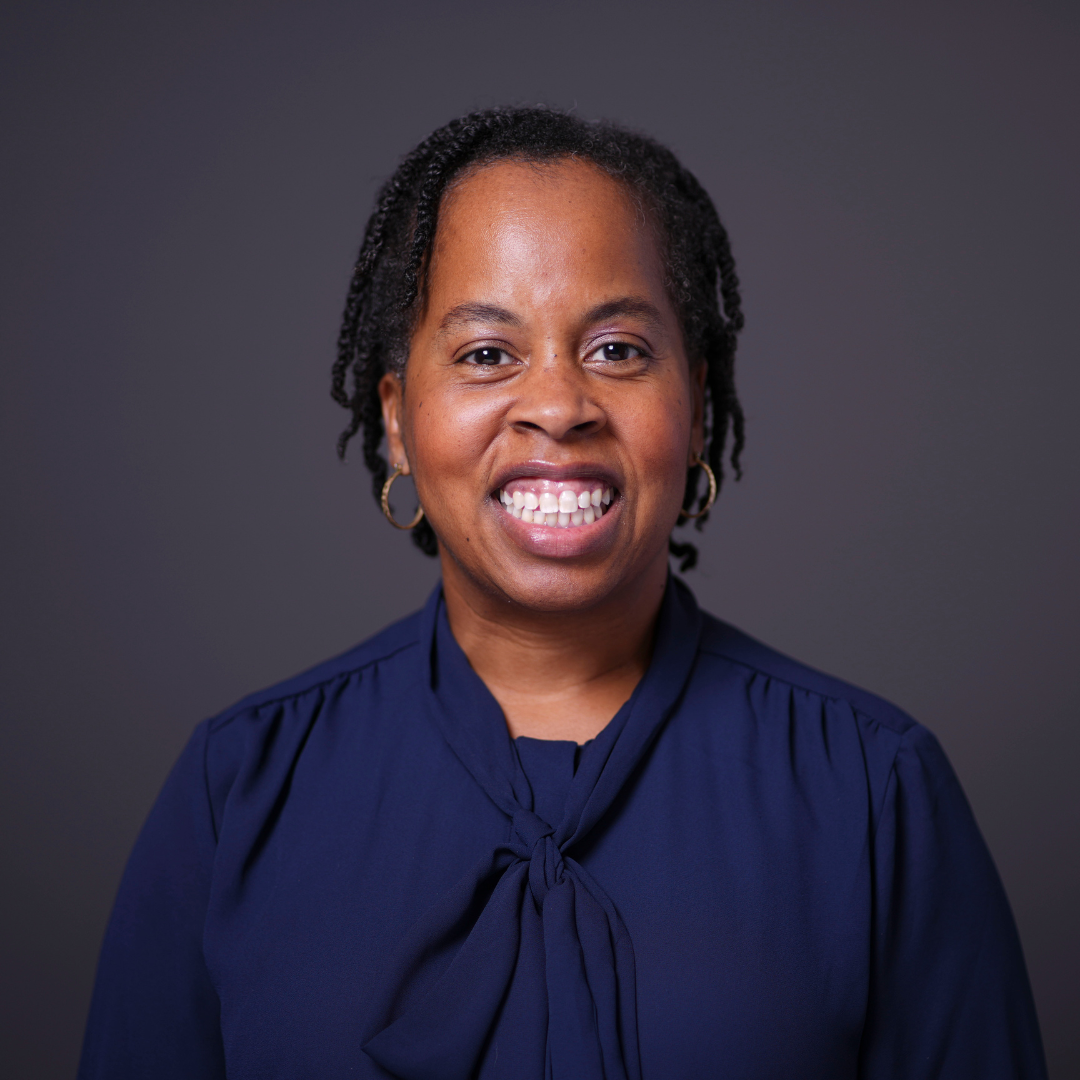
By Tasha Gibson, Senior Program Manager, Lake Institute on Faith & Giving
 As I continue to reflect on the meaningful gathering last fall in Charlotte, so beautifully described by Valaida Fullwood above, I marvel at all of the ways people from two faith traditions showed up in that room that night. People gave sermonettes, recipes, their willingness to greet and serve, their personal stories as panelists, their attention, their financial contributions, and more. And we were together.
Earlier this year, I joined a runners and walkers club. People from different backgrounds, sizes, and skill levels show up twice a week to run or walk. And we are also together.
Some club members are training to run or walk in a marathon or half marathon this spring, while others just want to be a part of the club. We are going different distances, at different paces, and are at different levels. But we are part of the same club. Of course, being together does not guarantee easy or fast ways forward.
I think that faith communities and faith-based organizations are at their best when they make space for people to show up and give what they have in a variety of ways. Although faith institutions differ from clubs in meaningful ways – perhaps most notably in their orientation toward belief in a divine Being that is active in the world – they may nonetheless have more in common than it first appears. In both faith institutions and clubs, everyone can be invited to show up ready to give.
The “Understanding the Soul of Money, Animating the Soul of Philanthropy” program was a part of a long-standing tradition of collaboration between Black leaders and Jewish leaders, and will most certainly yield positive effects in the Charlotte community in the long run. But that will almost certainly be, in part, because people will continue to show up, and bring what they have to give together.
Philanthropy and the Black Church: Where We Go From Here
 In April 2025, leaders from across faith, philanthropy, healthcare, finance, and higher education gathered in Indianapolis to explore what’s possible when Black churches and philanthropic organizations partner for greater impact. What follows is a reflection on that gathering and where the PBC project is headed next.
Winter 2026 ECRF Scholarships
The winter 2026 scholarship applications for Lake Institute’s Executive Certificate in Religious Fundraising (ECRF) are now open! The Thomas H. Lake Scholarship provides $675 in financial support to help ECRF participants take part in this enriching experience. Ten scholarships are available for this winter cycle.
Applications are due by February 20, 2026. Applicants will receive a confirmation email and can expect to hear from our team about scholarship decisions by the end of March.
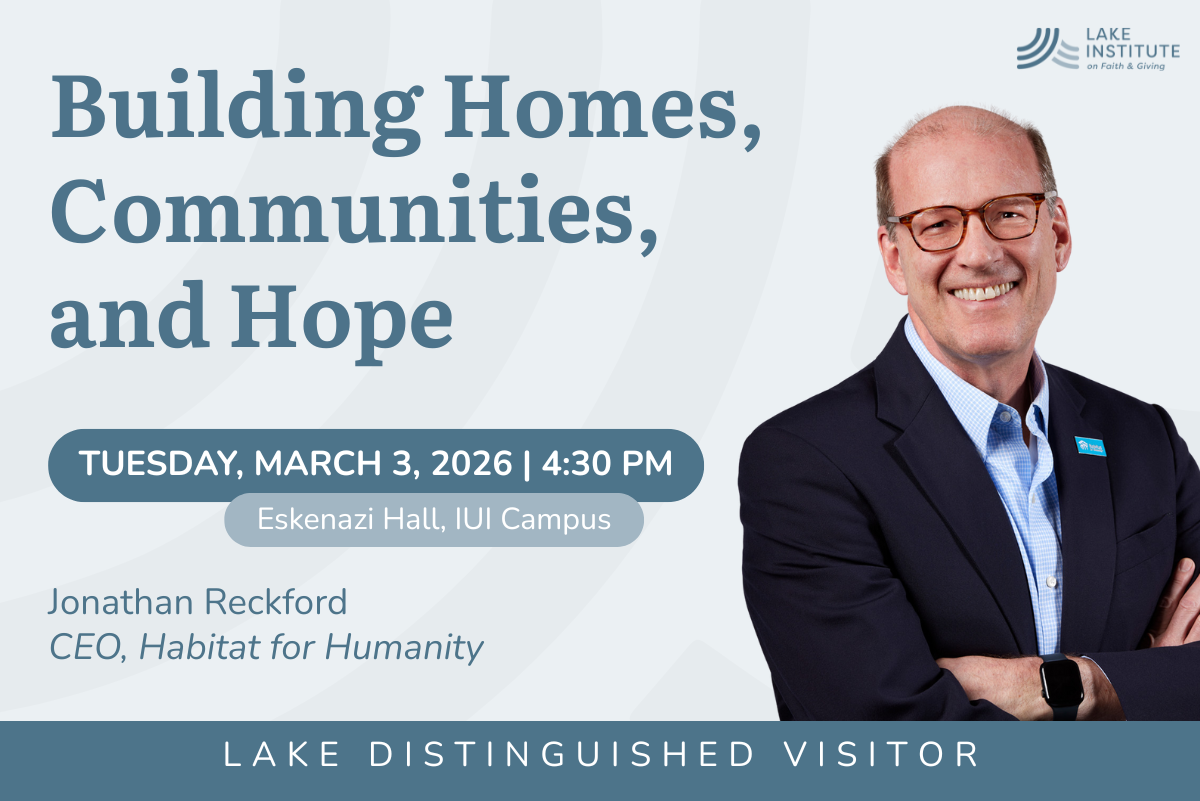
LAKE 2026 DISTINGUISHED VISITOR:
Jonathan Reckford, CEO of Habitat for Humanity
Building Homes, Communities and Hope
Habitat for Humanity is celebrating 50 years of building homes, communities and hope. Join CEO Jonathan Reckford for a discussion on the journey and complexities of leading a faith-based nonprofit, the role of the faith community in bridgebuilding, and how service is the ultimate antidote to our polarized world.
Date: Tuesday, March 3, 2026
Times: Pre-reception starts at 4:30 pm, lecture to follow at 5:00 pm Eastern
Location: Basile Auditorium, Eskenazi Hall, 725 W New York St., Indianapolis
Subscribe
Insights is a bi-weekly e-newsletter for the religious community and fundraisers of faith-based organizations that provides:
- Reflections on important developments in the field of faith and giving
- Recommended books, studies and articles
- Upcoming Lake Institute events