
Building More Than Homes: Service, Faith, and the Work of Bridgebuilding
Building More Than Homes: Service, Faith, and the Work of Bridgebuilding
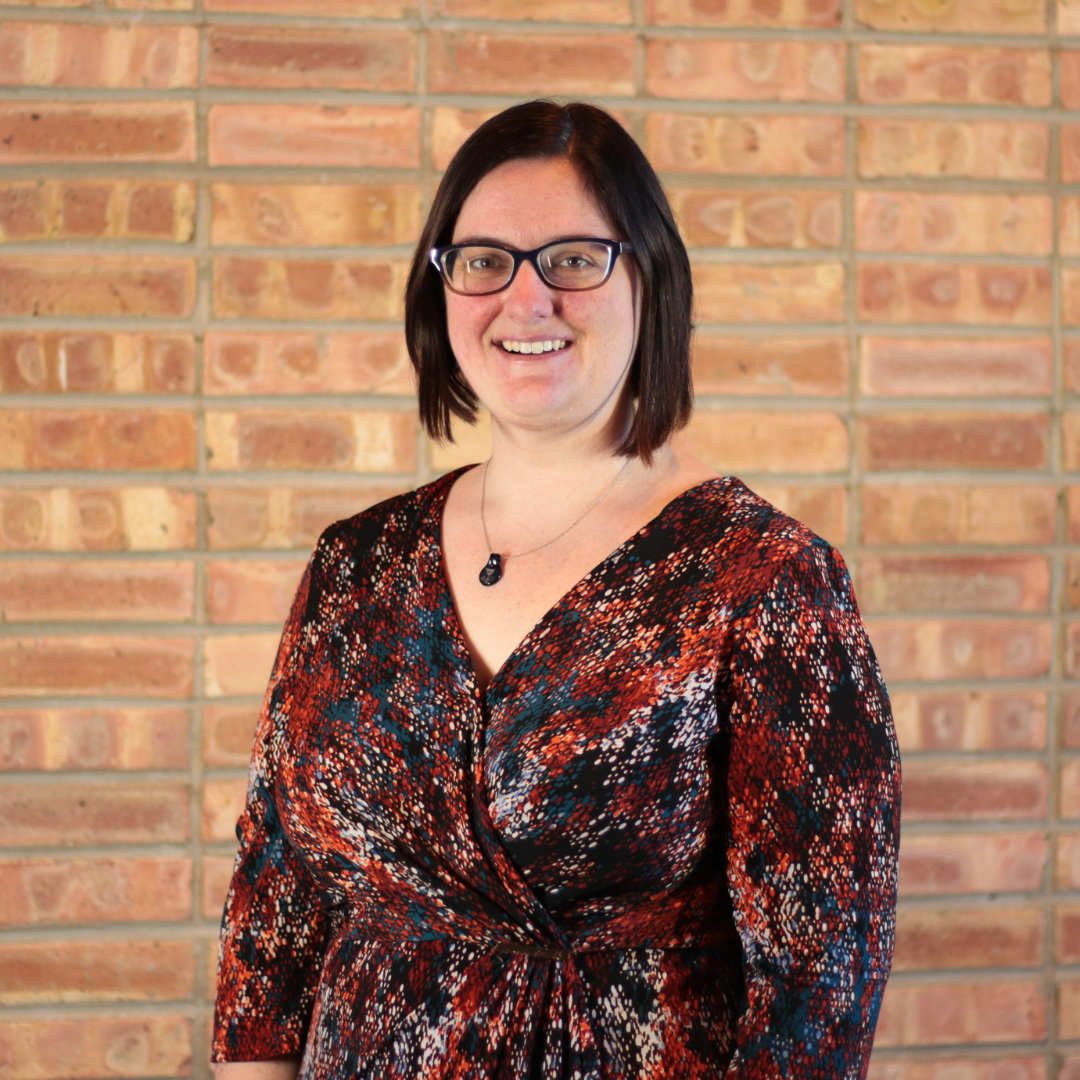
By Elizabeth Le’anani Coffee, Managing Director, Lake Institute on Faith & Giving
 My parents instilled community service in me from a young age, and nearly all my earliest memories of volunteering are connected to our local church. I remember piling into our family van to serve in after-school programs or spending evenings at a shelter for unhoused single parents and their children. Our children’s choir sang in retirement communities throughout the year, and my parents’ Bible study group went Christmas caroling at the homes of church elders and widows who could no longer travel easily.
Looking back, I realize these experiences formed my earliest understanding of community care, mutuality in giving, and service as a natural expression of my faith. They also taught me something I did not fully appreciate at the time: when people serve together, many of the divisions that shape our public life become less central.
I never worried about the politics of the person folding clothes next to me, or whether I agreed with the person across the table at a soup kitchen about a particular social issue. We were simply neighbors doing necessary work together.
Years later, a leader of a local community garden put words to what I had experienced all along: “Everyone puts a spade in the dirt the same way, no matter how they voted at the last neighborhood association meeting.” Service does not erase difference, but it creates space where difference can be held without becoming too much of a defining force.
At a time when our public life feels increasingly fragmented across political, economic, and social convictions, it is tempting to search for quick solutions to bridge our divides. New technologies promise us connection. New strategies promise us consensus. New language promises us civility. And yet, many of us sense that something deeper is required.
This is where faith communities have something essential to offer.
Across traditions, faith communities are uniquely formed to practice bridgebuilding. They gather people across generations, political identities, racial and economic backgrounds, not just around shared beliefs, but around shared practices of meaning, service, and hope. Long before “social cohesion” became a public concern, faith communities were cultivating habits of proximity, patience, and moral responsibility.
Bridgebuilding, at its core, is relational work. It requires sustained presence. It requires humility and the willingness to listen, to be changed, to acknowledge complexity rather than rush toward certainty. And it requires commitment to the shared flourishing.
Faith traditions are shaped by stories in their sacred texts that do not deny conflict, but wrestle with it. Across these texts, we see stories of exile and return, of rupture and reconciliation, of death and resurrection. These narratives resist the illusion that unity comes easily. They remind us that repair is slow, embodied, and ongoing.
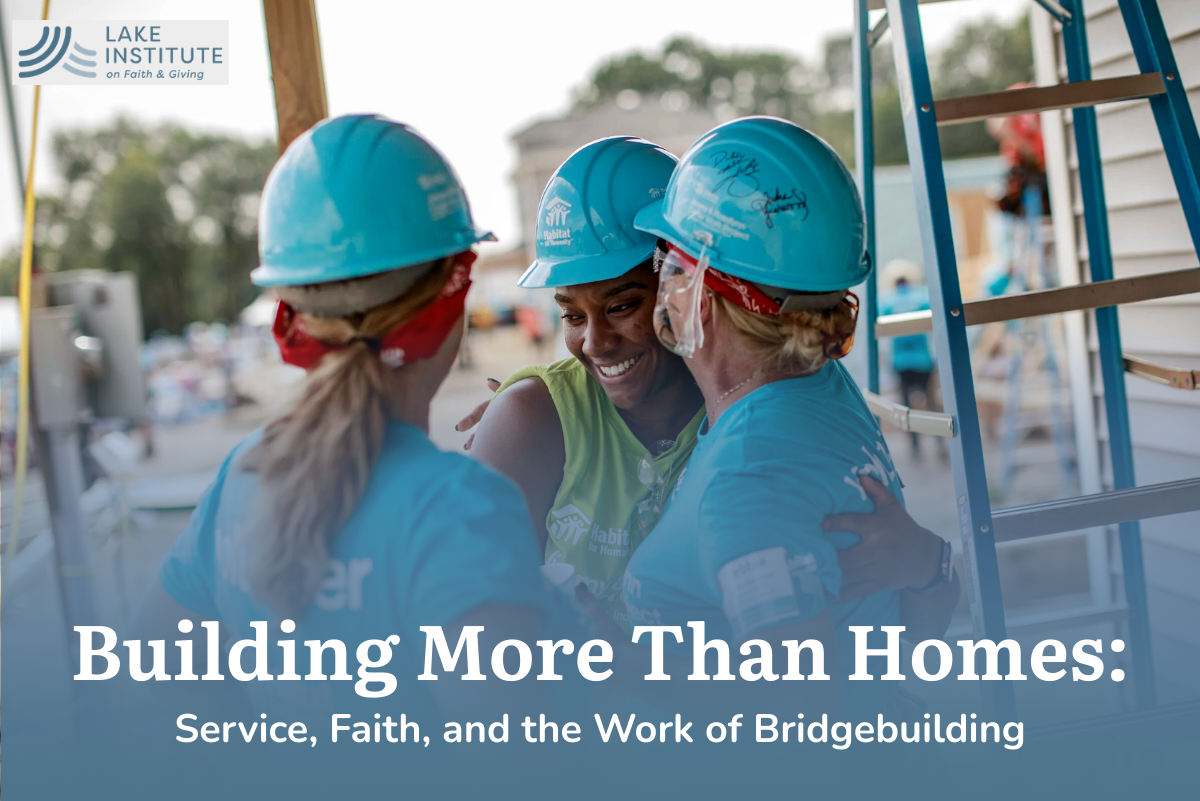
One of the most powerful ways faith communities build bridges is through service. Service, at its best, is not charity that flows in one direction, but shared work that dignifies all participants. It places people side by side, oriented toward a common task. It reframes “the other” as a neighbor.
When people labor together building homes, feeding neighbors, caring for children, or stewarding land, they are drawn into a shared vision for wholeness. They begin to see one another not primarily through ideological labels, but through mutual dependence and shared purpose.
Service, then, becomes an antidote to polarization, not because it solves disagreement, but because it rehumanizes those with whom we prematurely cast judgment. It reminds us that before we are opponents, we are connected.
In this landscape, bridgebuilding is not a program. It is a posture. It is expressed in how we listen, how we partner, how we tell stories about impact, and how we invite participation.
Habitat for Humanity’s 50-year journey offers a compelling example of what this kind of bridgebuilding can look like over time. Founded on a vision of housing as a primary catalyst for human dignity, Habitat has long brought together volunteers, donors, faith communities, and homeowners across lines of difference. Its work has demonstrated how shared service can cultivate solidarity, even amid profound social change.
As Habitat for Humanity marks this milestone, its experience raises timely questions for all of us engaged in faith and giving: What does it mean to lead faithfully in polarized times? How can faith communities serve as credible bridgebuilders without simplifying complexity or avoiding hard conversations? And how might acts of service, when practiced with humility and accountability, help renew our civic imagination?
These questions will be at the heart of Lake Institute’s upcoming Distinguished Visitor conversation with Jonathan Reckford, CEO of Habitat for Humanity International. Reckford brings decades of experience navigating the opportunities and tensions of faith-based nonprofit leadership, offering insight into how service, faith, and bridgebuilding intersect in practice.
We invite you to join us for this conversation. And not simply to hear a story of organizational success, but to reflect together on the deeper work of building communities marked by trust, dignity, and shared responsibility. In a world hungry for connection yet wary of institutions, faith communities remain one of our most vital resources for imagining and practicing a more generous public life.
Bridgebuilding does not begin with agreement. It begins with commitment. Commitment to show up, to serve alongside one another, and to remain in relationship even when the work is unfinished. Faith communities, at their best, remind us that this commitment is not only possible, but necessary.
And in times like these, it may be one of the most faithful gifts we can offer.
Letting Go & Building Forward
By Rev. Danielle Cox, Senior Minister of Avon Christian Church
 In 2022, Avon Christian Church was presented with an opportunity to partner with Greater Indy Habitat for Humanity on a small neighborhood of much needed attainable homes for our community. As ACC and churches everywhere continued to grapple with grief and trauma post-pandemic, we also struggled with the question of who God was calling us to be in this moment. The congregation knew they were not the same church they were before the pandemic. More importantly, they realized that moving forward meant letting go of the vision for the future they had held in 2019, one which imagined constructing a permanent sanctuary to complete their building, rooted in the initial plans for the congregation founded in 1964. ACC had a long history of serving its community and supporting local organizations, but the congregation believed new ways of imagining church and building relationships would be vital to the church’s identity in the future.
The congregation’s 11 acres have been used to serve the community in different ways over the years, but with a growing attainable and affordable housing crisis in Hendricks County, it appeared that the land could be used for a more permanent solution. The way the church became reconnected to Indy Habitat through this project is a great example of bridge-building in itself. It was through reaching out to Family Promise of Hendricks County, another organization working to address the housing crisis in our community, about the possibility of a housing project on the church’s land, that ACC and Habitat were brought together for a conversation about what a collaboration addressing affordable housing might look like. Through this and many subsequent conversations, Hope Landing was born.
This partnership was crucial, not just for the ways in which it serves our neighbors, but in creating momentum and reigniting a spark for the congregation, particularly in the ways it thinks about stewardship of our land and building. This renewed sense of building stewardship has led to additional community partnerships. In a time of increased polarization and mistrust in religious institutions, offering safe and welcoming spaces for groups in our community has in itself been an act of bridgebuilding. Throughout his ministry, Jesus met people where they were, concerned not just for their spiritual needs, but also for their basic needs. When people were hungry, he offered them food, and I like to think if they needed a place to live, he would have been right alongside them building homes and building hope – Jesus was a carpenter after all. As Christians, we are called to build bridges in the midst of divided times, build up community in the midst of brokenness, and build houses when the opportunity arises.
Rev. Danielle Cox has served as the Senior Minister of Avon Christian Church (Disciples of Christ) since 2019. She is passionate about empowering her congregation to put their faith into action in the community and beyond, following Christ’s command to love and serve their neighbors. Rev. Cox received a Master of Divinity from the University of Chicago Divinity School and a Bachelor of Arts in International Relations from the University of Lynchburg.
Building Homes, Communities, and Hope
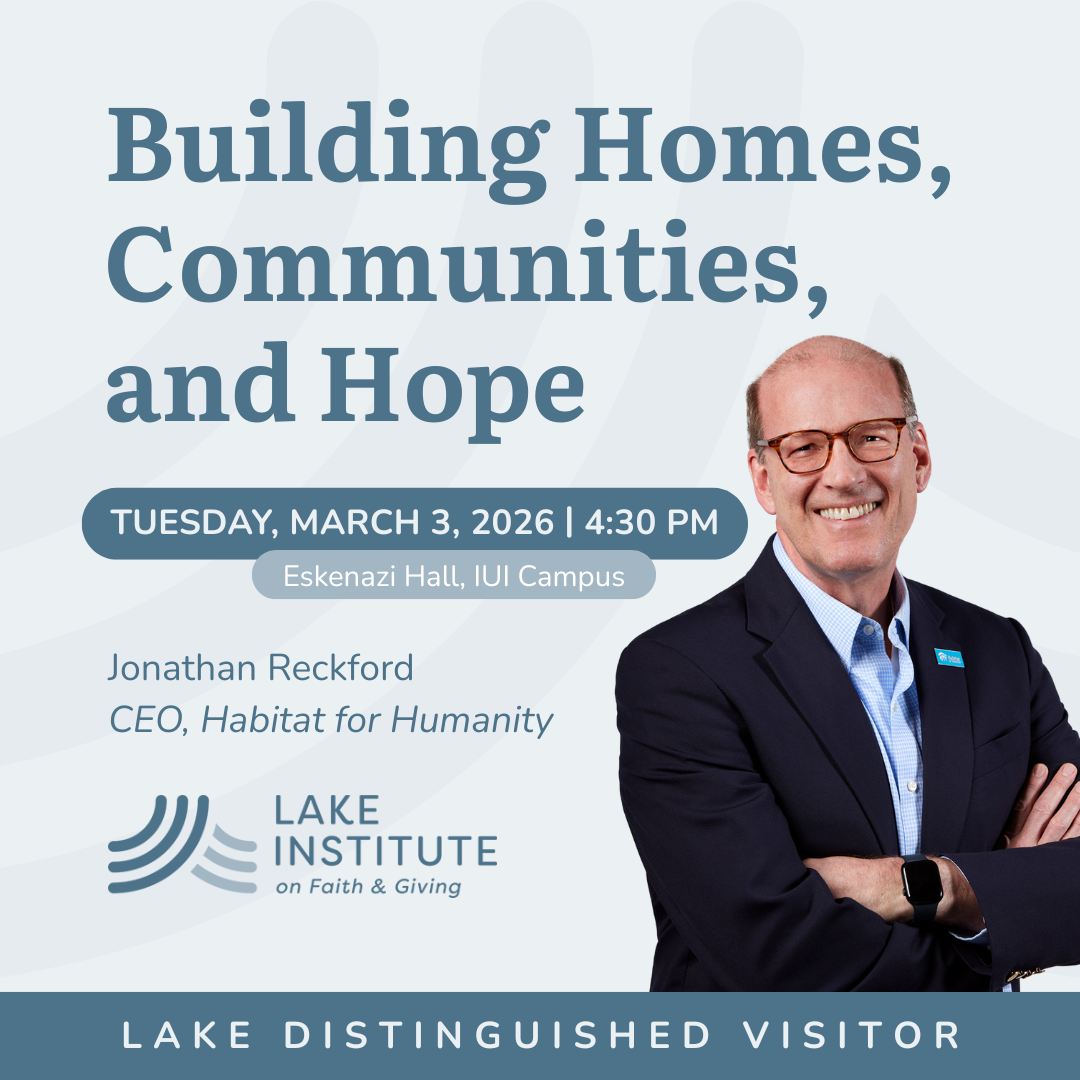
Habitat for Humanity is celebrating 50 years of building homes, communities and hope. Join CEO Jonathan Reckford for a discussion on the journey and complexities of leading a faith-based nonprofit, the role of the faith community in bridgebuilding, and how service is the ultimate antidote to our polarized world.
Date: Tuesday, March 3, 2026
Times: Pre-reception starts at 4:30 pm, lecture to follow at 5:00 pm Eastern
Location: Basile Auditorium, Eskenazi Hall, 725 W New York St., Indianapolis
Sharing the Lawn
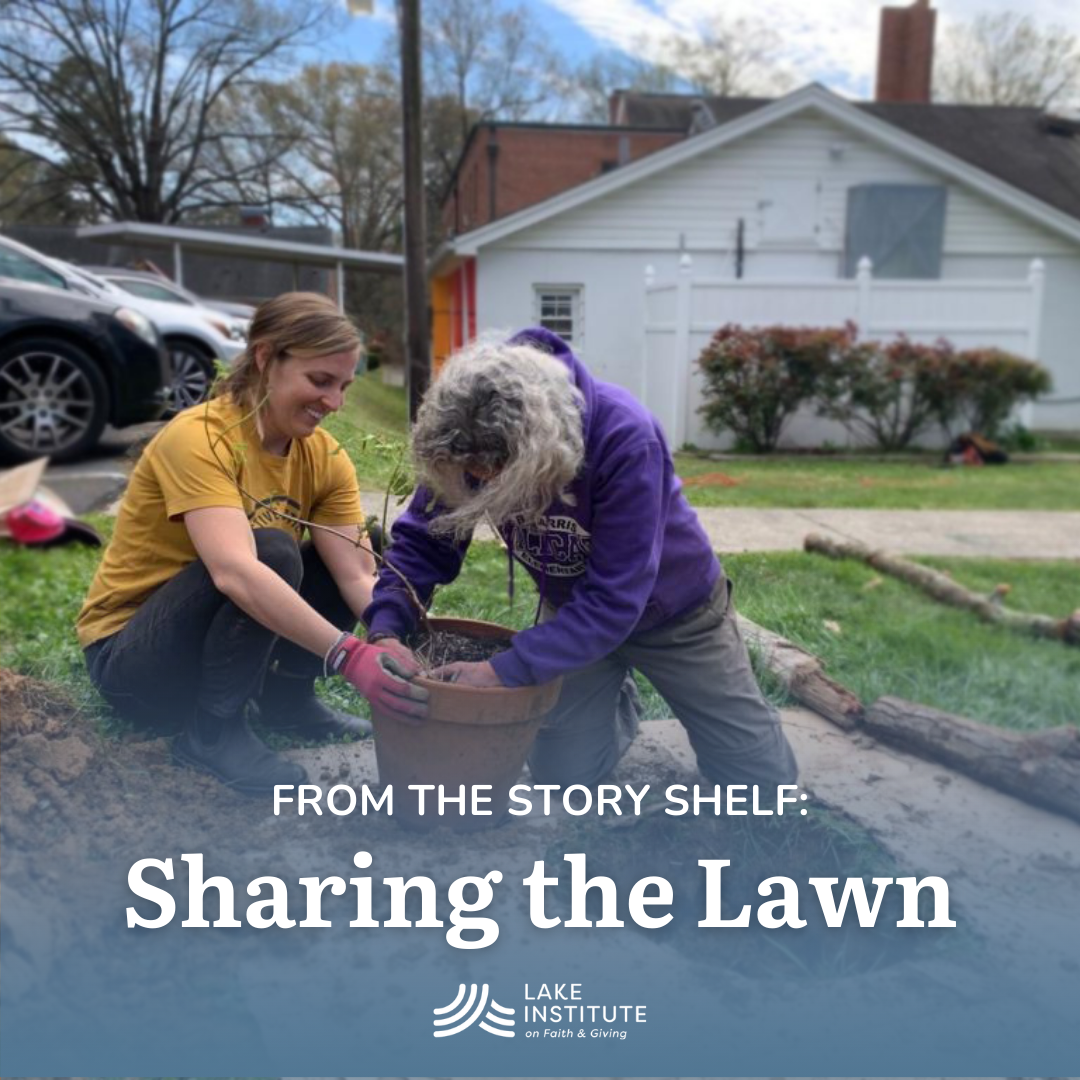
What began as simply allowing neighbors access to land became an opportunity to build relationships, trust, and mutual care across differences. By releasing exclusive control and embracing shared stewardship, this community in Durham, North Carolina, created new connections and strengthened its sense of belonging and generosity.
Subscribe
Insights is a bi-weekly e-newsletter for the religious community and fundraisers of faith-based organizations that provides:
- Reflections on important developments in the field of faith and giving
- Recommended books, studies and articles
- Upcoming Lake Institute events