

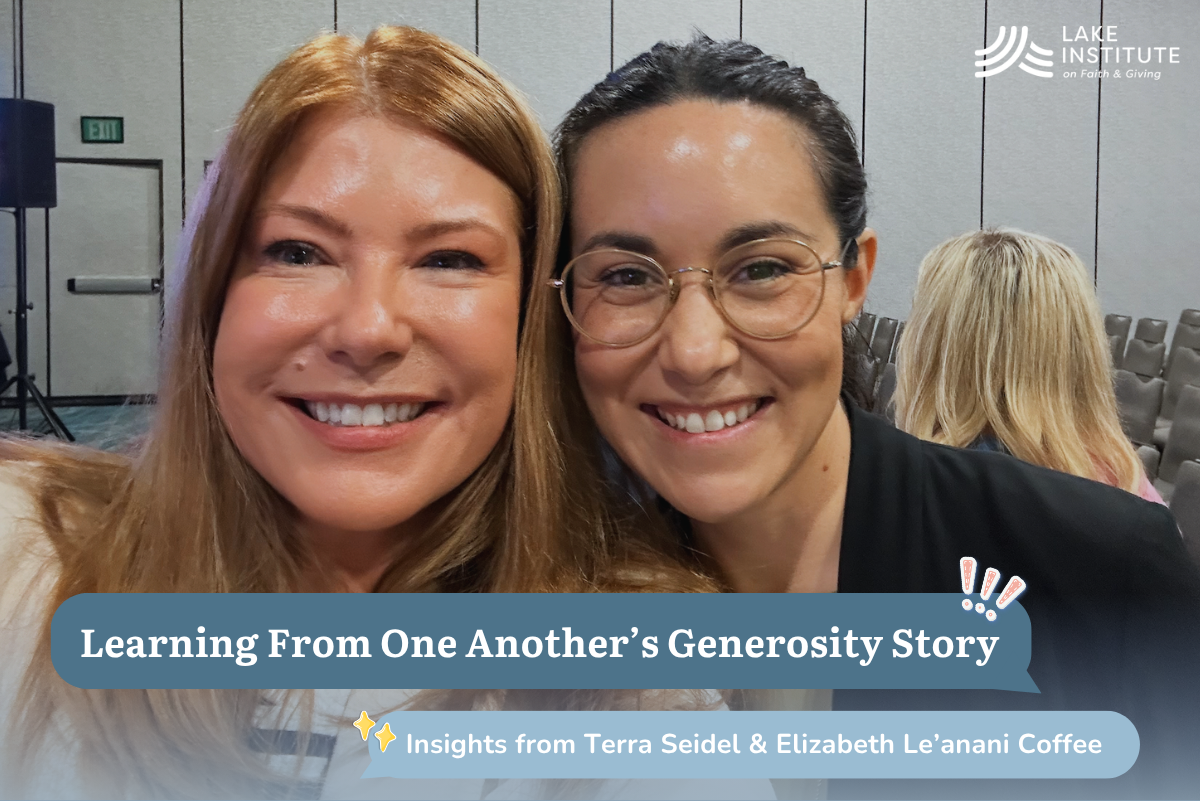
Learning From One Another’s Generosity Story
Learning From One Another’s Generosity Story
A Note From Lake
We are so grateful to partner with our friend and colleague, Terra Seidel, who invited Lake Institute on Faith & Giving to help lead the research behind Women, Wealth & Faith – a study commissioned by Women Doing Well to understand the giving habits of the Christian women they serve. While the perspectives shared in this article come from a particular Christian perspective, we hope these powerful stories of faith, wealth, and impact inform our larger Insights audience. We are deeply thankful for Terra’s initiative in raising this question and closing a real gap in our understanding of faith and philanthropy. We hope this piece sparks fresh, inspiring conversations across all of our faith communities. You can find the full study here.
By Terra Seidel, Doctoral Student & Catalyst for the Women, Wealth & Faith Research
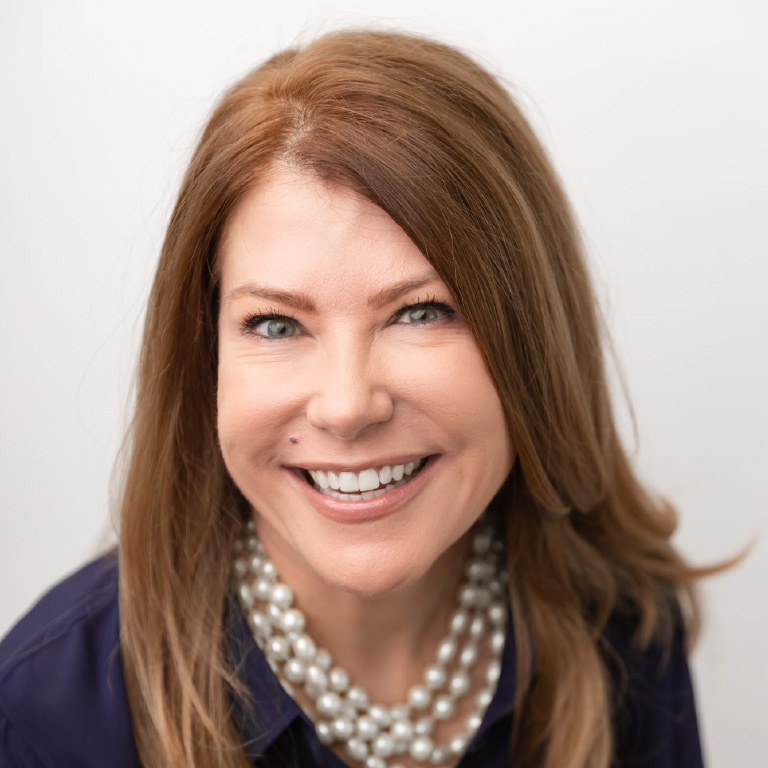
Recently I was talking with a friend about why, as people of faith, we need to keep learning from one another’s “best practices” in generosity – how we volunteer, how we give, and how we steward the resources God has entrusted to us. I found myself getting passionate, describing why it matters that women share what has actually worked in real life, and my friend smiled and said, “You’re a researcher at heart.” If the title of this article caught your attention and you’re still reading, there’s a good chance that the description fits you, too.
Two years ago, as I became more aware, through personal experience, of the tremendous rise of women as creators and inheritors of wealth, I went looking for research on Christian women and giving. I wanted to hear directly from my peers: What motivates “whole-hearted” generosity? What gets in the way? Do women who give through local community circles and women who unite nationally to support work around the world feel like they have a voice?
The more I looked, the clearer the gap became. So, I raised my hand and said I’d be willing to take on this project – with friends. I’m fortunate to call thought leaders in this space friends, and together we formed a consortium to listen to Christian women across the country. Number one on my list to be by my side were the experts at Lake Institute on Faith & Giving, whom you already know and trust. They did the heavy lifting for the Women, Wealth & Faith research study commissioned by Women Doing Well, and along the way, Erica Dollhopf, Ph.D. Associate Director of Research on the Lake team, has become my “soul sister”; we worked so closely together.
So, what do our friends and peers say? (Drum roll, please!)
From the very first wave of findings, one reality comes through loud and clear: Christian women are at the center of a historic shift in wealth and generosity.
The data confirms what many of us have sensed: Christian women are central to household generosity decisions. The majority actively participate in decisions about charitable giving, and many quietly play the leading role. At the same time, women report tension around giving within marriages and a strong preference for collaborative decision‑making, working together with spouses, family members, and trusted advisors.
Another strong signal from the research is that women increasingly seek values‑aligned relationships with financial advisors, ministry partners, and nonprofit leaders. They are not only asking, “How much should we give?” but also, “Does this partnership reflect our faith, our values, and our understanding of stewardship?”
One of the clearest themes emerging from the study is the role of confidence. Confidence in financial understanding, confidence in one’s sense of calling, and confidence in navigating complex decisions all show up as powerful predictors of generosity.
Women who feel confident about their financial understanding and their God‑given calling are far more likely to act on their desire to give, rather than keep that desire in the “someday” category. As women gain experience making giving decisions, their confidence and strategic clarity tend to grow, and with it, their generosity.
The hopeful news is that, across multiple studies, Christian women consistently show high levels of generosity in both time and financial giving, often exceeding national averages. KEY TAKEAWAY: The desire is already there; the opportunity is to help women move from good intentions to confident impact.
Remember that this research is only a beginning. My hope in initiating this project and in inviting Lake Institute to be the first group to join me is that we will keep learning together. The more we understand how Christian women experience calling and generosity, the better we can walk alongside them in stewarding God’s resources with wisdom.
Data like this is a gift, but it only becomes truly valuable when it is put into action and shapes the way we pray, plan, talk about money, and ultimately, give. Insights on women’s wealth and faith are not meant to sit on a shelf or live in a PDF; they are meant to inform real conversations in our faith communities and guide wiser decisions in our households. To inspire ministries to engage women more intentionally and collaboratively.
My hope is that these findings will encourage each of us to take at least one concrete next step, whether that means starting a conversation, joining a circle, revisiting a giving plan, or simply asking better questions about impact. After all, if this research has resonated with you, then perhaps, like me, you are a “researcher at heart,” eager not just to collect data but to turn what we’re learning into faithful, generous action.
Terra Seidel has devoted her career to advancing philanthropy, guided by a deep commitment to biblical generosity. What began as a personal calling has grown into a passion for bringing people together to create collective impact. She is dedicated to helping others discover and live out their own generosity stories. Currently pursuing a doctorate focused on the intersection of wealth and faith, Terra recently served as Project Director for the Women, Wealth & Faith research initiative, which explores the motivations and practices of Christian women’s generosity. As a member of one of the inaugural Executive Certificate in Religious Fundraising courses, Terra has remained actively engaged with the program for more than a decade, investing in the development of future faith-based fundraising leaders.
What Actually Moves Her to Give: Proximity, Trust, and Spiritual Practice
By Elizabeth Le’anani Coffee, Managing Director of Lake Institute on Faith & Giving

Terra’s essay captures something we at Lake have felt too. There’s real energy in hearing women name what actually moves them to give. Not in the abstract but in their own words.
Women, Wealth & Faith was commissioned by Women Doing Well to understand the audience of women they serve through their work. Commissioned research gives us opportunities to study a population at a deeper level than possible through our regular research. The survey we conducted for them was a representation of Christian women who are, on average, more affluent, more educated, and far more religiously engaged than the national norm. This is not a portrait of women donors broadly, or even of Christian women broadly. It’s a close look at an important, motivated segment. These are women with real resources and deep convictions. And like any other segment, they have their barriers to giving. So, money and faith don’t dissolve the tensions around finances and philanthropy. They just change their shape.
These women named that the barriers to giving more of their wealth away were not issues of knowledge or capacity (only 3% said they didn’t know how to give). The real barriers were trust, uncertainty, and fatigue from being asked too often. Not a lack of will. At the same time, what we learned breaks through these barriers isn’t more data or more solicitations; it is proximity to need and the nonprofits that serve. The key, then, was seeing where a gift actually lands. The giving habits that predict their generosity most strongly weren’t tied to income. For them, this looks like repeated disciplines of a life oriented around something larger than self: their Christian faith and Christian spiritual practices.
This study has been a reminder of where the real questions live for people of devout faith. Not in how much someone has, but in how much they trust the institutions and those around them, how close they stand to the need, and how deep their spiritual practice runs.
Fall 2026 ECRF Scholarships - Due Next Week
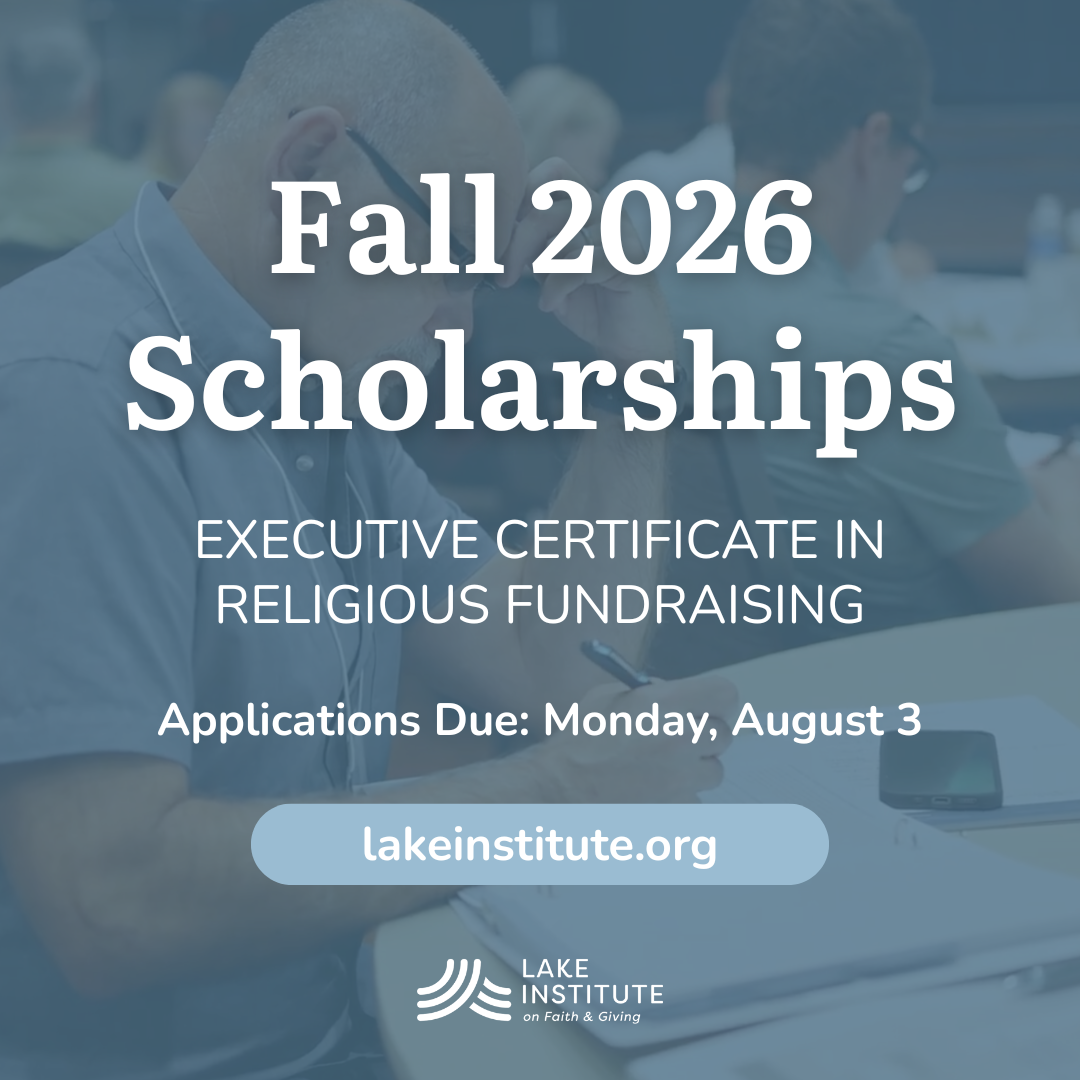
Executive Certificate in Religious Fundraising (ECRF) fall 2026 scholarship applications are still open! The Thomas H. Lake Scholarship provides $675 in financial support to help ECRF participants take part in this enriching experience. Ten scholarships are available for this scholarship cycle.
Applications are due next Monday, August 3, 2026. Applicants can expect to hear a decision from our team by the end of August.
Join Us for the 21st Annual Thomas H. Lake Lecture
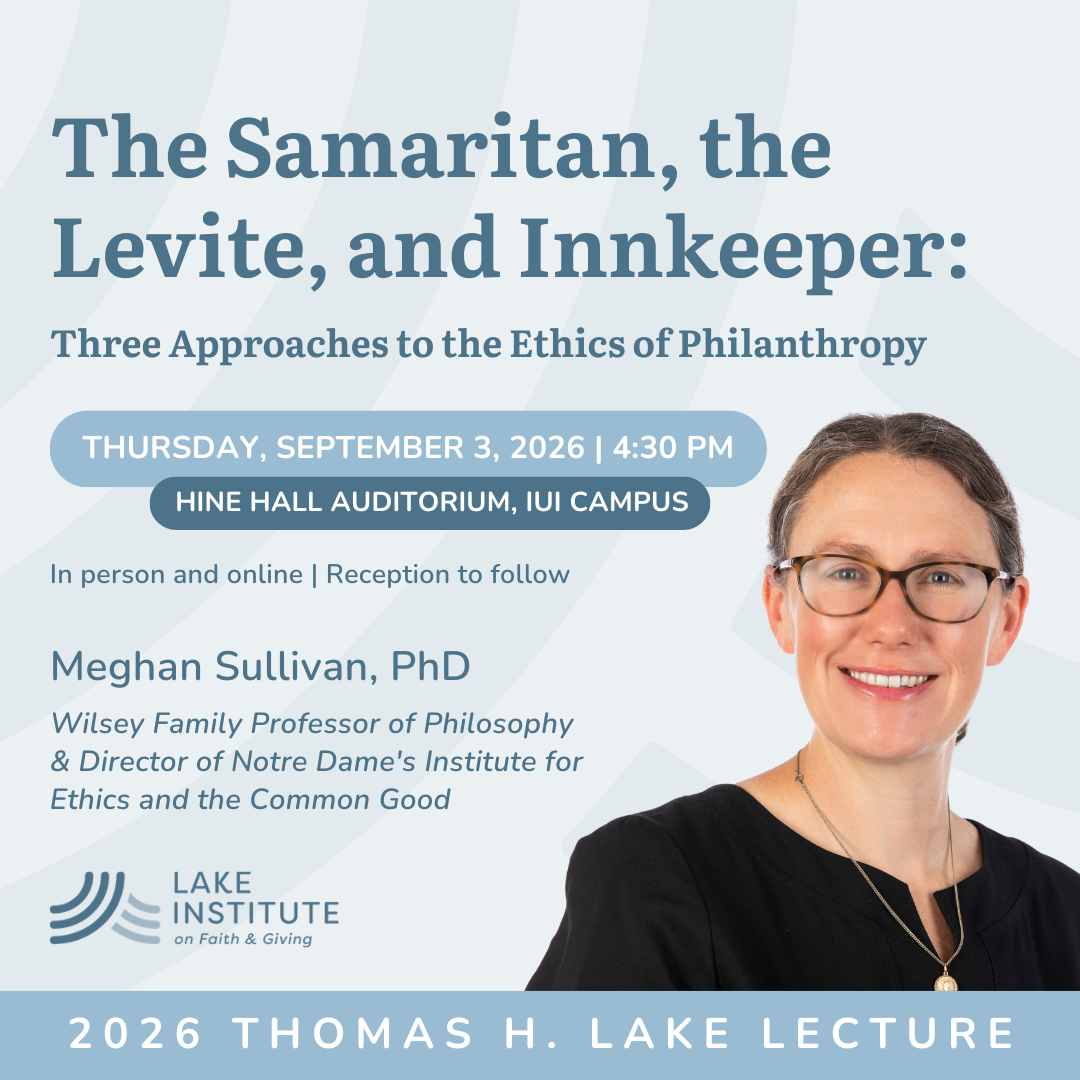
You’re invited to attend the 21st Annual Thomas H. Lake Lecture with Meghan Sullivan, PhD, on Thursday, September 3, 2026. During the lecture, we will dive into one of history’s most famous stories—the Parable of the Good Samaritan—and look at it through a fresh lens. We’ll explore the ethical frameworks embedded in the story and what it can teach us about different approaches to giving and caring for others. You’ll walk away with meaningful insights to help guide your own thinking about how we practice philanthropy today.
Subscribe
Insights is a bi-weekly e-newsletter for the religious community and fundraisers of faith-based organizations that provides:
- Reflections on important developments in the field of faith and giving
- Recommended books, studies and articles
- Upcoming Lake Institute events