
How Community Engagement Strengthens Faith
How Community Engagement Strengthens Faith
A Note from Lake Institute on Faith & Giving
Dr. Rebecca A. Glazier is a leading voice in encouraging congregations to engage their communities. In applying her expertise in research and practice, her findings are good news to both congregations and communities. We are excited to highlight her findings in our Insights newsletter this week. You’ll be glad to read what she has learned in over a decade of research on congregations and community below.
By Dr. Rebecca A. Glazier, Welfare and Self-Reliance Manager, The Church of Jesus Christ of Latter-day Saints
 At a time when many congregations are worried about declining attendance and increasing division, research from the Little Rock Congregations Study offers hopeful and practical insight. When congregations engage meaningfully in their communities, members are more likely to be happy, feel connected to God, and describe their congregation as a place that feels like family.
This finding challenges a common assumption in congregational life: that focusing outward will draw down already limited resources. After all, can you really risk joining the neighborhood cleanup on Saturday when you need your members to set up tables for the fish fry on Friday? Far from being a zero-sum game, community and congregational engagement are mutually reinforcing. That insight is not speculative. It emerges from more than a decade of listening carefully to congregations themselves.
Learning from Community
The Little Rock Congregations Study is a long-term, community-based research project. Researchers conducted thousands of surveys, hundreds of interviews, and seven in-depth case studies over 12+ years to better understand how congregations engage with their communities. The findings are described in the book, Faith and Community: How Engagement Strengthens Members, Places of Worship, and Society.
Congregations in the study partnered with nonprofits, worked with schools, hosted food pantries, participated in neighborhood events, and collaborated across faith lines. Their community engagement efforts varied depending on congregational resources, geographic location, and theology. But the strongest congregations shared a common feature: they got people outside the walls of their worship space and into the community.
The research reveals that community engagement produces benefits at multiple levels. It begins with individuals, strengthens congregations, and ultimately contributes to a healthier society.
Benefits for Individuals
Most immediately, individual people benefit from engagement. When people get to know and serve their neighbors, it leads to happier, healthier lives. Sometimes called the paradox of generosity, people who voluntarily give their time and money to help others consistently report higher levels of personal wellbeing.
Additionally, community engagement results in spiritual benefits. Engaged members are more likely to say they feel close to God and experience moments of deep spiritual peace. Engagement often takes the form of explicit service, providing opportunities for people of faith to put their beliefs into action. As one Christian leader in this multi-faith study put it, “I’ve seen the fruit of it. One of the greatest ways to develop as a follower of Jesus Christ is through serving people at the margins. It grows you up as a believer.”
These findings are especially important because of increased loneliness and social isolation in modern life. Community engagement makes life happier and more purposeful, creating opportunities for individual relationships and meaningful service contributions. Importantly, these individual benefits do not stay at the personal level—they reshape congregational life as well.
Benefits for Congregations
In addition to individual benefits, the research also shows significant benefits flowing to places of worship themselves. Community engagement is positively associated with more frequent worship service attendance, in part because engaged congregations foster a more welcoming and friendly culture. Members of engagement congregations are more likely to say their congregation feels like a family and that they would invite others to attend.
One powerful way congregations build this kind of warmth is by serving together; more than any trust fall or ropes course, shared service unites members around a common purpose. As one member put it, “You develop a camaraderie because you are working towards the same goal; you become like family. He becomes like my dad, working alongside me. She becomes like my sister, passing out clothes. He becomes like my brother, bringing supplies in. So, that develops a bond that can’t be broken.”
Perhaps most important for congregation leaders and professionals, community engagement reshapes how people think about giving. In engaged congregations, generosity is more likely to be understood as participation in a shared mission rather than simply putting money in the virtual or physical collection plate.
Building a warmer congregational culture through community engagement should be a core mission for many congregations. Doing so makes congregations more likely to retain members, deepen investment, and sustain attendance over time. Engagement is not an added burden. It is part of the solution to the many challenges facing institutions of faith today. When these individual and congregational dynamics are repeated across communities, their effects extend well beyond any single place of worship.
Benefits for Society
Finally, these benefits aggregate up to improve society at large. Not only do engaged congregations provide direct benefits to people in need in their communities, they also help make democracy stronger. People who are engaged in their communities feel a greater sense of political efficacy—they feel like their voice matters. This makes them less jaded and disengaged. They are more likely to vote, to help others, and to feel connected to people beyond their immediate social circles. In short, they are building social capital.
These kinds of connections are especially critical at a time when trust in institutions is low and social fragmentation is high. When people serve alongside others who may be different from them, it becomes harder to reduce one another to stereotypes. Shared service creates opportunities for empathy and understanding that are increasingly rare in other parts of public life.
Where Congregations Can Start
Because every congregation is unique, community engagement will look different at different places of worship. As a social scientist, I can’t help suggesting that congregations begin by listening to their members. Members are more likely to care about—and commit to—efforts they are personally invested in.
When it comes to starting community engagement projects, lay leaders are often essential. Especially in the early stages, having a committed champion can make all the difference. At the same time, clergy play a critical role in naming the religious imperative behind engagement. Whether it is action on immigration grounded in caring for the stranger, racial justice work motivated by seeing the image of God in all people, or foster care ministries based in a desire to help the most vulnerable and innocent, clergy help connect service to faith.
Finally, partnerships matter—especially for smaller congregations. Collaboration allows congregations to share resources and burdens. As one Little Rock congregation explained when describing its partnership with a different faith: “We had the facility. They had the volunteers. Together, it worked.”
A Way Forward
Community engagement is one way congregations can help their members, strengthen their institutions, and contribute to a healthier society. Evidence from the Little Rock Congregations Study clearly shows benefits in all three areas. At a time of fragmentation and declining attendance, community engagement is not just a strategy—it is a source of renewal rooted in faith.
Dr. Rebecca A. Glazier is an advocate for and practitioner of faith-based community engagement. She received her PhD from the University of California, Santa Barbara and taught for 16 years as a political science professor in the School of Public Affairs at the University of Arkansas at Little Rock. Rebecca is the author of over thirty academic articles and two books, including: Faith and Community: How Engagement Strengthens Members, Places of Worship, and Society. In September 2025, Rebecca began a new role as a Welfare and Self-Reliance Manager for The Church of Jesus Christ of Latter-day Saints.
From Scarcity to Abundance: Rethinking Congregational Engagement
By David P. King, PhD, Karen Lake Buttrey Director and Associate Professor, Philanthropic Studies

When it comes to congregations and communities, Lake Institute has consistently advocated for the role that faith plays in community engagement. In our last Insights issue we highlighted the role that faith plays in service and the role of bridgebuilding. This past week in Indianapolis we were privileged to hear from Habitat for Humanity International CEO Jonathan Reckford on the role that faith plays in building homes, communities, and hope.
In all our research, teaching, and convening, Lake Institute has been clear: faith matters for generosity, democracy, and the flourishing of our local communities. But it is essential to note that this is a mutually beneficial relationship. Congregations that are engaged in their communities also experience that the institutions themselves, their individual members, and society at large benefit as well!
Too often religious leaders feel that they are confronted with stark either/or choices: compelled to focus on maintaining internal support versus extending their reach beyond their walls into their communities. Yet Glazier’s research matches what the theological and sociological instincts of most religious leaders know to be true. In fact, we are not facing a binary choice between the spiritual or material, inside or outside, self-preservation or self-sacrifice. Instead, these questions are often interconnected and mutually beneficial. Increased community engagement is good for individuals, congregations, and societies across multiple measures. Viewing these questions through the lens of abundance over scarcity, engaged congregations may not only help themselves, but they may also play an increasingly vital role in the overall health of our communities.
Questions: For religious leaders, how might you make this case in your communities? How might shifting our focus from inside the walls of the congregation to beyond help refine or renarrate our essential mission in the story that we tell?
Video Replay: Building Homes, Communities, and Hope
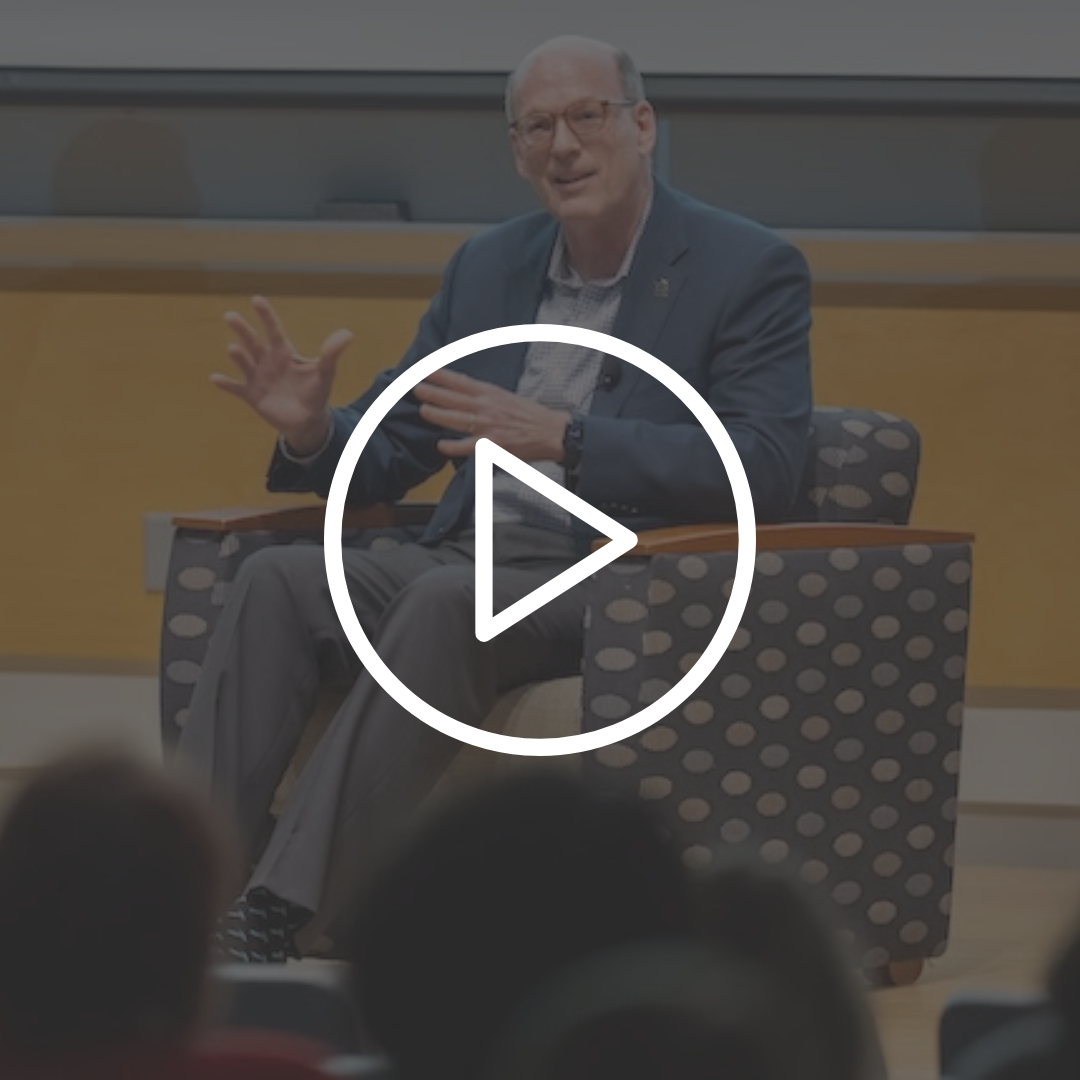
Thank you to everyone who joined us for our 2026 Distinguished Visitor event with Jonathan Reckford, CEO of Habitat for Humanity International. During the event, David P. King, PhD, facilitated a meaningful conversation exploring faith, leadership, and global impact.
The full recording is now available online!
ECRF Spring 2026 Cohort

Grow your skills and deepen your impact with the Executive Certificate in Religious Fundraising (ECRF) eight-week online course this spring! You’ll explore the spirituality and practice of fundraising, learn research-based tools and strategies unique to religious communities, and complete a practical application project to bring these insights to life in your ministry.
Registration for the April 2026 online cohort is still open. Secure your spot today!
Subscribe
Insights is a bi-weekly e-newsletter for the religious community and fundraisers of faith-based organizations that provides:
- Reflections on important developments in the field of faith and giving
- Recommended books, studies and articles
- Upcoming Lake Institute events