

Loving Attention: The Good Samaritan and Philanthropic Ethics
Loving Attention: The Good Samaritan and Philanthropic Ethics
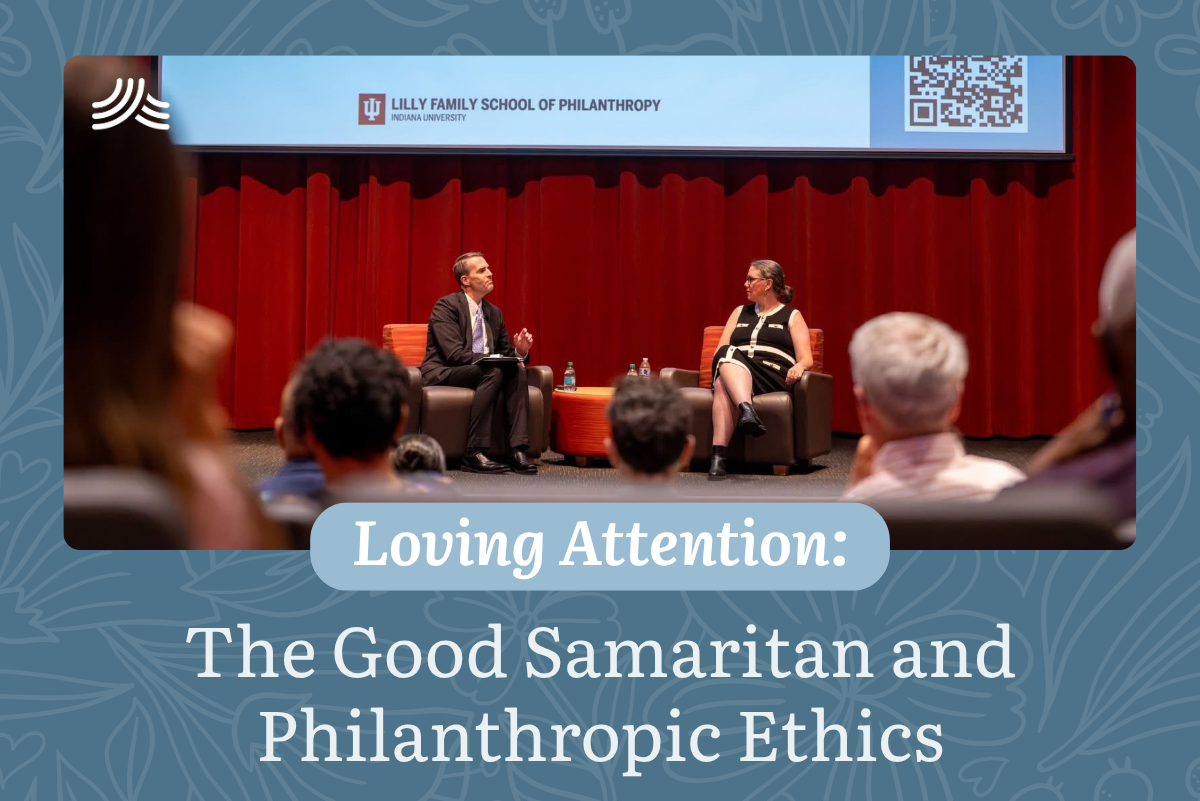
By David P. King, PhD, Karen Lake Buttrey Director and Associate Professor, Philanthropic Studies
 In our current political and cultural climate, one of the most common requests we hear is a call for civility. And civility is by all accounts admirable, even vital, for any effective civil society and for healthy public debate. Yet, for Professor Meghan Sullivan, civility itself is by no means enough. It’s a second-order virtue – productive and perhaps necessary in a pluralistic and democratic society – but it falls short of the depth of activity and attention able to transform a person, a relationship, and a community. For Sullivan, that power is reserved for nothing short of love.
In our twenty-first Thomas H. Lake lecture, noted University of Notre Dame philosopher Meghan Sullivan sought to apply that love ethic to philanthropy through one of history’s most famous stories: The Parable of the Good Samaritan. Taking her cue from St. Ignatius of Loyola and Ignatian spirituality, in Sullivan’s powerful retelling and examination of the story, she invited the audience to imagine themselves as each character within the story – from the Samaritan and wounded man, to the Levite and priest, and even the innkeeper as well.
Through the lens of the Samaritan, Sullivan unpacked what we might see as philanthropy embodied through loving attention. The Samaritan was attentive to the wounded man, setting aside stereotypes, differences, and his own desires to tend to the man’s present needs. He made himself vulnerable to focus on the person right in front of him. As Sullivan described, this was no abstract love of all humanity, or an emotive touchy-feely love, but rather a love that you could feel in your guts – focused and intense even if it could be messy. And that love continued, as the Samaritan carried the wounded man to the nearest inn, attending to his every need that night, and making arrangements at his own expense to ensure his attentive care continued through the innkeeper.
How does that translate to philanthropy? Sullivan was keen to point out that attention and connection matters. Your philanthropy (literally the love of humanity) is not simply designated for family, friends, and those of your tribe. The parable is clear that in considering who is your neighbor, connection and vulnerability matter. That may mean proximity invites you to help a neighbor next door, but it might also mean connecting with someone around the world. Connection modeled through attention and mutual vulnerability serves as a guide. In essence, philanthropy costs us something more than the time we volunteer or the dollars we give.
Sullivan contrasted this form of philanthropy with a second form encapsulated in the school of “effective altruism.” In her imaginative retelling (again worth watching in full), Sullivan considers how the Levite and priest could illustrate this modern approach. Sullivan consents that the intentions of effective altruists are good. They are prioritizing efforts to do the most good for the greatest number of people, and they want to be able to measure that impact, compare their options, and rationally make decisions that aren’t overwhelmed by emotions, personal passions, or particular connections. It is by nature, less personal, proximate, and perhaps less driven by connection, attention, and vulnerability. Such an approach has gained a solid following as many philanthropic-minded individuals truly want to make the greatest difference they can with the resources they have.
In contrast, Sullivan proposes what she calls “affective altruism” that prioritizes the connection, vulnerability, and attention she developed in the love ethic of the Samaritan. While impact is important, she highlights practical wisdom over optimization, particularity and a connection with the recipient over detachment. As a virtue, philanthropy driven by love is not simply good for others, it is also deepened, developed, and beneficial for the giver as well. As we so often teach at Lake Institute, generosity is a learned character trait, a moral virtue, that must be regularly practiced. Generosity is not just for the few of us blessed with abundant resources, it’s a virtue that all of us can practice. Just as all of us are recipients of gifts, so too can we be philanthropists. And often the relationships and connections we develop as we give and receive is where that love ethic is sharpened.
Finally, Sullivan offered us encouragement by celebrating the innkeepers in our midst. For so many of us who have given much of our lives working for congregations, nonprofits, and civic organizations, Sullivan’s attention to the necessary role that innkeepers play was a welcome word. To be clear, Sullivan is not naïve to what she is calling us toward. This love ethic, this way of living generously, is not easy. To make space for the attention and support necessary to attend and connect with others amidst the harried nature of our lives with our personal goals and with society often incentivizing different ends, we need institutions, leaders, and communities of support. We need guides, models, and places of empowerment where there is built-in and well-earned trust when we get it wrong or we need additional help.
We left the lecture with much to chew on. What would the philanthropic sector look like if we more often sought to embody this love ethic or “affective altruism”? How do our institutions and innkeepers help to shape a particular ethic or ethos of philanthropy? At the same time, how are we ensuring as a sector that we are also caring for the innkeepers among us in their vital work?
Yet, we also all left encouraged, knowing the power that philanthropy – the love of humanity – holds for shaping society and shaping our own individual lives is powerful. Perhaps in the rekindling of philanthropy’s roots in love and attention, we can find the secret to a good life and a particular path to building flourishing lives and a flourishing world together.
Exploring the Good Life
Q&A with Dr. David Craig, Professor of Religious Studies, IU Indianapolis, and David P. King, PhD, Karen Lake Buttrey Director and Associate Professor, Philanthropic Studies
 Alongside our public Thomas H. Lake lecture, Professor Meghan Sullivan also met with IU Indianapolis faculty colleagues as we consider how best to engage questions of human flourishing with our students in the classroom. Dr. Sullivan has helped to pioneer and teach a course at the University of Notre Dame on God and the Good Life enrolling thousands of undergraduates. Along with her colleague Paul Blaschko, she has written a popular philosophical introduction to these questions, The Good Life Method. She has helped to connect colleagues across the country engaged in teaching courses that center meaning-making and the good life across college campuses.
Our IU Indianapolis colleague and former Lake chairholder, Dr. David Craig, is piloting a version of such a course at IU Indianapolis this fall. His course, “Global Traditions and the Good Life,” is fully subscribed with undergraduates excited to tackle these questions. In setting the stage for his course, he opens: “According to Aristotle, young students cannot benefit from studying the good life because they are lacking in life experiences and their passions chase too many objects.”¹ Craig’s course invites students to prove Aristotle wrong as the class together seeks to imagine what living well means personally and professionally through contrasting accounts of good lives from traditions around the globe and diverse communities.
David King invited David Craig to reflect on what he heard from Prof. Sullivan as well as the initial reception from his IUI course.
David King (DK): How are you seeking to invite undergraduate students to reflect on the good life?
David Craig (DC): Today, we might often associate the “good life” with celebrity, leisure, or riches, especially as images flash across our social media feeds and catchy beats jangle in our earbuds. In our course, we are intentionally analyzing how social media and music celebrate the real attractions of fame, pleasure, money, and more. In reflecting on popular culture, students bring their expertise. As a counterpoint, the course offers contrasting accounts of good lives from traditions around the globe and diverse communities, whether discussing family and honor in scenes from The Godfather or an account of the “bourgeois virtues” fostered in capitalist societies.
DK: Global traditions of the good life presuppose different sets of virtues needed to live well. What have you found as ways into these discussions with students across a diverse set of faith and cultural traditions?
DC: I find that stories of moral exemplars help students appreciate how journeying to a good life takes a moral compass oriented by various virtues. Confucius compared the Dao (“the Way”) to the North Star, around which virtues revolve like stars. Mohandas Gandhi explored how his practice of ahimsa (“nonviolence”) built from an array of virtues. He cultivated fearlessness through non-possession of things. He combined Satyagraha (“holding onto truth”) with tolerance for other people’s ideas of a Truth beyond human comprehension. Students can compare their own moral compass to these exemplars’ compasses.
DK: At Lake Institute, we are often thinking of generosity as a virtue that is developed through practice. How might generosity fit within the notions of the good life that you are exploring this semester?
DC: We are reading Ingrid Mattson’s 2010 Thomas H. Lake Lecture, “Zakat in America: The Evolving Role of Islamic Charity in Community Cohesion.” Dr. Mattson describes the emotional dimensions and spiritual intent of this giving practice as Muslims cultivate gratitude for Allah’s gifts, steward their resources, and strengthen social ties. Her account helps students explore how they practice generosity in their communities.
DK: Professor Sullivan’s Lake lecture on the Good Samaritan returned to themes of caring for one’s neighbor. Within your work that has focused on the common good, where might notions of community or neighborliness fit into conceptions of the good life?
DC: My first book explored ethical consumption and the common good (John Ruskin and the Ethics of Consumption). Christian ethicist James Nash celebrates how these themes connected historically in Protestant traditions of a frugal life. In contrast to cultural associations of frugality with stinginess or penny-pinching, the virtue of frugality connects etymologically with “fruitfulness.” By being disciplined in consuming well, we can invest our energies and resources more in goods shared with neighbors while protecting environmental conditions that sustain other communities. Frugality helps practice more abundant living.
DK: You’ve taught hundreds of students at IU Indianapolis in your career, but I know you have also worked alongside countless number of nonprofit and civic leaders in your teaching and research as well. What lesson or message would you take from your course that is most applicable for practitioners at this moment?
DC: Community wellbeing is under threat in many ways. My current research focuses on Medicaid policy, as more than 1 in 5 Hoosiers on Medicaid have lost their coverage since the start of the most recent gubernatorial administration. In class, we read Black feminist theology scholar Melanie Harris who places community wellbeing at the center of a Womanist tradition. The same conviction found in scholarship also inspires the work of many community partners, including local Indianapolis Crossroads AME Church and their efforts to improve social determinants of health in local neighborhoods. As a Crossroads member put it, “Communal responsibility is the heart of African-American communities.“ How might centering communal wellbeing in a good life generate new ways to meet human needs and nurture civic trust?
¹Aristotle, Nicomachean Ethics, W.D. Ross, trans., 1.3: https://classics.mit.edu/Aristotle/nicomachaen.html
Are You Interested in Learning About Faith-Based Capital Campaigns?
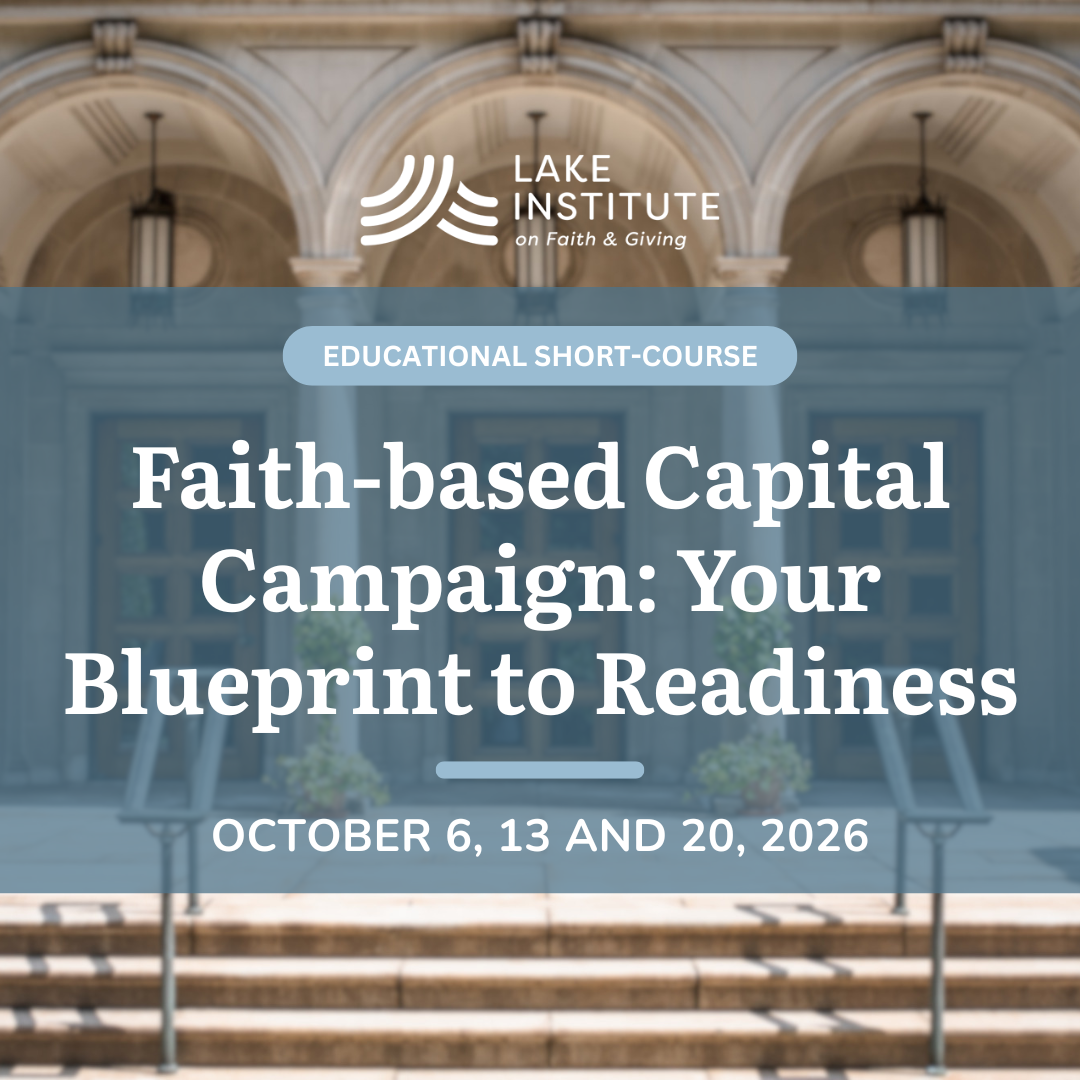
Our “Faith-based Capital Campaign: Your Blueprint to Readiness” course is designed to guide you through the discernment process: how do you set a financial goal, determine whether to engage an expert or consultant, and develop a campaign rooted in the vision of your community.
Join us to explore how you can align your capital campaign with the mission of your organization and inspire meaningful giving. The online learning platform opens Tuesday, September 29; the first plenary session is Tuesday, October 6.
Watch the 2026 Lake Lecture Replay
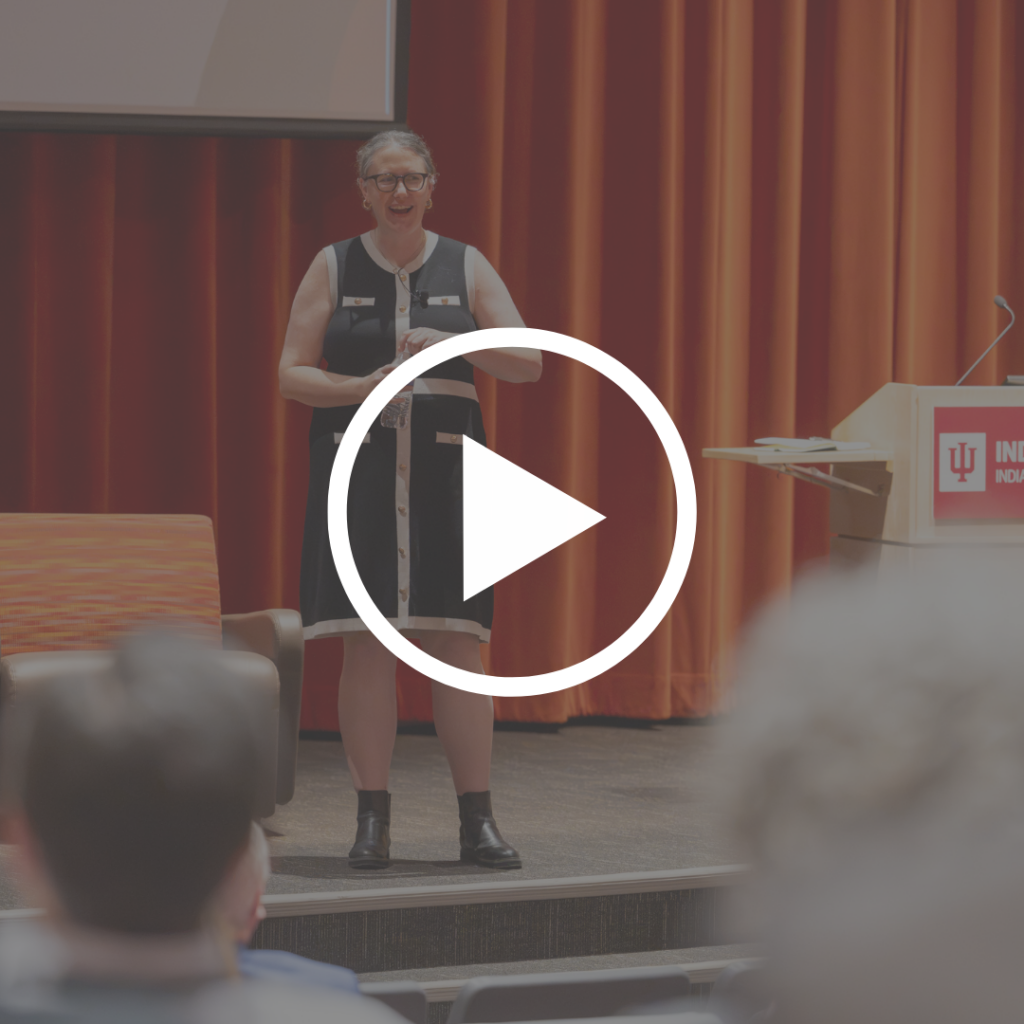
Meghan Sullivan, PhD, dove into one of history’s most famous stories—the Parable of the Good Samaritan—and looked at it through a fresh lens. Explore the ethical frameworks embedded in the story and learn how you can apply key principles to giving and caring for others.
Subscribe
Insights is a bi-weekly e-newsletter for the religious community and fundraisers of faith-based organizations that provides:
- Reflections on important developments in the field of faith and giving
- Recommended books, studies and articles
- Upcoming Lake Institute events