
Hotdogs with a Higher Purpose
Hotdogs with a Higher Purpose
By Ray Marcano
In Bristol, Virginia, hot dogs are more than one of America’s favorite foods.
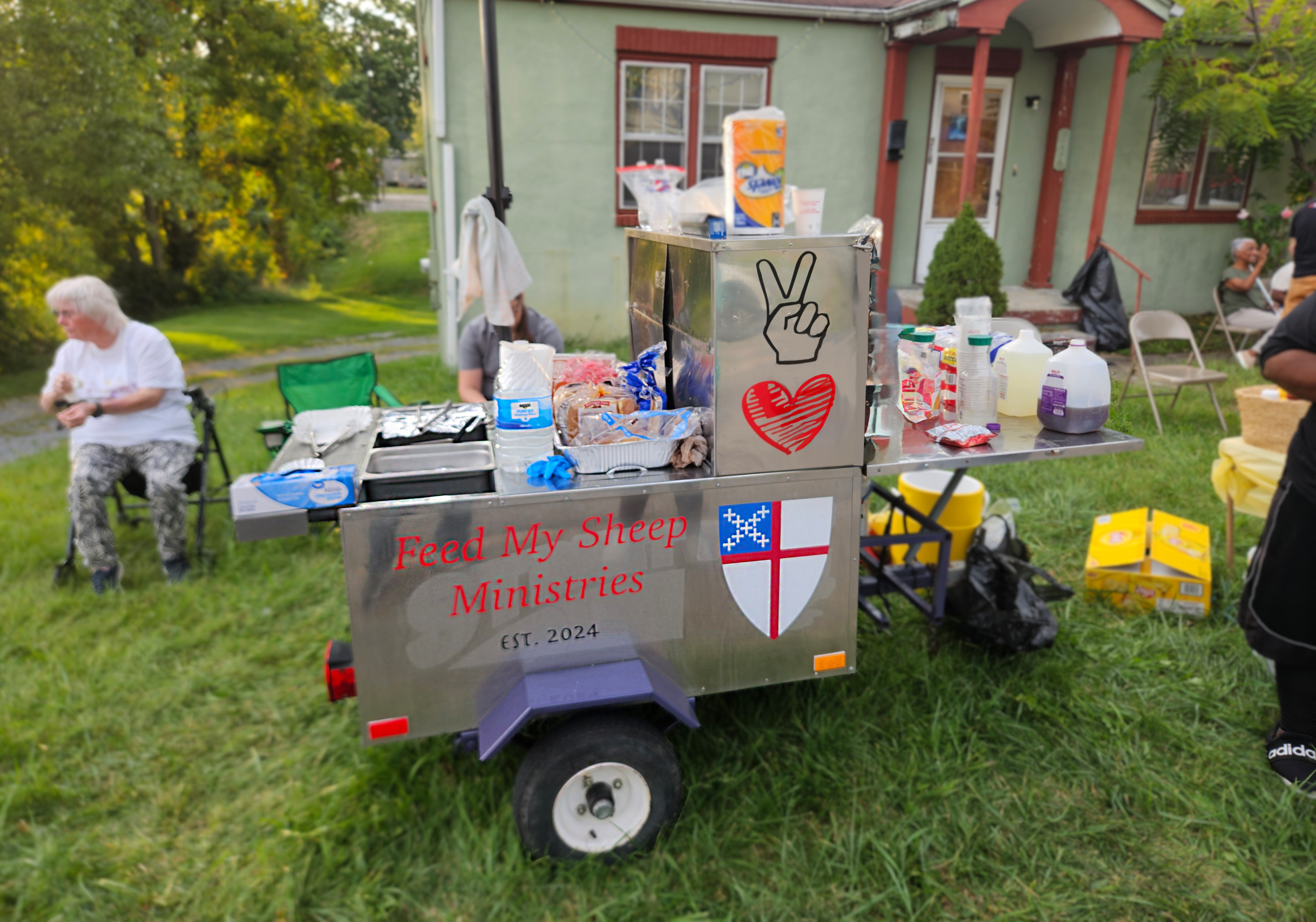
The Emmanuel Episcopal Church, under the leadership of The Rev. Dr. David L. Bridges, purchased a hot dog cart last year to feed the unhoused population.
He asked a parishioner, who happened to be homeless, how he and the church could help the community. “Well,” the parishioner said, “everybody needs to eat, and living on the street, it’s tough to eat.”
Dr. Bridges became the church pastor in May 2024 and began looking at ways to connect with the community. Another parishioner recommended a program he called “Feed My Sheep,” which would bring food to those in need. Dr. Bridges looked into buying a food truck, but spending $50,000 on a vehicle and paying for ongoing costs was too big of an expense.
Then, true to the saying that “God works in mysterious ways,” one day Dr. Bridges saw a car pulling a hot dog cart and thought—that’s how we get food to the people. He raised $4,500 and purchased a cart from a social media site.
The hot dog cart idea was a paradigm shift. Instead of asking people to go to a church for food, the church would bring food to the people.
“We started out going down by the public library on Wednesdays in the winter, because a lot of the unhoused people hang out there. And so we’d feed them there and then go over to city park for the same thing, just to feed whoever’s out there.”
But it’s gotten harder for the church to do its work. The city made it illegal for the homeless to stay in certain areas, so the hot dog cart has only gone out once this year. The new rules have forced the unhoused into a wooded section away from downtown. Dr. Bridges said he’s thinking through how to get them food without giving away their location.
Feeding those in need matches with the church’s mission.
“In our baptismal covenant, we agree to uphold the dignity of every human being and to meet the needs of the needy among us as best we can,” Dr. Bridges said.” Our covenant makes us responsible for our neighbors, those around us, and this is one way of showing people that this is who we are. We’re followers of Christ who said, ‘Feed my sheep,’ and that’s why we’re here. No agenda, no cost, no obligation.”
As with any new venture, there’s risk. “Perhaps the risk is that no one would show up. But I knew that wasn’t going to be the case. Maybe people feel that there’s a little bit of risk in trying to join people together, especially across racial barriers.”
His partnership with AME Pastor The Rev. Dr. William Ward, a Black man, has gone a long way toward showing the community that people of different backgrounds can love and care for each other. “We spend as much time together in public as we can, because people need to see us in public,” Dr. Bridges said.
Now, Dr. Bridges has his sights set on other community projects.
Dr. Bridges and Dr. Ward held a community block party with food and prayer, but more importantly, “We displayed unity, that we were all one family, not here with an agenda,” but to “be in community.” He asked himself, “What can we do?” The answer: “We can do this more often,” and he’s working on a plan to do so.
They want to reopen a now-closed AME Church as a community gathering spot that can help meet the needs of a community with a declining population, rising poverty, and a tough job market.
“I think that since the building is debt-free, we can join together and do this, and I think we can get grant monies to do it,” Dr. Bridges said.
I bet they’ll have hot dogs.
This story is part of Lake Institute’s story collection, the Faithful Generosity Story Shelf, which highlights congregations and other religious organizations who have sought to use their assets and resources in creative—and sometimes surprising—ways as an expression of faithful giving.
Each entry in our Story Shelf is short enough to be read and discussed during a committee meeting or other group gathering. Our hope is that these accessible vignettes will spark new questions, conversation, and imagination among clergy and laity about what might be possible with the funds, buildings, land, and other resources in their care. If you know a story that should be included in the Story Shelf, suggest it here.
Subscribe
Insights is a bi-weekly e-newsletter for the religious community and fundraisers of faith-based organizations that provides:
- Reflections on important developments in the field of faith and giving
- Recommended books, studies and articles
- Upcoming Lake Institute events