

Redefining Philanthropy: Voices from the Next Generation
Redefining Philanthropy: Voices from the Next Generation
A Note From Lake Institute
Lake Institute on Faith & Giving is deeply connected to the IU Lilly Family School of Philanthropy (LFSOP), where everyone from first-year students to established leaders explores what it means to practice generosity in today’s world.
We asked several LFSOP students how their studies and work with Lake Institute have shaped their understanding of faith and giving, and what questions they’re carrying into their future in philanthropy. Their responses reflect a wide range of experiences, from those just beginning their journeys to those building on years of work in their communities. Together, they offer a powerful glimpse into how the next generation of philanthropic leaders is reimagining the field.
It is a privilege for Lake Institute to walk alongside these students, and we’re grateful to share their perspectives with you.
By Lilly Family School of Philanthropy students, Kelin Peraza-Argueta, Elizabeth Greene, Muaz Ibrahim, and Robert Rueda
Kelin Peraza-Argueta

My work with Lake has really shaped how I think about philanthropy and who it belongs to. I feel like a lot of times we talk about philanthropy in a very institutional way that centers wealth and people like Carnegie and Rockefeller. However, through my experience with Lake, I have been reminded that philanthropy has always existed in everyday communities, even if it has not always been recognized that way.
For me, some of my earliest experiences with giving came from my family and from growing up Catholic. I remember going to mass and my mom handing me a few dollars to put into the collection tray. Even though at the time I did not recognize it as philanthropy, I now recognize it as one of my first introductions to giving. In faith spaces, you learn that we are all equal in the eyes of God and that everyone has something to give, no matter how big or small or where they come from. I think that brings philanthropy back to its roots, to its literal meaning as the love of humanity. Continue reading Kelin’s response.
Elizabeth Greene
 Because I’m pursuing my master’s at the IU Lilly Family School of Philanthropy, I’ve been afforded many opportunities to explore the ways faith and generosity intersect. I am grateful for these chances because I’m the Grants Officer at a faith-based nonprofit serving individuals and families fleeing domestic violence. During my offsite internship last fall, for example, I compared the ways nonprofits use language and images to depict their current and prospective clients on their websites and in online appeals. My study included 16 Midwestern nonprofits (eight are faith-based) that offer emergency shelter and/or supportive services to people experiencing homelessness, including those fleeing domestic violence. I now view this as a pressing concern because I was incredibly disappointed with a lot of the faith-based organizations’ materials. Continue reading Elizabeth’s response.
Muaz Ibrahim
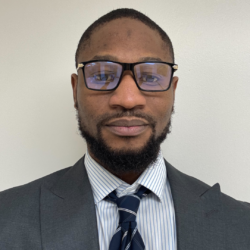 My studies at the Lilly Family School of Philanthropy have provided an important intellectual bridge between my longstanding commitment to faith leadership and my growing scholarly interest in structured systems of giving.
As an Imam and community practitioner engaged in pastoral care, social development initiatives, and faith-based community organizing, I have always witnessed the transformative power of religious generosity at the grassroots level. However, my academic formation has enabled me to interpret these experiences through analytical, historical, and policy-oriented lenses. This has helped me understand faith-inspired giving not only as a devotional act but also as a sophisticated social institution capable of shaping civic life, strengthening social capital, and advancing human development. Continue reading Muaz’s response.
Robert Rueda
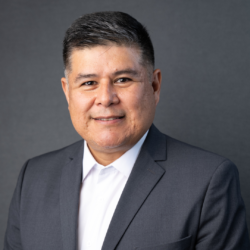 My path to the School of Philanthropy began not in a classroom but on the Texas-Mexico border, where I have spent over two decades walking alongside Latino young adults and their faith congregations. What I observed was the start of a journey of exploring philanthropy through my context: communities practicing extraordinary generosity, sharing food, pooling resources, caring for neighbors, yet often seen as recipients of generosity but not key actors. The disconnect between what I witnessed and what the sector measured sent me looking for a better framework.
My studies have given me language for what I always sensed was true. Philanthropy, at its core, is love and care for humanity, expressed in multiple ways across contexts and intended to lift others up and support their well-being. Continue reading Robert’s response.
Cultivating Philanthropy at LFSOP
By Anthony L. Heaven, PhD, Assistant Professor of Philanthropic Studies, IU Indianapolis Lilly Family School of Philanthropy
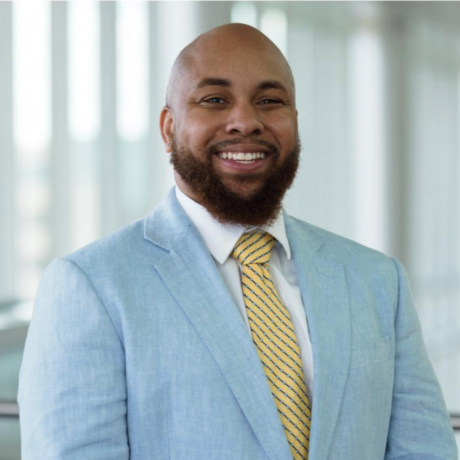 The Lilly Family School of Philanthropy is, in many ways, a space cultivated by a variety of faith and spiritual traditions. Students do not arrive with a single shared understanding of their beliefs. Instead, they bring distinct moral lenses, religious commitments, and, at times, skepticism toward organized religion. What emerges in the classroom is not consensus but intellectual, spiritual, and moral collaboration.
This is especially evident in my undergraduate courses. When students design and implement funding campaigns, their choices are rarely random. Some are drawn to religious nonprofits that reflect their own traditions or communities. Others focus on youth development or organizations serving those experiencing marginalization and hardship. While these decisions are not always explicitly framed in theological terms, their underlying motivations often reflect deeply held beliefs about care, responsibility, and human dignity.
At the graduate level, this work is further developed. Students engaging philanthropy through ethical analysis ask questions about the role of faith in shaping giving and justice. They examine how religious affiliation is defined and whether those definitions should be broadened as they pertain to the support of religious organizations. They interrogate the persistent underfunding of Black faith‑based organizations despite their long‑standing impact in the United States. Students also explore how culturally rooted and faith‑informed frameworks shape philanthropic practice in ways that are often overlooked in mainstream discourse, including why dominant narratives of religious giving tend to privilege financial contributions. Their work grapples with the tensions between mainstream perspectives and culturally grounded approaches, many of which are rooted in faith and spiritual values.
Across these examples, there is a shared phenomenon: students’ belief systems, whether consciously articulated or not, help propel the good they seek to do in the world. These beliefs inform their decisions to pursue education and careers in philanthropy. They shape the questions students ask, the research they conduct, and the organizations they choose to support with their time, talent, and treasure. They also influence how students understand and advocate for justice within the field.
I am reminded of Rev. Dr. Willie Jennings’s* reflections on remaking the commons and forming a moral imagination for philanthropy rooted in place. In this sense, the School functions much like a garden. It nourishes a diverse community of students, staff, faculty, and community members. Though we come from different faiths and belief systems, we share in what is cultivated here: community, knowledge, and a commitment to a life of impact.
*Dr. Heaven is referencing our 20th Annual Thomas H. Lake Lecture with Dr. Willie Jennings in 2025.
Introduction to Grantwriting for Faith Leaders

Lake Institute on Faith & Giving is offering an online short course in August 2026 that will provide faith leaders with an introduction to grantwriting.
Participants will learn the role grant funding can play in your organization’s approach to resources, learn about basic fundraising tools from the perspective of grant funding, and receive practical tools and strategies to find and successfully write grants.
REGISTER TODAY
Recent News & Blog

Step into the story of Lake Institute! Our blog features everything from fresh perspectives on faith and giving to staff spotlights, moments from our history, and reflections on timely topics shaping philanthropy. It’s a space to learn, connect, and see how generosity continues to evolve.
Subscribe
Insights is a bi-weekly e-newsletter for the religious community and fundraisers of faith-based organizations that provides:
- Reflections on important developments in the field of faith and giving
- Recommended books, studies and articles
- Upcoming Lake Institute events