
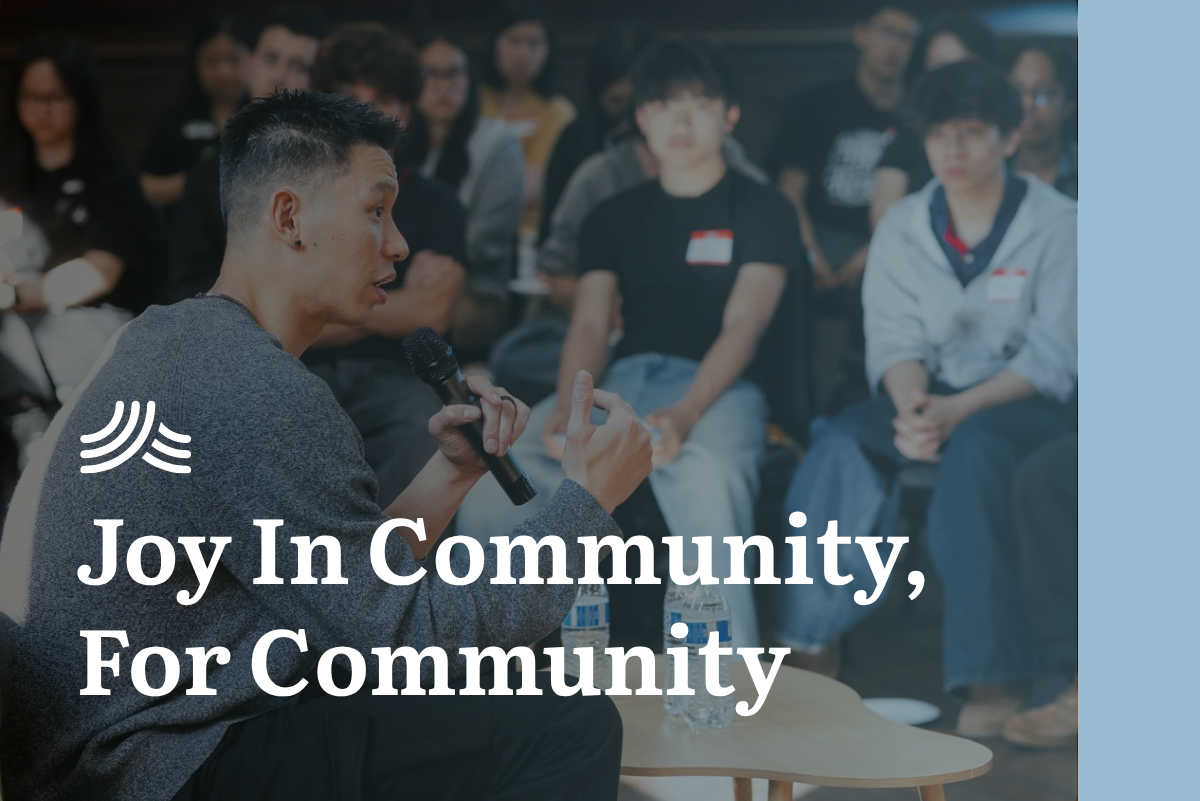
Joy In Community, For Community
Joy In Community, For Community
As a new NBA season tips off, we want to recognize that some of the most meaningful work connected to the game happens off the court. Sport philanthropy is vast, consisting of athlete foundations, team giving initiatives and vehicles, and league-wide philanthropic efforts. Faith is one of the threads running through that. At Lake, we’re always interested in how faith informs generosity, and the Jeremy Lin Foundation offers a compelling window into that question. In the reflection below, Executive Director Stephanie Hsu and Board President Patricia Sun share what they’ve learned about prayer, power, partnership, and the joy of giving in community. Whether you lead a congregation, study generosity, or steward a foundation’s resources, their story offers both inspiration and practical wisdom for all of work. And we couldn’t have an issue about sports philanthropy without including the School of Philanthropy’s resident expert on this field, LaKoya Gardner, Director of the Mays Family Institute of Diverse Philanthropy. In her accompanying expanded perspective, she reflects on how faith grounds her belief that every platform is an opportunity to serve, and on the work Mays is doing to help athletes, teams, and leagues give with purpose and intentionality.
By Stephanie Hsu, Executive Director, Jeremy Lin Foundation, and in partnership with Patricia Sun, Board President, Jeremy Lin Foundation
 As Jeremy Lin was entering the NBA, he and his family created the Jeremy Lin Foundation as a commitment to give back to the community. They knew that whatever came of his basketball career, it would be a gift to be shared and stewarded. Drawing from Jeremy’s own experiences growing up, the Foundation’s mission is to love and support overlooked, under-resourced youth.
Our heart as a Foundation is rooted in the upside-down Kingdom that Jesus exemplified: one that prioritizes community and challenges what we believe community to be. It is a vision that radically tells us last shall be first, and teaches us to center the least of these. Fifteen years after the Foundation was established, we have learned that God offers us deep joy in giving together, in community, centering those already doing the work on the ground.
Listening deeply
Over the years, we have had the privilege of holding more than 200 community listening conversations, meals, and gatherings. Starting with listening helps us to come into the community with a posture of learning. We are not here to bring solutions, but to learn from those we wish to work with and serve. We are grateful for the community members who have been willing to share what’s top of mind for under-resourced communities, and point us toward the people already doing good work, often without much notice or funding behind them.
This has also been a journey into our own AANHPI (Asian American Native Hawaiian Pacific Islander) community’s needs. Despite growing up in America, many of us did not know that 1 in 4 AANHPIs are struggling with poverty in major cities, and receive only 0.3% of philanthropic funding. These needs are often obscured because of the harmful model minority myth that tells us Asian Americans are all successful, when in reality Asian Americans have the largest income inequality as a community. The priorities we heard the most are basic needs and protections for vulnerable youth, culturally competent mental health care, and youth development.
As we spent time listening to the community, we found that there were funders that wanted to respond to these needs together. Giving together in a way that centers community is the spirit behind our Thrive Together Collaborative, a pooled donor initiative supporting cohorts of nonprofits in the highest-need communities. We move alongside faith partners like the Long Family Foundation and Pilgrim Foundation, as well as secular and multi-faith partners. Together, we’re now supporting 40,000 under-resourced, low-income youth. Half of them are immigrants, half of them are AANHPI.
Carrying burdens together
After spending time listening to the community, responding to these needs looks concrete and actionable: five-year grant commitments to cohorts of youth-serving organizations. Beyond multi-year grants, we offer strategic planning, financial advisory and capacity support as needs shift and grow. We use Jeremy’s platforms to give voice to the organizations and youth we serve. We hold grantee-requested convenings and facilitated gatherings on topics they want to discuss, so our cohort partners don’t feel like they are carrying this work alone.
We seek to be relational and ask what the nonprofits and youth are carrying and pray for our partners: for a young person who can’t access the mental health care they need, a leader’s sick spouse, a quiet burnout that no strategic plan accounts for. Prayer reminds us that we do not have the answers, but we have a faith in a God that is always with us.
Growing together
Pooling funds with partners isn’t only about amplifying grant dollars, it’s about discerning and learning together. In a recent gathering and learnback with 12 grantee leaders and more than 100 grantee youth, our Board and a fellow funder wrestled with what we were hearing when it came to staff and youth mental health. Our debriefs together were generative in brainstorming the urgency of tackling staff wellness and burnout prevention through support and team wellness grants. Another funder partner shared with us their pilot of staff wellness funds, and how caring for people behind the work was essential to communities flourishing. We also learned from a partner that bringing boxes of pastries to site visits is a gesture of mutuality and care that sets the table for breaking bread and more balanced dynamics.
Funding together lets us learn from and challenge each other. We wrestle with power and funding dynamics, talk through how to serve grantees without centering ourselves, and experience joy and healing on site visits and learning tours that deepen our own relationships. We encourage each other when the work is hard.
With Presence and Hope
These are uncertain times: inequities accelerating, power consolidating with fewer guardrails, under-resourced communities strained as resources are declining. Kids are afraid to go to school, to church, to the youth programs meant to be stable ground for them. Nonprofits are forced to choose between meeting rising needs and keeping their own staff employed. In this time of uncertainty, we all want to look for answers that can solve big problems quickly.
After a crushing update about a youth who a nonprofit had walked alongside for years from homelessness to foster and group homes, we asked the leader how she avoids burnout. She told us: we cultivate joy, because God is standing with us at the margins, and we don’t go where God’s presence is not. I think about that constantly. It’s where I find my hope: wherever the people at the margins are standing, that is exactly where we are meant to be too.
Jeremy and his family believe platforms mean little if they don’t build up the community around them. We often think philanthropy is about the work being through us, but we have come to recognize that the gift is that the work is in us as well – and the deep joy of learning from community, and being in community.
Beyond the Game: The Power of Sports and Philanthropy
By LaKoya Gardner, Director, Mays Family Institute on Diverse Philanthropy
I’ve always believed that sports have an extraordinary ability to bring people together, transcending racial, cultural, religious, and socioeconomic differences. But what excites me most is not simply the power of sports to unite people. It’s the opportunity to use that influence to inspire hope, address inequalities, and create meaningful change in communities.
My faith has always reinforced the importance of using our gifts, talents, and opportunities to serve others. I believe that when we’re blessed with a platform to influence lives, we also have a responsibility to use it with purpose, compassion, and intentionality.
At the Mays Family Institute on Diverse Philanthropy, part of the Indiana University Lilly Family School of Philanthropy, we’re committed to exploring how sports and philanthropy can work together to strengthen communities and create lasting impact.
Through our Athlete to Advocate executive certificate program, we provide collegiate and professional athletes with research-based knowledge and practical strategies to leverage their philanthropic activities, leadership abilities, and communication skills to advance social impact. Through concept development, case studies, and small-group discussions, participants explore the intersection of philanthropy, leadership, communication, and social responsibility, gaining practical tools to translate their influence into meaningful action.
Our broader work has also allowed us to engage professional athletes, their families, foundation leaders, athletic directors, and representatives from professional sports leagues and teams. These experiences reinforce something I believe deeply: athletic accomplishments may create a platform, but how individuals use that platform to uplift others can define their lasting legacy.
For me, philanthropy is about more than financial contributions. It’s about listening, building meaningful relationships, understanding community needs, and creating opportunities for those who have historically faced barriers to resources and support.
We’re also advancing this work through our Sports and Philanthropy Fellows initiative, supporting research that examines the intersection of athletics, charitable giving, and community engagement. Our goal is to identify gaps, uncover opportunities for collaboration, and provide insights that help philanthropic and civic leaders make more informed investments.
Ultimately, I believe the greatest victories aren’t always measured by championships, trophies, or records. They’re reflected in the lives we touch, the relationships we build, and the opportunities we create for others. Because when sports are connected to purpose, service, and philanthropy, their impact can extend far beyond the game.
Apply for an ECRF Scholarship Today
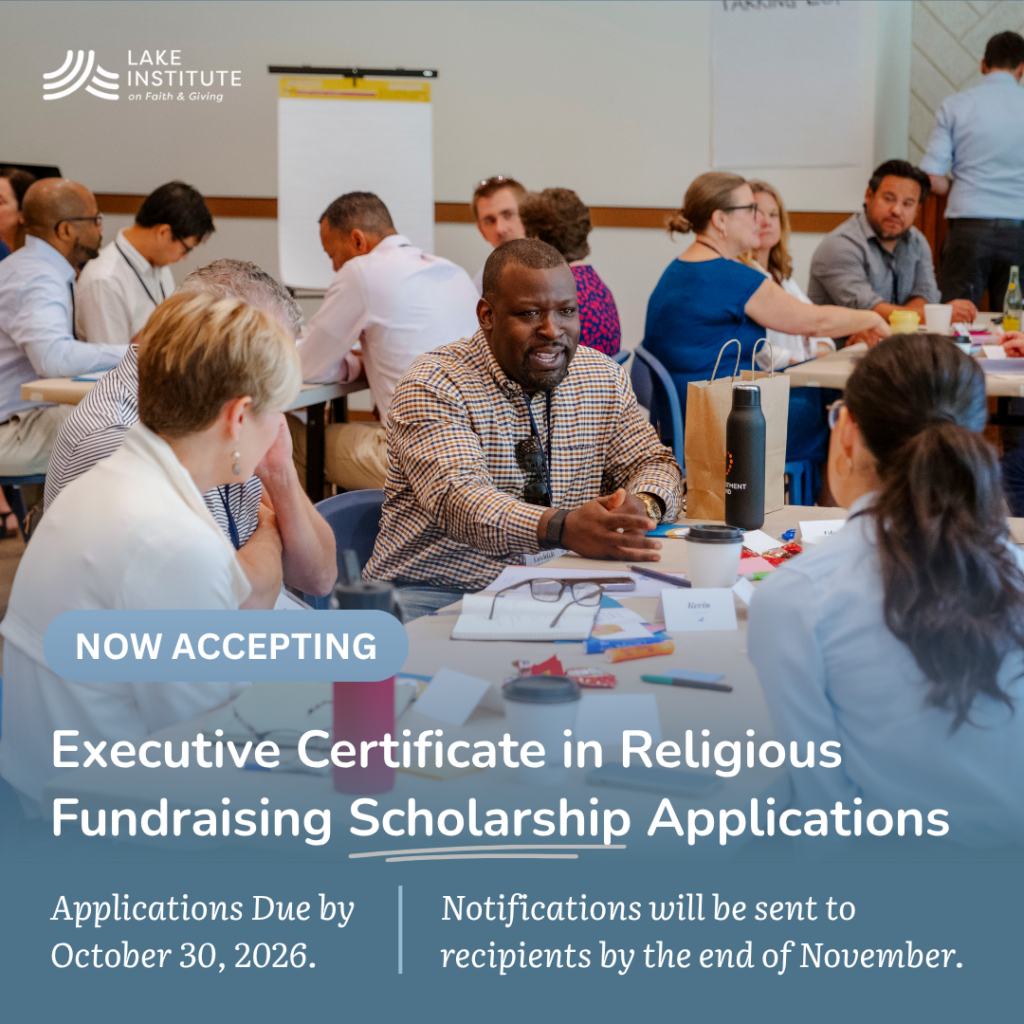
Scholarship applications are now open for the Executive Certificate in Religious Fundraising (ECRF) course. Applications will remain open through October 30, 2026, and recipients will be notified by the end of November.
These partial scholarships may be used toward ECRF courses in 2027, with final payments due by June 1, 2027. We encourage applicants to register for their preferred course while applying for the scholarship.
A Legacy of Faith & Giving
The story of Lake Institute on Faith & Giving is rooted in a powerful idea: how faith shapes generosity and how generosity, in turn, shapes communities. Discover the history of Lake Institute and the vision that continues to guide its work in faith and philanthropy on our blog.
Subscribe
Insights is a bi-weekly e-newsletter for the religious community and fundraisers of faith-based organizations that provides:
- Reflections on important developments in the field of faith and giving
- Recommended books, studies and articles
- Upcoming Lake Institute events