

Still Missing Connections? Probing the Presence of Religious Leaders and Institutions in American Civic Life
Still Missing Connections? Probing the Presence of Religious Leaders and Institutions in American Civic Life
In this Issue:
-
- Still Missing Connections? Probing the Presence of Religious Leaders and Institutions in American Civic Life
- From Missing Connections to Meaningful Engagement
- Are You Considering a Capital Campaign?
- Kilama Dennis Awarded 2026-27 Lake Doctoral Dissertation Fellowship
- Join Us for the 21st Annual Thomas H. Lake Lecture
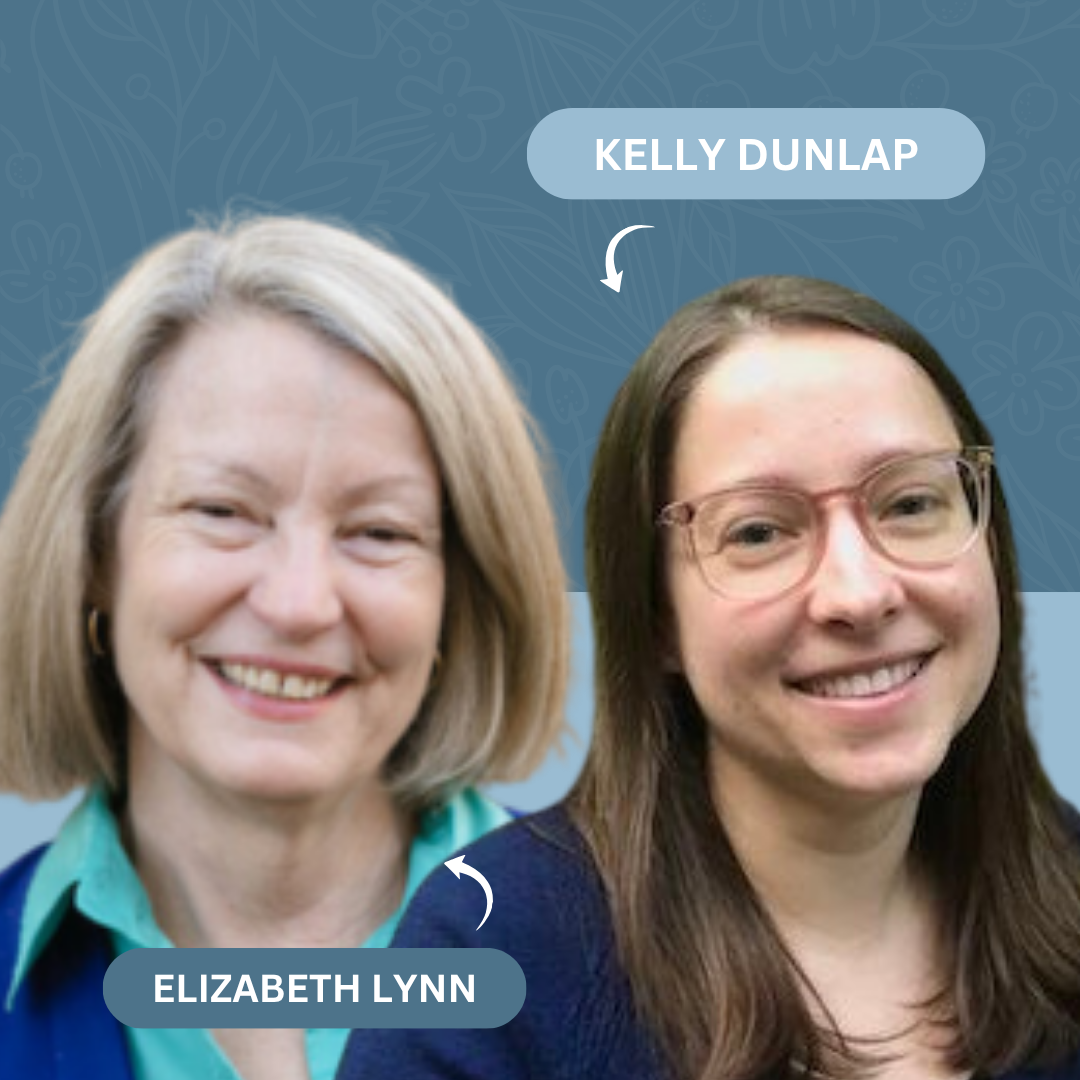
By Elizabeth Lynn, former Special Projects Director, and Kelly Dunlap, Senior Program Manager, Lake Institute on Faith & Giving
 “Clergy are not public leaders.”
This blunt assessment, offered by the dean of a public university, sums up the findings of a research project on religious presence in civic life conducted by Barbara G. Wheeler, Elizabeth Lynn, and colleagues in the late 1990s. The research team visited four American cities, interviewing a range of government, non-profit, business, and higher education leaders and asking, How prominent are religious leaders and institutions in the life of your community? What they heard became a report titled Missing Connections, prepared for Auburn Seminary’s Center for the Study of Theological Education. As the title suggests, the researchers found a troubling story of missed connections. Theological schools seemed invisible to their neighbors; congregations were turned inward, taking care of their own; clergy seldom spoke in the public square.
Lake Institute on Faith & Giving wanted to know how these dynamics might have changed in the decades since. While much of our focus at Lake Institute is on the giving of money, we understand that faithful giving takes many different forms, so we also explore how people of faith give their time, talents, and testimony to create positive change in their communities. To deepen understanding of these kinds of faithful giving (which we might call religious civic engagement), in 2022 we launched a follow-up probe of the role of religious leaders and institutions in the life of one American city: Richmond, Virginia.
With expert consultation from Barbara Wheeler, we conducted interviews with 28 of Richmond’s leaders across faith traditions and the nonprofit, business, civic, and political sectors. Sadly, Barbara passed away just as we were finishing the Richmond report. We set the work aside for a time but now return to it with a renewed desire to share what we learned. Indeed, what better way to honor Barbara Wheeler than to continue a conversation she cared so deeply about?
A Complex Picture Emerges
Our follow-up probe, centered on Richmond, VA, reached a slightly more complex conclusion than the 1999 report. Visibility of religious institutions and their leaders and members in the city’s civic life remains low, especially when compared with the roles that religion played in Richmond’s past. Interviewees pointed back to the civil rights movement and other periods of social change and recalled how religious leaders were prominent figures shaping those changes. Today, according to some, political and business leaders do not generally rely on religious support, and clergy, with a few exceptions, are not “a force to be reckoned with.”
Beyond the bright lights of the public square, however, we uncovered a surprising range of ways that religious organizations and people of faith are actively engaged in the life of Richmond and its region.
Seven Forms of Religious Civic Engagement
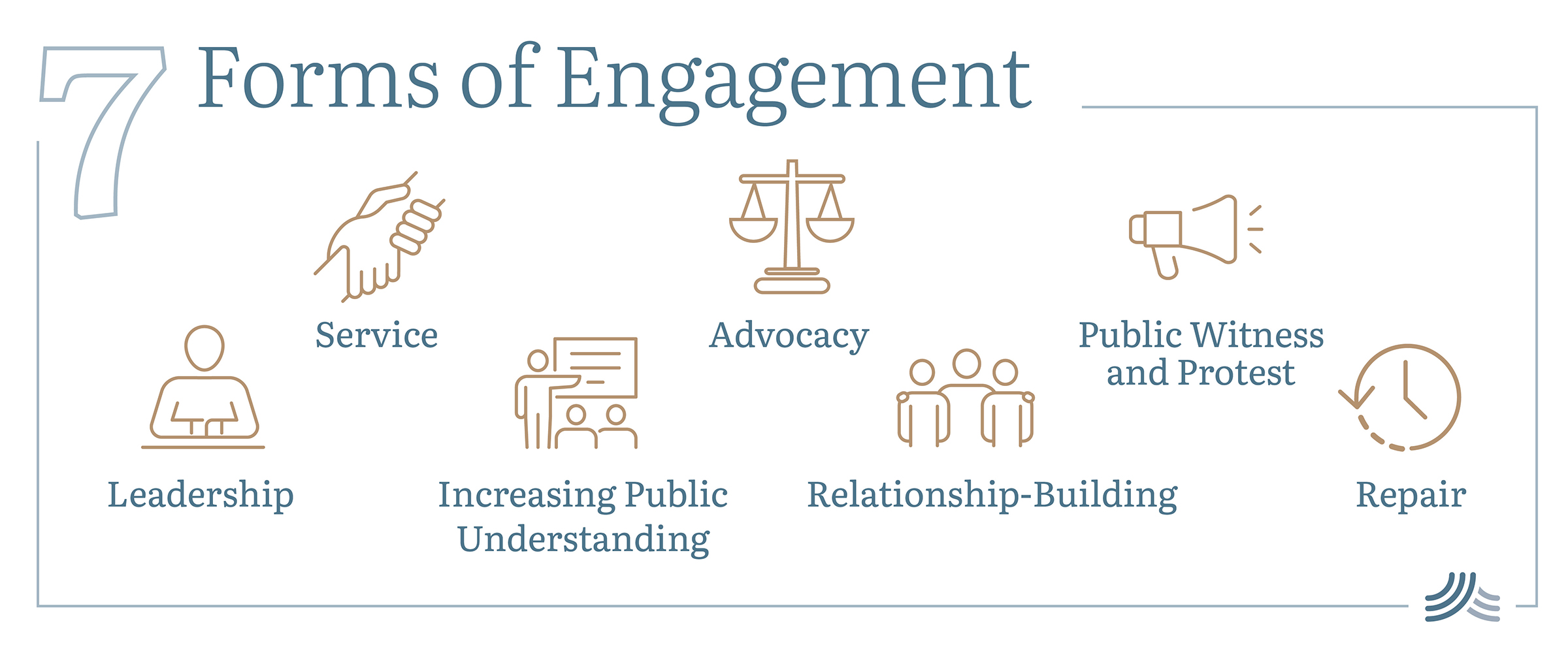
This engagement takes seven forms:
- Service: Coordinating to meet basic needs and to improve educational opportunities for groups and neighborhoods with fewer resources.
- Advocacy: Forming and joining coalitions to press for policy change at the city and state level.
- Protest and Witness: Staging public responses to perceived injustice and immorality in the form of statements, vigils, marches, and more.
- Public Leadership: Seeking to lead in the larger community in ways that express and further one’s faith, by running for political office, serving on non-profit boards and commissions, stewarding one’s vocation, etc.
- Public Education: Offering programs to the public that illuminate the community’s history and its current challenges.
- Relationship-Building: Fostering intentional relationships with neighbors, city leaders, and people of different faiths, for diverse purposes of reconciliation, bridge-building, and moral influence.
- Repair: Seeking to mend past harms by revisiting collective history, re-writing narratives to tell a more truthful story, removing memorials and plaques, expressing repentance.
Some of these forms of engagement are long-standing and well-established traditions of religious presence in public life (service, for instance, or advocacy).
Others, like relationship-building, are more experimental and organic, as individual clergy and laity work out what it means to act on their faith in an increasingly polarized political arena, without the assurance of a seat at the civic table or (in some cases) a congregational mandate.
Still others, like repair and protest and witness, gained definition and urgency in the racial reckonings that swept the nation in 2020, although it is not clear whether that urgency has been sustained over time.
Comparing Typologies
Those who study American religious presence in civic life may want to compare these seven forms with earlier typologies, like the Hartford study on Varieties of Religious Presence (Pilgrim Press, 1984) or some of the findings of the National Congregations Study reported as part of the essay collection The Quiet Hand of God (University of California Press, 2002).
Differences among the typologies are easily discernible, if not easily explained. For instance, whereas previous typologies focused on the civic orientation of the congregation and the nature of activities taking place within the congregation’s own walls, our probe found a greater emphasis on the actions of individual leaders (both clergy and laity) and cross-group coalitions. This may be a function of how we focused our research; it could also reflect changes in the relationship between religious leaders and their constituencies—or changes in what is perceived to be effective religious engagement in our time.
Further Research – and Conversation – Needed!
The findings of our limited probe are at most suggestive, inviting further conversation about the ways that religious leaders and institutions are giving faithfully to their communities today—not just through money, but through time, talent, and testimony. We hope you will be inspired to learn more and add to this important conversation.
You can read our full report here. Most of all, we hope you will share the seven forms of engagement with your congregation or theological school and ask:
Where do we see ourselves at work across these forms of engagement? Are there other forms of engagement we would add to the list?
Where are we still missing connections that could be made … for the sake of our faith and the common good?
From Missing Connections to Meaningful Engagement
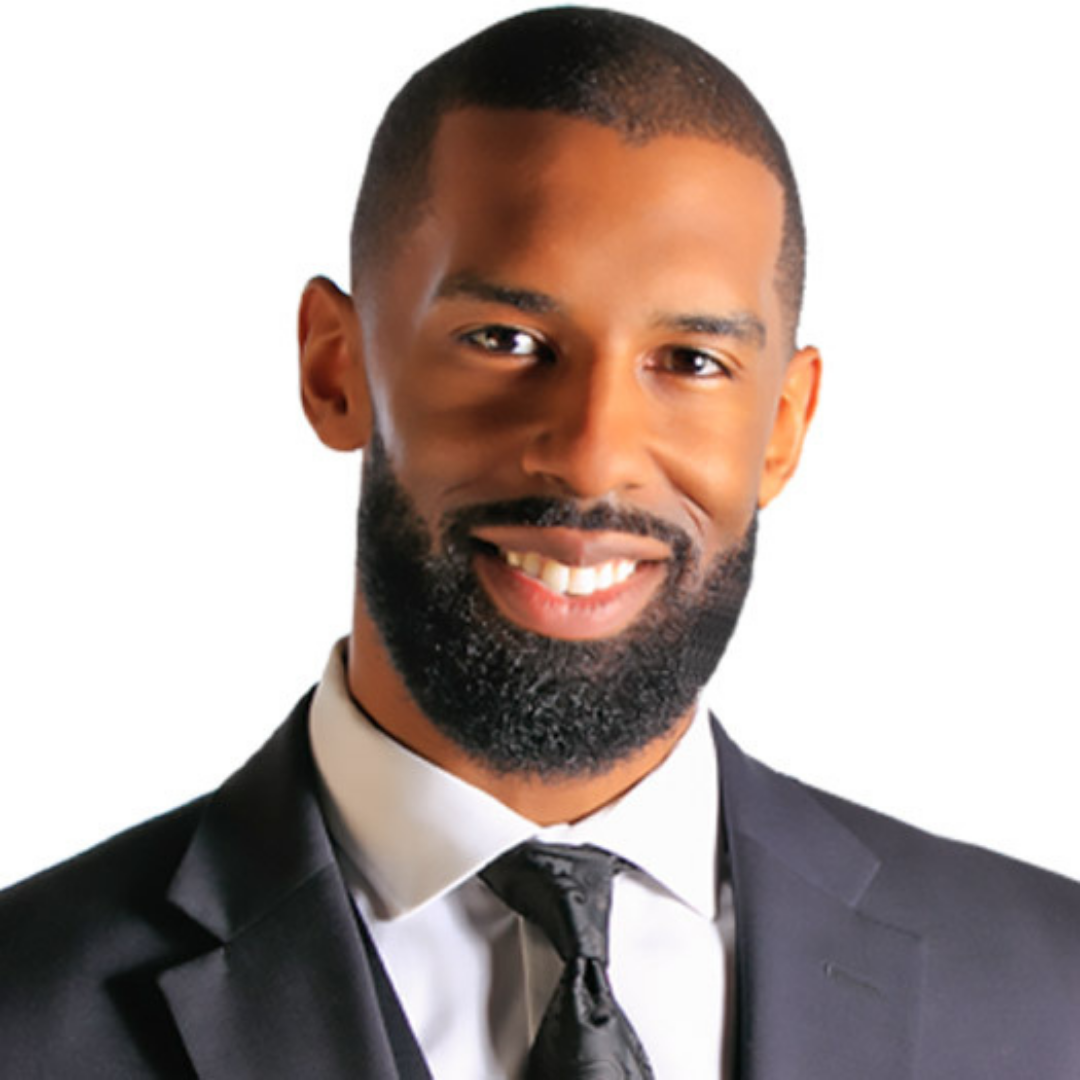
By Rev. Dr. Anthony L. Riley, Pastor, Central Baptist Church
 In the fall of 2014, when the death of Michael Brown pulled some clergy out of our sanctuaries and into the streets of Ferguson for a season, the church was undeniably present in the public square. Some pastors marched. Some pastors prayed on camera. Some pastors sat with mayors and police chiefs and grieving mothers. It felt, briefly, like the world remembered that clergy are public leaders after all.
But seasons pass. Dunlap and Lynn’s seven forms give me language for self-examination. Their seven forms read to me like a mirror held up to Central Baptist Church. We serve, we always have. We have marched in Protest and Witness when Saint Louis required it of us. Public Education comes naturally to a congregation that has never been shy about teaching our history from the pulpit. Two of Dunlap and Lynn’s seven forms gave me pause: Relationship Building and Repair.
Both are described as unfinished, experimental, and still being worked out by clergy without a script or a guaranteed seat at the table. That is exactly how it feels from where I sit in Saint Louis. Saint Louis carries its own buried history: the deed restrictions, the divestment, the highways cut through Black neighborhoods on purpose. A congregation that only serves and never repairs is treating a symptom while the wound stays open.
Our region has never lacked religious service. Food pantries, tutoring programs, shelter partnerships- our congregations have long known how to meet a need. What we have lacked, and what I confess my own ministry is still learning, is the slower work of relationship across lines that Saint Louis has spent a century reinforcing. Stewarding a vocation inside city government or a nonprofit board long after the headlines fade asks more discipline, unity, and vision than we sometimes bring.
This city is one of the most segregated in the country, not by accident but by policy. A pulpit exchange or a joint prayer service will not undo that history. Repair asks something harder still: that we tell the truth about how we got here and let that truth cost us something. I think of the church members who trace their families back to neighborhoods that were redlined or bulldozed for a highway. Repair is not a program. It is a posture, a willingness to revisit our own institutional history honestly before we ask the city to revisit its own.
I do not have this fully worked out. But I would rather stand in that uncertainty publicly than retreat into service and charity alone because it is familiar.
These categories are not a report card. They are a mirror. Some seasons call a congregation toward Advocacy, others toward Relationship Building, others toward the quiet, unglamorous work of Repair. The danger is not doing one form poorly. The danger is doing only the form that is comfortable and calling it faithfulness.
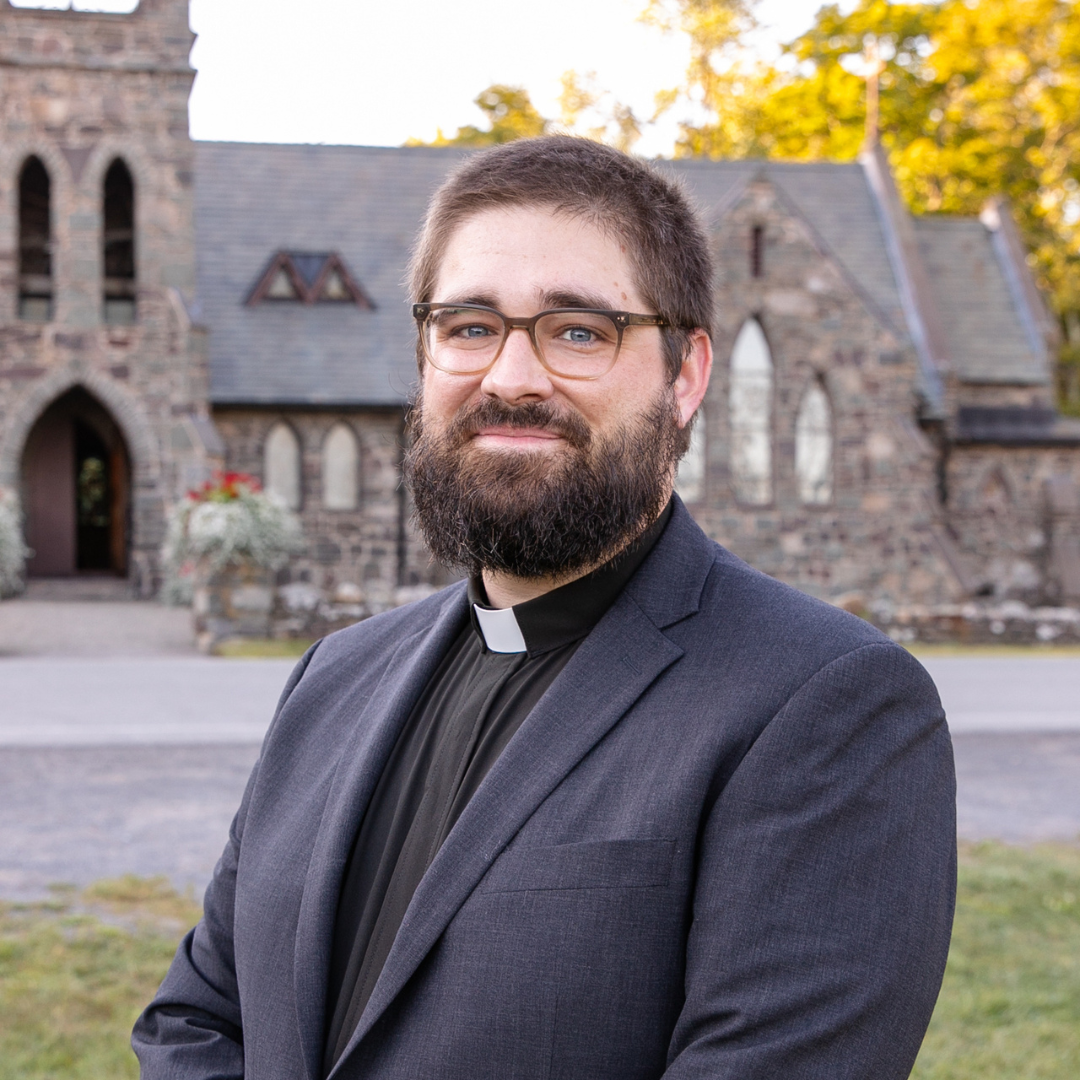
By Rev. Brian Fox, Rector, St. Paul’s Episcopal Church & Montessori School
 Conversations about faith in the public square feel especially fraught these days, and I love the way that Kelly Dunlap and Elizabeth Lynn reframe religious civic engagement as faithful giving. This spirit of generosity could be a helpful antidote to corrosive postures of civic engagement rooted in scarcity, fear, and conflict. What gifts do our faith communities have to offer?
Still, I wonder: who is doing the work? The probe “found a greater emphasis on the actions of individual leaders (both clergy and laity) and cross-group coalitions.” This reflects a top-down approach to civic engagement, but putting the work on a few leaders poses some problems. Clergy tend to have more extreme political opinions than the members of their congregations — will this create tension? Is civic engagement the responsibility of just a few religious professionals, who are expected to do it on behalf of their whole community?
This is the missing connection I want to explore: the one within the walls of my church, between the leaders and the people in the pews. Can this typology help me get more folks involved in caring for our common life? Can I shift my role as a leader from “doing” to “empowering others to do”? Maybe we’ll have fewer missed connections if we get more people involved. Many hands make light work… and can do more, and reach farther!
This typology offers many possible paths forward, but most religious communities probably can’t pursue them all at once. Rather than scattering our attention and stretching ourselves too thin, I want to gather people together around a core issue with just a few modes of engagement. A clear focus might lead to deep, meaningful work that moves beyond an individualistic model of civic engagement towards a communal model that makes space for many.
Are You Considering a Capital Campaign?
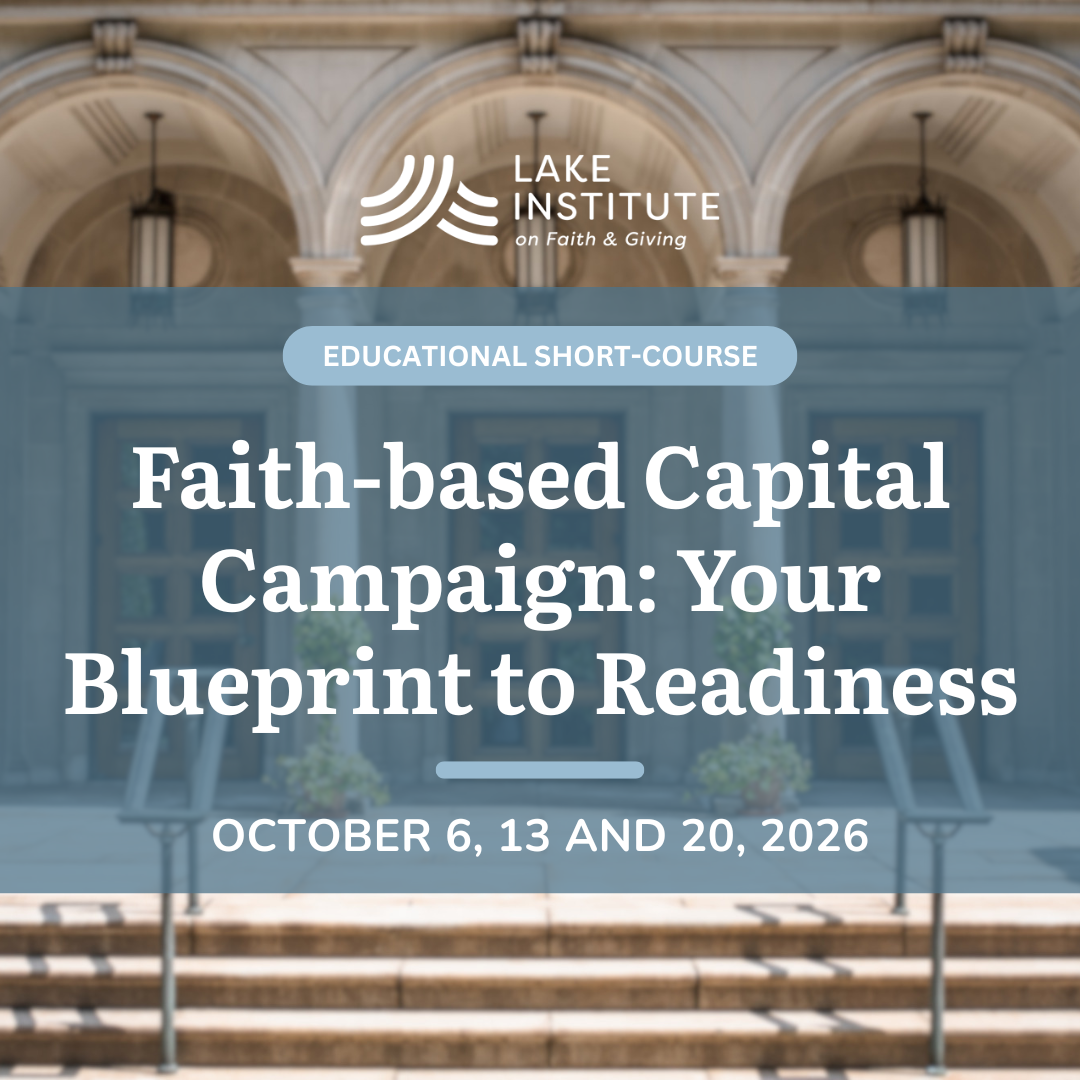
Our “Faith-based Capital Campaign: Your Blueprint to Readiness” course is designed to guide you through the discernment process: how do you set a financial goal, determine whether to engage an expert or consultant, and develop a campaign rooted in the vision of your community.
Join us to explore how you can align your capital campaign with the mission of your organization and inspire meaningful giving. The online learning platform opens Tuesday, September 29; the first plenary session is Tuesday, October 6.
Kilama Dennis Awarded 2026-27 Lake Doctoral Dissertation Fellowship
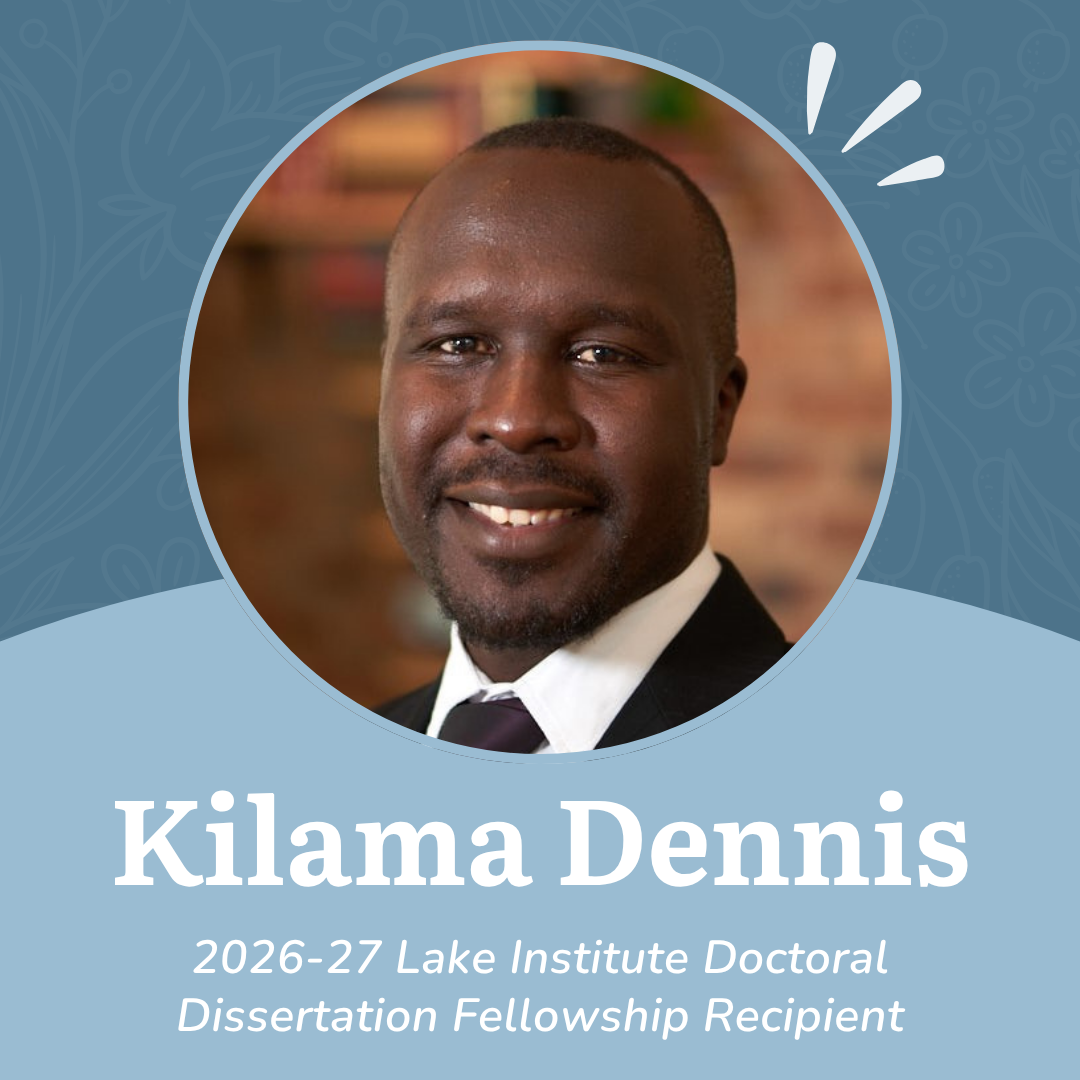
We are pleased to share that we have granted the 2026-27 Doctoral Dissertation Fellowship to Kilama Dennis. This one-year grant is given annually to support graduate students whose research engages issues at the intersection of faith and giving.
Kilama Dennis is a PhD candidate at the Indiana University Lilly Family School of Philanthropy and is an Enright Fellow. He previously worked with the church, the nonprofit sector, and academia in Uganda. His research is focused on the intersection of faith-based organizations, fundraising, African philanthropy, and financial sustainability.
LEARN MORE ABOUT HIS DISSERTATION
Join Us for the 21st Annual Thomas H. Lake Lecture
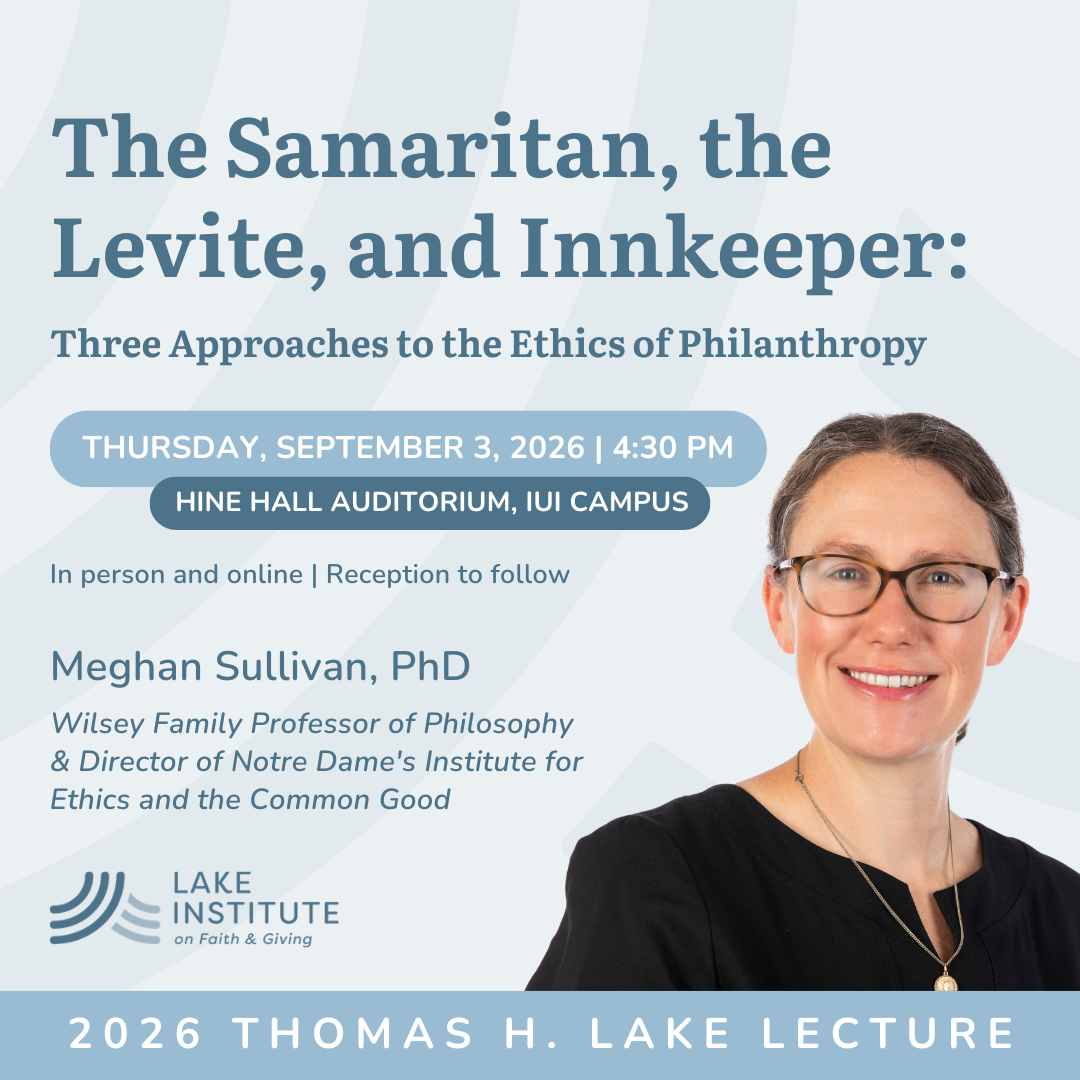 You’re invited to attend the 21st Annual Thomas H. Lake Lecture with Meghan Sullivan, PhD, on Thursday, September 3, 2026. During the lecture we will dive into one of history’s most famous stories—the Parable of the Good Samaritan—and look at it through a fresh lens. We’ll explore the ethical frameworks embedded in the story and what it can teach us about different approaches to giving and caring for others. You’ll walk away with meaningful insights to help guide your own thinking about how we practice philanthropy today.
Subscribe
Insights is a bi-weekly e-newsletter for the religious community and fundraisers of faith-based organizations that provides:
- Reflections on important developments in the field of faith and giving
- Recommended books, studies and articles
- Upcoming Lake Institute events