
Giving Thanks for Wise Guides
Giving Thanks for Wise Guides

By David P. King, PhD, Karen Lake Buttrey Director and Associate Professor, Philanthropic Studies
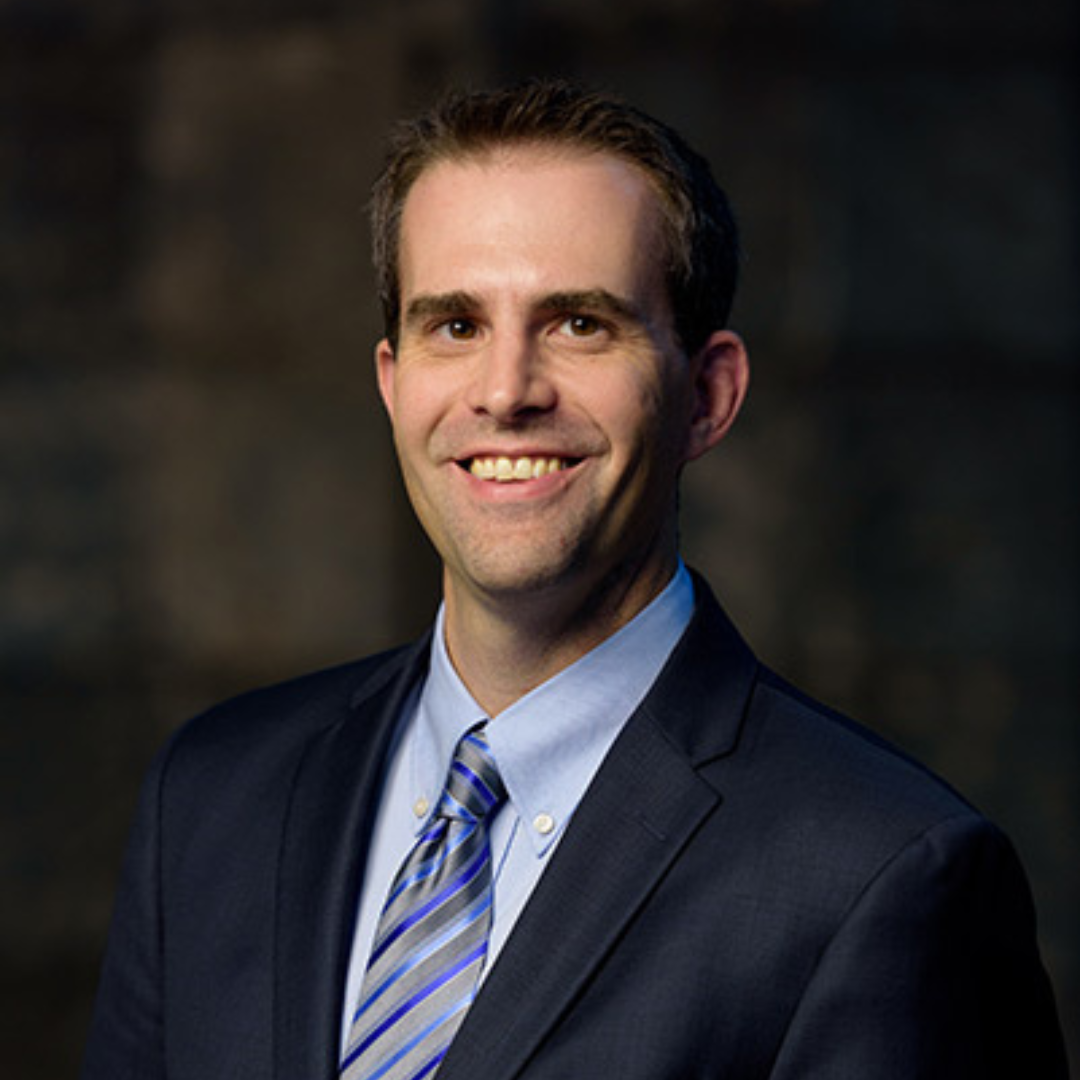
As we enter 2026, we could not be more excited about the work that we are called to at Lake Institute. In fostering a deeper understanding of the dynamic relationship between faith and giving through research, education, and public conversation, we are eager to continually learn and listen. In this new year, we have been busy setting the strategic priorities that will guide us across Lake’s third decade as we seek to respond to the challenges that religious institutions, individuals, and communities are experiencing amidst all the shifting ground around them.
This is exciting work, and we cannot wait to invite you – Insights readers – into this process with us as a key audience and vital link to this shared work. We look forward to continuing to connect with you here to ensure that we are addressing the practical questions that religious, philanthropic, and nonprofit leaders are asking.
A metaphor that Lake Institute has latched onto over the past year is that of a trusted bridge. Working at multiple intersections, we strive to be bridge-builders. We seek to bridge research and practice; we workacross religious traditions and types of institutions; and we examine philanthropic practices both old and new to educate leaders, inform practice, and reimagine how generosity takes root in a changing world. That often means working across sectors, introducing religious and nonprofit leaders to one another, or introducing philanthropies to the vital role that faith communities play in many of our world’s most pressing problems. It takes a commitment to learning multiple languages and gaining fluency as a translator across traditions, sectors, and communities. It benefits the curious who are eager to listen, learn, and ask questions. Overall, it’s an extremely privileged position for which Lake is grateful for the confidence and trust that others put in us.
And it takes so many gifted colleagues to serve in this bridge-building capacity. It starts with our gifted staff, but we could not do our work without colleagues across the School of Philanthropy and with an adjunct faculty of talented instructors who are experts both in the teaching and the practice of faith-based fundraising across a diverse range of communities. Alongside this team, we are linked to dozens of partners who have worked with us for years to offer courses in their communities, shared data for joint research reports, or sought to co-convene conversations on the pressing issues around faith-based generosity and the public good.
A group that we are most thankful for at Lake Institute, but is rarely out front is our Advisory Board. From Lake’s inception, this group has served as chief among the wise guides that have helped to shape our work. They represent much of the diversity that Lake’s work seeks to address, such as scholars across multiple disciplines, faith leaders across multiple religious traditions, theological educators, and leaders of philanthropic networks. Each member embodies that desire to work directly with practitioners while also bridging the multiple communities with which Lake seeks to work. Our advisory board meetings are generative with new ideas, suggestions of new possible approaches, and affirmation for the importance of the work at hand. Each of these leaders brings their own reputation as generous and curious colleagues to the table, even as they provide hard-earned practical wisdom. In sharing their questions, networks, and support with us, they are offering a great gift.
Embodying that spirit on our Advisory Board is our outgoing chair, Rev. Libby Manning. Libby serves as the Director of the Wabash Pastoral Leadership Program as well as a Development Advisor for the Madison County Community Foundation. In her spare time, she is in the thick of her doctoral studies in philanthropic leadership at the School of Philanthropy. Libby is the definition of a bridge-builder. Her work at Wabash focuses on supporting Indiana clergy while also connecting them with civic leaders across sectors. As an engaged donor of time, talent, and treasure in her own community, she has also stepped up to support her local community foundation in its work in supporting philanthropic partnerships as well. As a neighbor, pastor, teacher, philanthropist, and doctoral student, Libby exemplifies the ways in which Lake seeks to live into our work. As she rotates back into leadership as past-chair and advisory board member, we are tremendously grateful for the ways in which she set tables for just the right kind of conversations and with the hospitality that is evidence of incredible intention and forethought.
As Rabbi Adam Miller and Rev. Dr. Reggie Blount take on leadership as chair and vice-chair in this coming year, we will strive to follow the example that Libby has set for us across Lake’s Advisory Board, and in the ways that extend across our work with friends and partners in this work. In this new year, let us make space for the hard but invigorating conversations that require all of us operating at our fullest best selves to engage together in order to support one another. As we enter 2026, I am thankful for all the wise guides who are willing and able to take on the most vital questions defining faith and giving for this current and future generation.
Holding Together What Polarization Pulls Apart
By Rev. Libby Davis Manning, Director of the Wabash Pastoral Leadership Program
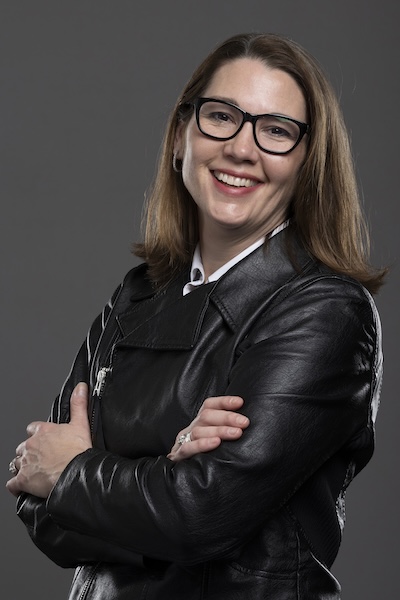 I am honored to have supported Lake Institute’s work over the last 12 years, serving as an Advisory Board member, then Vice Chair, and, for the last 2 years, Chair of the Advisory Board. As I pass the baton to two gifted colleagues—Rabbi Adam Miller and Rev. Dr. Reggie Blount—I do so with the conviction that the work of bridge organizations like Lake Institute is more important than ever. The strong headwinds of polarization and growing organizational distrust fracture the conditions required for collective problem-solving and moral imagination. However, bridge organizations help restore those conditions by creating structured, credible spaces where people and institutions that might otherwise remain isolated can encounter one another constructively.
Lake Institute’s work matters more than ever because in our polarized environments, individuals and institutions retreat into ideological, sectoral, or identity-based silos. Bridge organizations counter this dynamic by translating across communities—faith and philanthropy, research and practice, civic and religious life—so that knowledge, values, and lived experience circulate rather than harden. This translation function is not neutral; it is disciplined work that requires fluency in multiple cultures and the ability to name both common ground and real difference without collapsing either.
Lake Institute’s work matters more than ever because polarization erodes trust in institutions and expertise. Bridge organizations can serve as trusted intermediaries precisely because they are not aligned with a single sector or constituency. Their credibility is relational rather than positional, built over time through listening, convening, and follow-through. In moments of uncertainty or conflict, this trust enables bridge organizations to convene conversations others cannot—conversations that surface tensions honestly while keeping participants oriented toward shared purposes such as the public good, community well-being, or moral responsibility.
Lake Institute’s work matters more than ever because many of today’s most pressing challenges—inequitable access to resources, social fragmentation, and contested understandings of generosity—are “wicked problems” that no single institution or sector can solve alone. Polarization makes collaboration harder just when it is most needed. Trusted bridge organizations like Lake Institute lower the transaction costs of collaboration by aligning expectations, clarifying roles, and helping partners see how their distinct contributions fit within a larger ecosystem of action.
Lake Institute’s work matters more than ever because bridge organizations model an alternative posture in public life. In an era marked by certainty, speed, and performative disagreement, Lake Institute embodies curiosity, patience, and disciplined listening. By showing that disagreement need not preclude cooperation—and that difference can be a source of insight rather than a threat—bridge organizations help sustain the civic and moral imagination essential to long-term social renewal.
In short, bridge organizations like Lake Institute matter more than ever because they help hold together what polarization pulls apart: fostering learning, collaboration, and hope amid fragmentation. As we head into the new year of 2026, I give thanks for the work of Lake Institute, its staff, and its dedicated leadership team of David King, PhD and Elizabeth Coffee. And in the words of Montgomery Schuyler, 19th century journalist and critic, “It so happens that the work which is likely to be our most durable monument, and to convey some knowledge of us to the most remote posterity, is a work of bare utility; not a shrine, not a fortress, not a palace, but a bridge.”
Developing Legacy Giving in Congregations
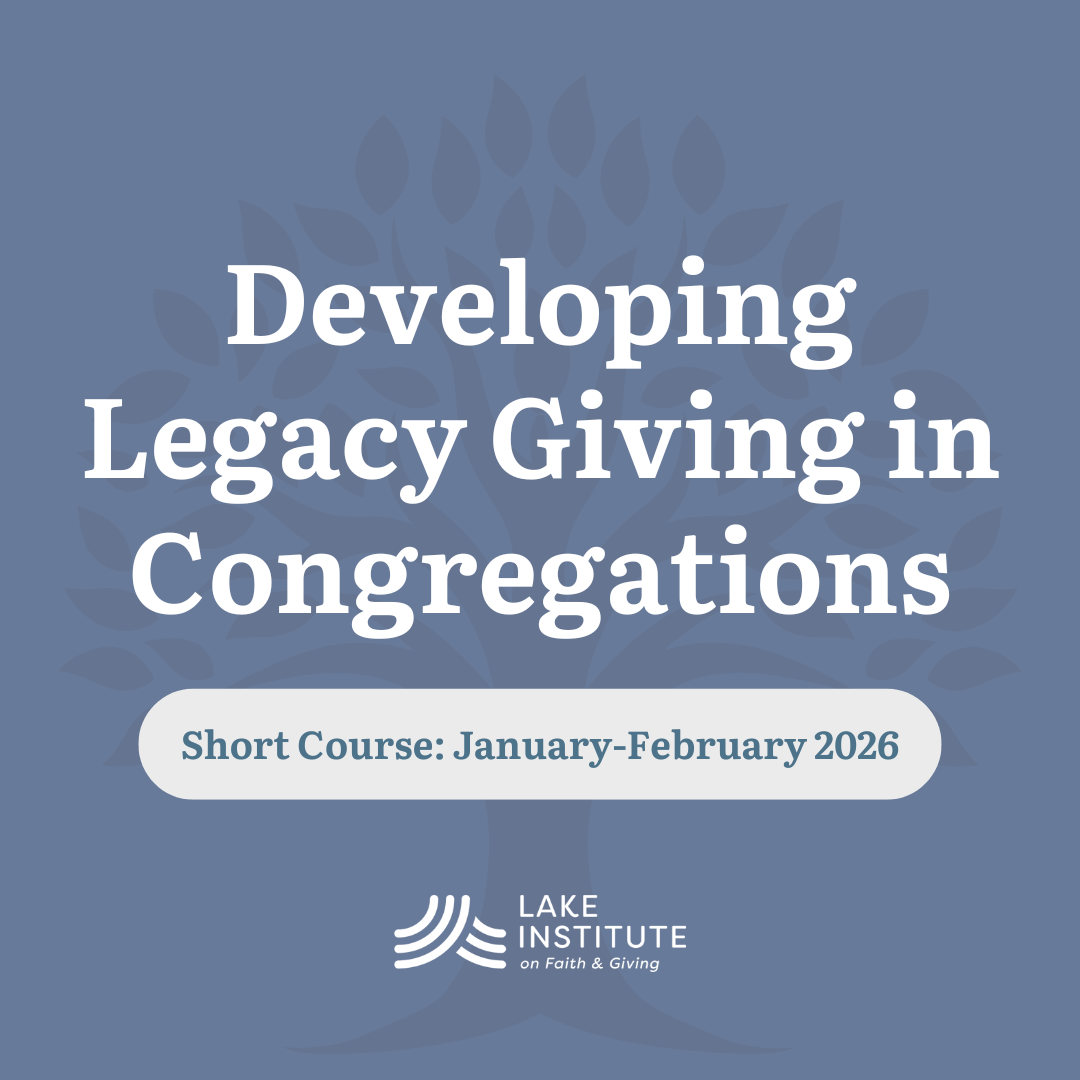
Equip your congregation for sustainable impact by enrolling in Lake Institute’s Developing Legacy Giving in Congregations course (Jan–Feb 2026).
Over four weeks of live and asynchronous sessions, leaders will learn how to design effective legacy giving programs. From understanding donor motivations and gift vehicles to crafting invitations and building momentum, this course offers practical tools to help you build a lasting legacy giving program.
It’s not too late to sign up—the online learning platform opens on January 20, 2026, with the first plenary session on January 27, 2026.
Lake's 2026 Doctoral Dissertation Fellowship

Are you a PhD candidate completing a dissertation at the intersection of faith and giving? The Lake Institute’s annual Doctoral Dissertation Fellowship offers a one-year grant to support your final year of writing. Applications are due January 16, 2026—don’t miss this opportunity. Visit the link below to submit your application for Lake’s 2026 Doctoral Dissertation Fellowship.
Subscribe
Insights is a bi-weekly e-newsletter for the religious community and fundraisers of faith-based organizations that provides:
- Reflections on important developments in the field of faith and giving
- Recommended books, studies and articles
- Upcoming Lake Institute events